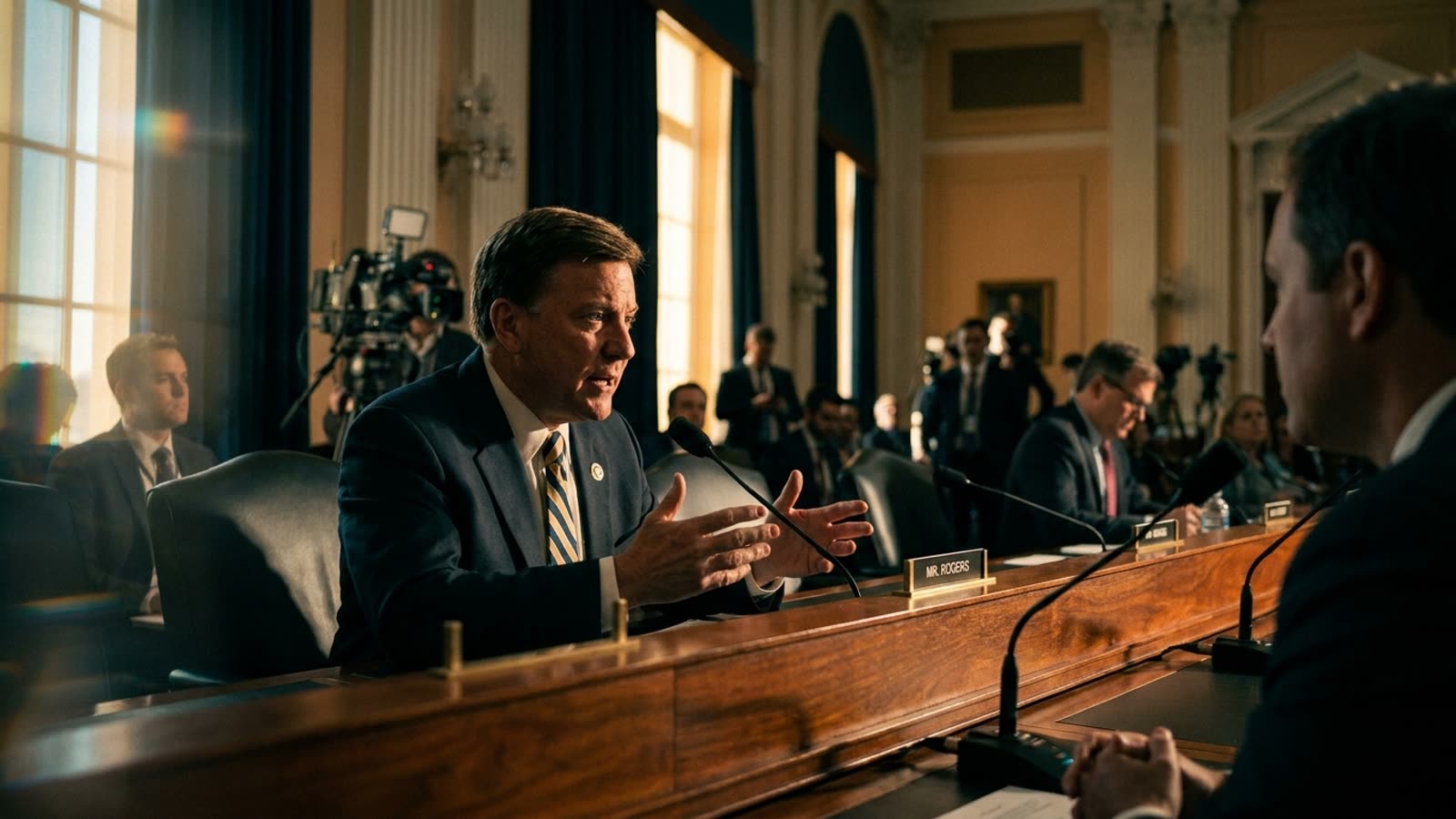
The second and final debate between Republican Mike Rogers and Democrat Abdul El-Sayed for Michigan's open Senate seat was, by the low standards of 2026 political discourse, almost civil. No one stormed off. No one's microphone was cut. And yet the ninety minutes in Grand Rapids crystallized something more troubling than theatrics: both candidates have concluded that the most potent weapon in a swing state is not a vision for governance but an indictment of the other's fidelity.
Rogers, the former congressman and FBI agent, spent much of the evening defending his proximity to President Trump while simultaneously insisting he is his own man. El-Sayed, the physician and former Detroit health director, hammered Rogers as a MAGA loyalist who would rubber-stamp whatever the White House demands. Rogers countered by questioning whether El-Sayed's past criticism of certain counterterrorism policies made him insufficiently devoted to national security. The result was a strange spectacle: two men auditioning for a job by arguing about who loves whom more.
The loyalty trap
Michigan is one of a handful of states where the Senate majority may be decided, and both campaigns know it. Rogers needs Trump's base to turn out; El-Sayed needs to peel off enough suburban moderates who find Trumpism distasteful but worry about progressive overreach. This has produced a debate strategy heavy on vibes and light on specifics. Rogers invoked "common sense" no fewer than eleven times. El-Sayed referenced "working families" with similar frequency. Neither offered a detailed position on the looming debt-ceiling fight or the future of the Affordable Care Act's enhanced subsidies, both of which will land on the next Senate's desk within months.
Why Michigan matters beyond Michigan
The state's political geography—union-heavy southeast, MAGA-friendly exurbs, a genuinely persuadable middle—makes it a laboratory for whether Democrats can rebuild a multiracial, working-class coalition or whether Republicans can hold Trump-era gains without Trump himself on the ballot. Polling shows the race within two points, and both parties are pouring resources into the state. A Rogers victory would likely cement Republican control of the upper chamber; an El-Sayed win would keep Democratic hopes alive and signal that Trumpism has a ceiling even in the Midwest.
The missing debate
What went largely unmentioned: Michigan's role as a manufacturing hub for electric vehicles, the state's water infrastructure needs, and the ongoing fallout from the auto industry's halting transition away from internal combustion. These are the issues that will shape the state's economy for a generation, and they received perhaps ten combined minutes of airtime. Instead, viewers were treated to extended riffs on whether Rogers once called January 6 a "dark day" or merely a "difficult day," and whether El-Sayed's support for Medicare for All in a previous campaign disqualifies him from representing a state where union health plans remain sacred.
Our take
Michigan deserves better than a loyalty contest. The state's voters are sophisticated enough to understand that a senator's job is not to be a presidential sycophant or a resistance mascot but to legislate. Rogers and El-Sayed are both capable of that work, but neither has made a compelling case for why he should be trusted with it. With two weeks until Election Day, the race remains a toss-up—and a dispiriting reminder that American politics has become less about what you will do than about whom you will obey.