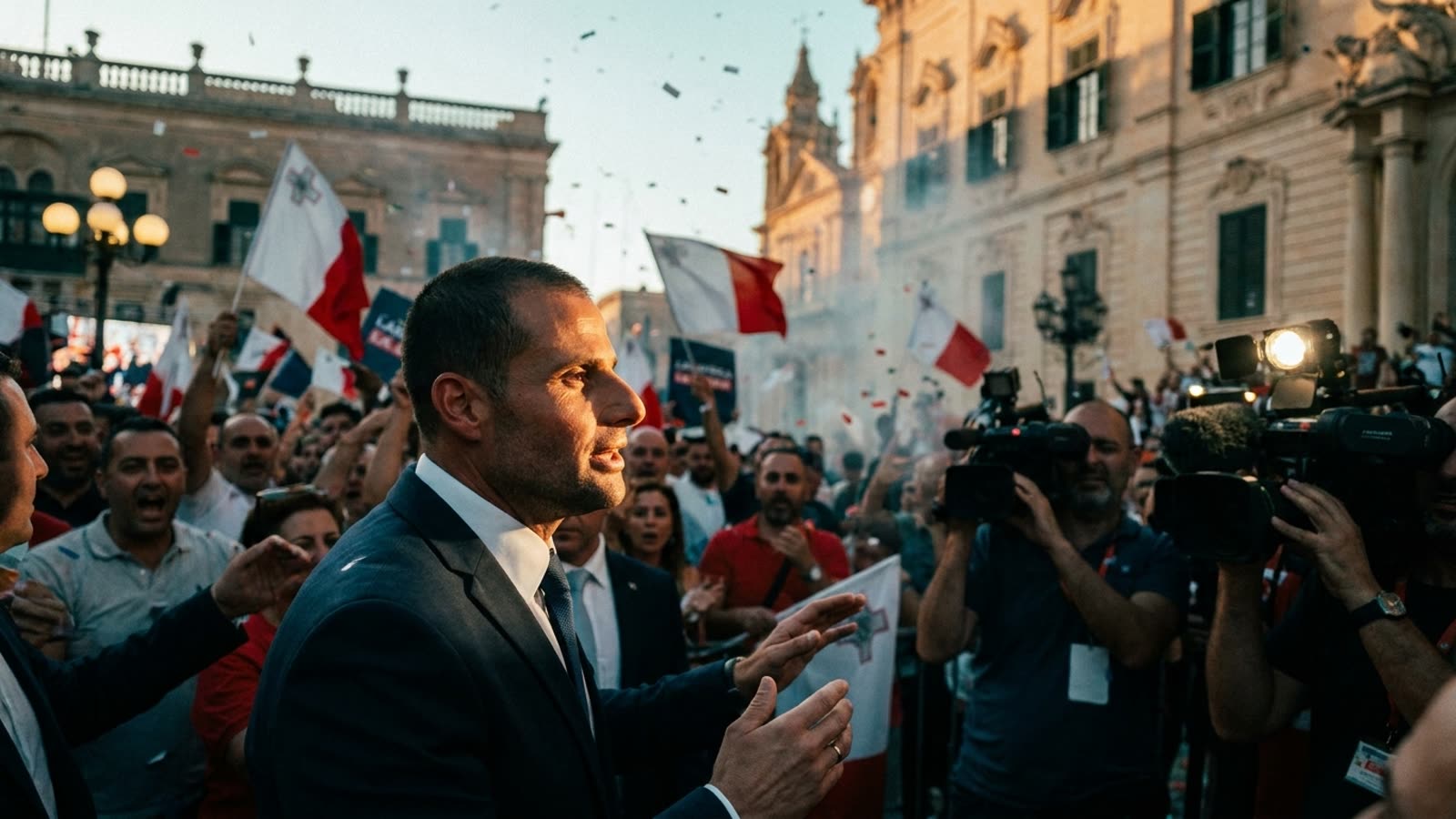
The Mediterranean archipelago that gave the European Union its smallest member state has just handed Brussels its most awkward political puzzle: a center-left government winning decisively in an era when social democrats elsewhere can barely form coalitions.
Malta's Labour Party secured a record fourth consecutive parliamentary majority on Saturday, a feat unmatched in the country's post-independence history and increasingly rare anywhere on the continent. Prime Minister Robert Abela, who inherited the party leadership in 2020 amid the fallout from journalist Daphne Caruana Galizia's assassination, has now cemented his own mandate rather than merely surviving on his predecessor's fumes.
The corruption shadow that wouldn't stick
Labour's dominance is all the more striking given the scandals that should have sunk it. The 2017 murder of Caruana Galizia—who had spent years exposing government corruption—led to the resignation of Prime Minister Joseph Muscat and implicated senior officials in a web of passport sales, money laundering, and cronyism. International observers expected a reckoning.
It never came. Abela distanced himself just enough from the Muscat era while preserving the economic formula that made Labour popular: low taxes, citizenship-by-investment schemes that fund public services, and a construction boom that keeps unemployment negligible. Maltese voters, it turns out, are willing to tolerate considerable ethical murkiness so long as the paychecks clear.
Why Europe can't replicate the model
Malta's success is instructive but non-exportable. A population under 550,000 allows for clientelist politics that simply don't scale. The citizenship-for-cash program—selling EU passports to wealthy foreigners—generates revenue that larger states cannot proportionally match without provoking Brussels. And Malta's geographic position as a logistics hub between Europe and North Africa gives it leverage on migration that translates into quiet concessions from the EU.
The result is a political economy that resembles a well-run city-state more than a European social democracy. Labour doesn't need to solve the structural problems facing German or French center-left parties because Malta's problems are structurally different: manageable, negotiable, and lubricated by external capital.
Our take
Malta's fourth Labour term is less a triumph of progressive politics than a reminder that small, strategically positioned states can write their own rules. Abela has proven that voters will forgive a great deal if prosperity holds and alternatives look worse. The lesson for European social democrats is bleak: Malta's formula works precisely because it cannot be copied. For everyone else, the search for a viable center-left project continues.