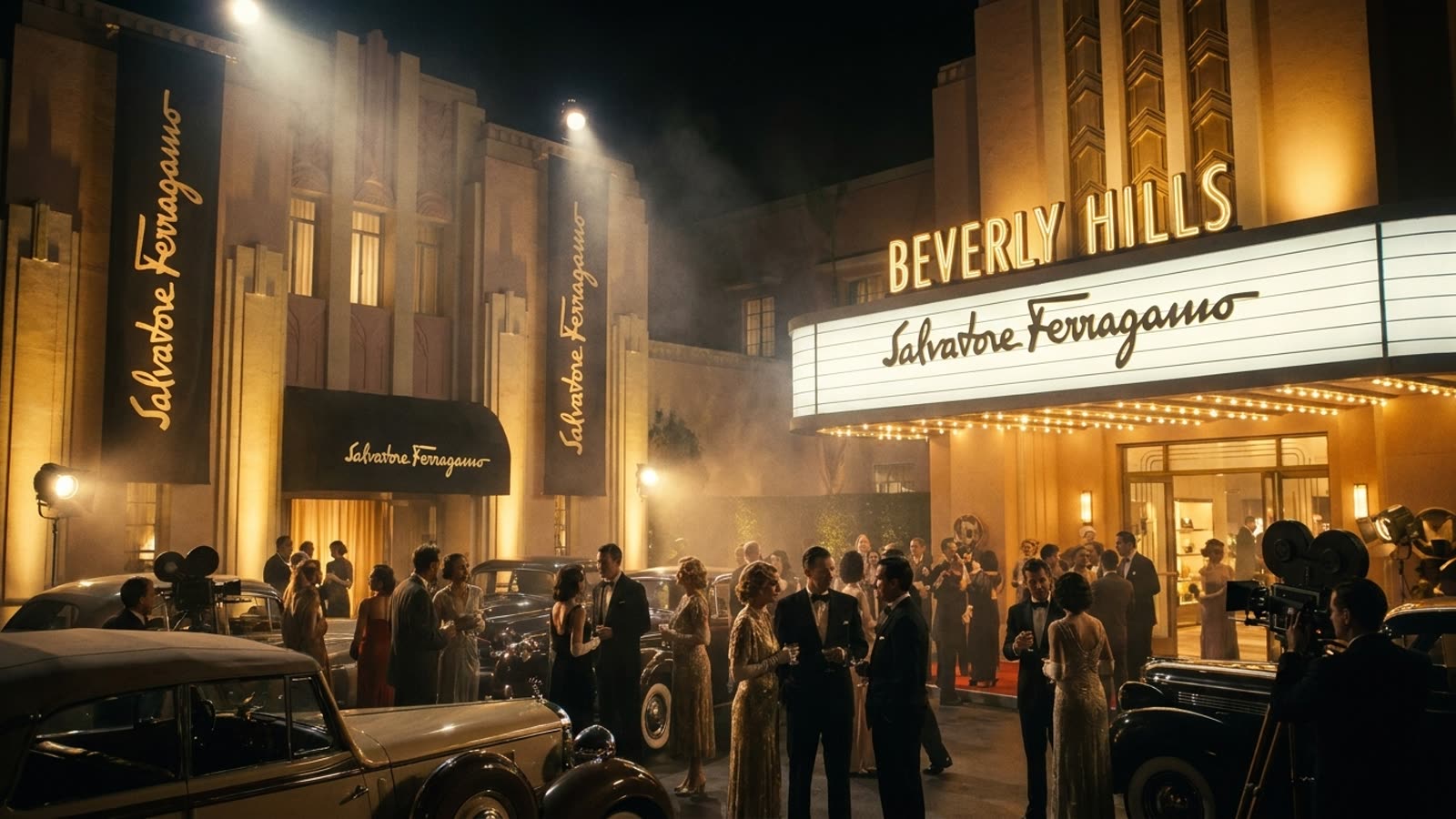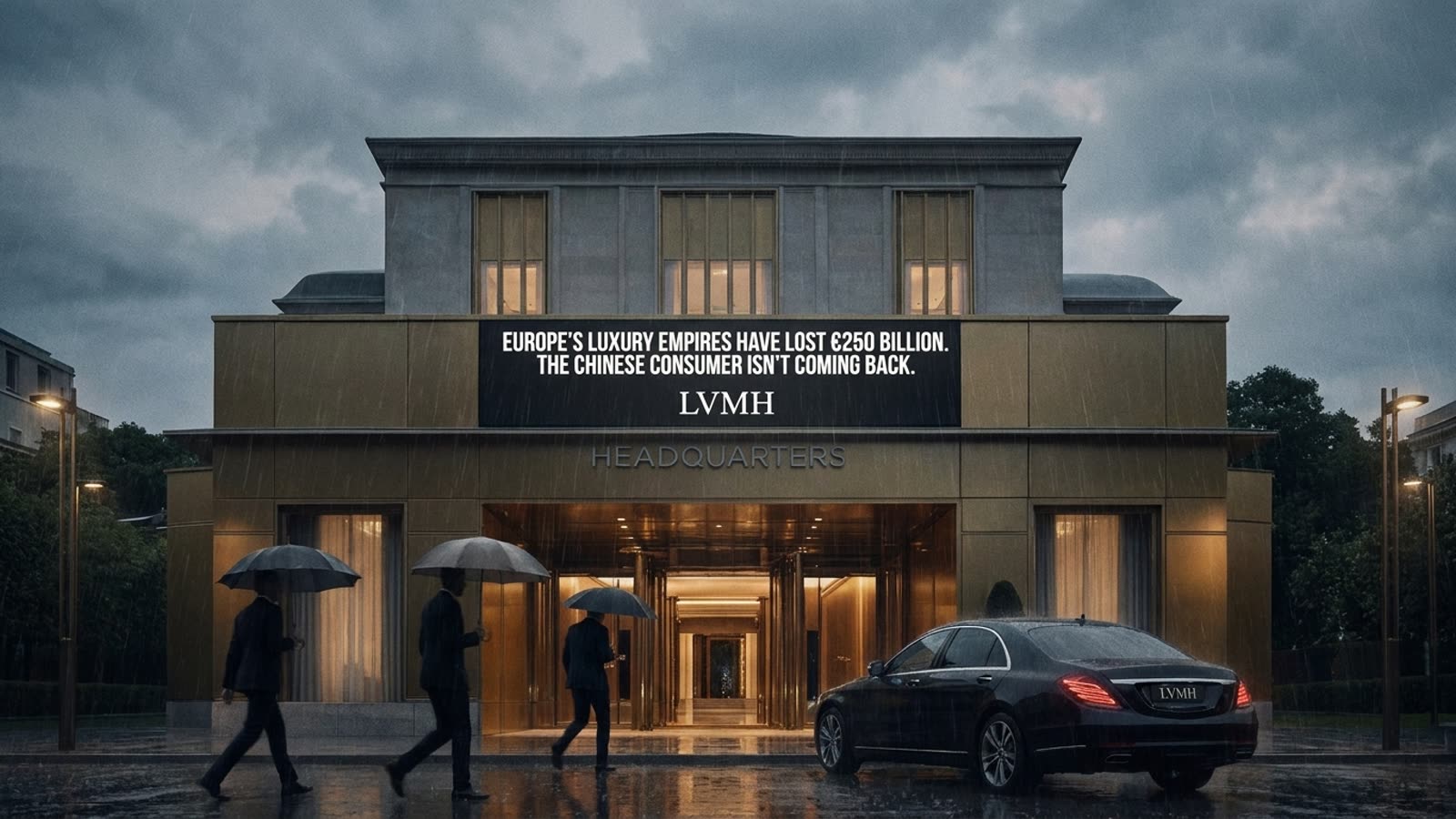
The numbers are brutal enough to make a Hermès scarf feel like a noose. European luxury groups have shed €250 billion in market value as Chinese consumer demand—the engine that transformed heritage brands into global juggernauts—sputters into what increasingly looks like structural decline rather than cyclical pause.
For fifteen years, the formula was elegant: China's emerging middle class wanted to signal arrival, and European houses were delighted to sell them the vocabulary. Louis Vuitton bags, Cartier watches, Gucci loafers—these weren't products so much as passports to a cosmopolitan identity. The luxury sector's market capitalization quintupled. Executives congratulated themselves on brand-building genius when they were mostly beneficiaries of the largest wealth creation event in human history.
The demand that evaporated
Chinese consumers accounted for roughly 35 percent of global luxury spending at the market's peak. That share is contracting, and the reasons extend beyond Xi Jinping's "common prosperity" rhetoric. Youth unemployment hovers near record highs. Property wealth—the piggy bank that funded many luxury purchases—has cratered. And perhaps most troublingly for the houses, younger Chinese consumers are exhibiting a preference for domestic brands and "quiet" consumption that their parents never did.
The shift is visible in the earnings calls. LVMH, Kering, and Richemont have all reported softening Asian revenues. Store traffic in Shanghai and Shenzhen is down. The aspirational Chinese tourist, once reliably spotted in Paris and Milan with multiple shopping bags, has become scarcer.
Cooling markets compound the pain
Global equity weakness has amplified the sector's troubles. Luxury stocks, trading at premium multiples justified by perpetual-growth assumptions, are particularly vulnerable when those assumptions falter. Kering has lost more than half its value from recent peaks. Even LVMH, the sector's fortress, has seen its stock retreat significantly.
The houses are responding with familiar playbooks: price increases to protect margins, cost discipline, renewed emphasis on "ultra-high-net-worth" clients less sensitive to economic cycles. But these strategies have limits. You cannot price-increase your way out of a demand problem indefinitely, and the ultra-wealthy, while lucrative, cannot replace the volume that aspirational buyers provided.
Our take
The luxury sector's China dependency was always a vulnerability masquerading as a strength. The houses told themselves a story about timeless brand equity when they were really riding a one-time demographic wave. That wave has crested. European luxury will survive—these brands have endured world wars and revolutions—but the era of effortless double-digit growth is finished. The next decade will require something the sector hasn't needed in a generation: actual creativity in finding new customers, rather than simply opening another boutique in Chengdu.