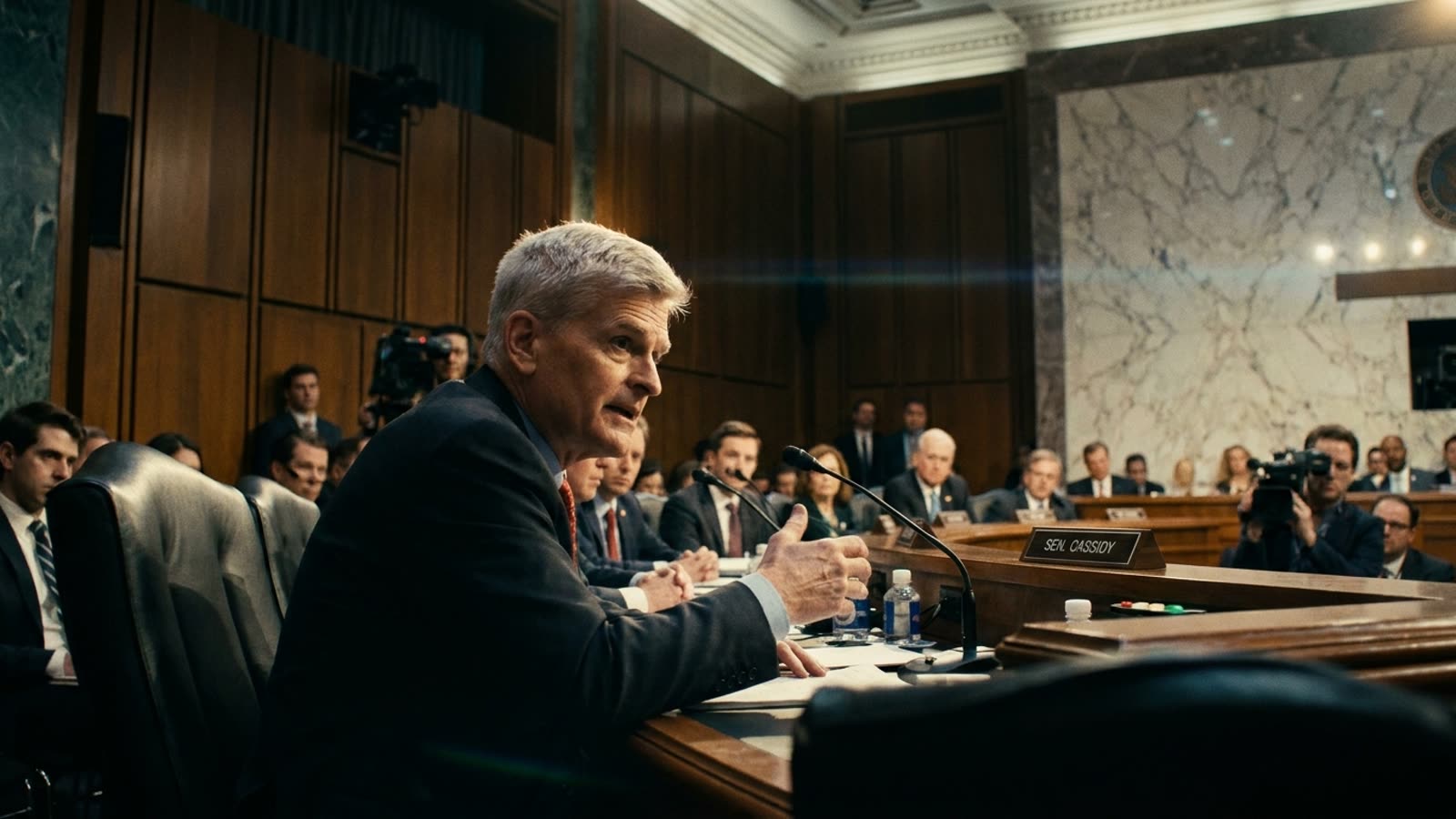
Bill Cassidy committed the unforgivable sin of voting his conscience, and now Louisiana Republicans must decide whether that sin deserves capital punishment.
The state's Senate runoff, set for the coming weeks, pits Trump-endorsed candidates against one another in a contest that has almost nothing to do with Louisiana's actual policy needs and everything to do with demonstrating fealty to a former president who treats disloyalty as a blood crime. Cassidy, one of seven Republican senators who voted to convict Trump in his second impeachment trial, announced he would not seek reelection after it became clear the state party had no interest in defending him. The primary field that emerged reads like a loyalty competition, with candidates racing to prove they would never, under any circumstances, exercise independent judgment.
The mechanics of a purge
Trump's influence over Republican primaries has been documented exhaustively, but Louisiana offers a particularly clean test case. Cassidy was not a moderate by any conventional measure—he voted with Trump's positions roughly 90 percent of the time during the administration and opposed most Biden-era legislation. His crime was singular and specific: he concluded that a president who incited a mob to storm the Capitol had committed an impeachable offense. For this, he was censured by the Louisiana Republican Party within days of his vote.
The candidates now vying for his seat have made their positions clear. The frontrunners have pledged unwavering support for Trump's agenda, whatever that agenda happens to be at any given moment. Policy specifics are secondary to the central question: would you have voted to convict? The correct answer, delivered with appropriate vehemence, is the price of admission.
What the voters actually want
The interesting question is whether Louisiana's Republican electorate genuinely demands this level of conformity or whether the primary system simply selects for it. Turnout in runoff elections tends to be low and dominated by the most engaged partisans—precisely the voters most likely to prioritize loyalty over legislative effectiveness. Cassidy's actual record of delivering for Louisiana, including significant infrastructure funding and hurricane relief, becomes irrelevant when the electorate has been conditioned to view any deviation as betrayal.
Polling suggests the Trump-endorsed candidate holds a commanding lead, which would confirm what most observers already assume: the Republican Party's transformation into a personality cult is complete, at least at the primary level. The general election is a formality in a state this red.
The midterm shadow
This race matters beyond Louisiana because it signals what Republican incumbents can expect if they ever break ranks. The party's congressional delegations have watched Cassidy's exile carefully. The lesson is unambiguous: there is no vote important enough to justify crossing the leader, no principle worth defending if it costs you his endorsement. The handful of Republicans who occasionally dissent on procedural matters have calibrated their rebellions to fall short of anything that might trigger real consequences.
Our take
Louisiana will almost certainly elect whoever Trump tells them to elect, and the winner will arrive in Washington with a clear understanding of their job description: vote as directed, amplify the approved messages, and never—under any circumstances—think for yourself. This is not governance; it is audition theater. Cassidy's actual offense was believing that senators are supposed to exercise judgment. The runoff will confirm that this belief has no place in the modern Republican Party.