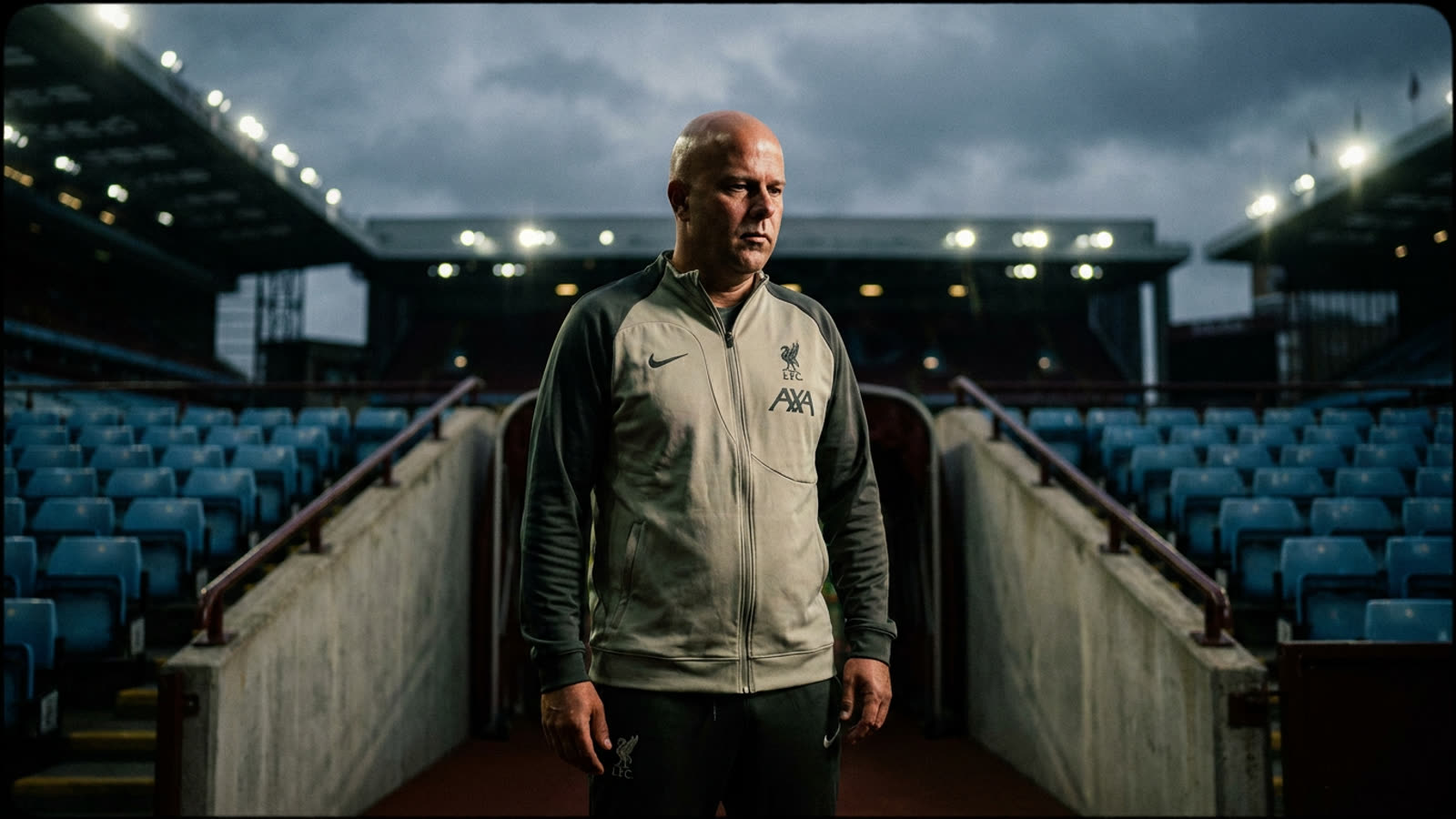
The numbers tell a story that Liverpool supporters have spent months refusing to read. A team that sat atop the Premier League at Christmas has now lost seven of their last eleven matches, conceding goals at a rate that would embarrass a newly promoted side. Friday's demolition at Villa Park was not an aberration—it was a confirmation.
Arne Slot's post-match admission that his team "crumbled" carried the weight of a man who has run out of euphemisms. The Dutch manager arrived at Anfield last summer trailing clouds of tactical glory from Feyenoord, promising a more controlled, possession-based evolution of Jürgen Klopp's heavy metal football. What he has delivered instead is a side that looks increasingly uncertain of its own identity.
The defensive unraveling
Liverpool's backline has become a case study in collective dysfunction. The partnership that looked so assured in autumn has dissolved into a series of individual errors and systemic failures. Villa exploited spaces between the lines with almost casual ease, their runners finding pockets of freedom that simply should not exist at this level. The statistics are damning: Liverpool have now set an unwanted club record for goals conceded in a single Premier League campaign under any manager since the competition's inception.
What makes this collapse particularly alarming is its timing. These are not the growing pains of September, when new systems take time to bed in. This is May, when muscle memory should carry a team through difficult moments. Instead, Liverpool look like strangers to each other, eleven players wearing the same shirt but reading entirely different scripts.
Champions League qualification hangs by a thread
The financial implications of missing out on Europe's premier competition cannot be overstated. Liverpool's wage structure, their ability to attract and retain elite talent, their entire competitive model—all of it assumes Champions League revenue. A season that began with genuine title aspirations now carries the very real possibility of Thursday night football in the Europa League, or worse.
The remaining fixtures offer little comfort. Liverpool must rely on results elsewhere while navigating their own psychological fragility. Slot spoke of needing to "find solutions," but solutions require time he may not have. The Anfield hierarchy has historically shown patience with managers, but that patience was built on a foundation of minimum standards being met. Champions League qualification has long been considered that minimum.
Our take
Slot deserves criticism for his in-game management and his apparent inability to arrest this slide, but the deeper problem predates his arrival. Liverpool's squad needed significant investment last summer and received modest tweaking instead. The manager was handed a team showing signs of age and asked to make it younger through coaching alone. That was always a gamble, and it has not paid off. Whether Slot survives this depends less on the final league position than on whether ownership believes he can rebuild what Klopp left behind—or whether they conclude he was simply the wrong man to inherit it.