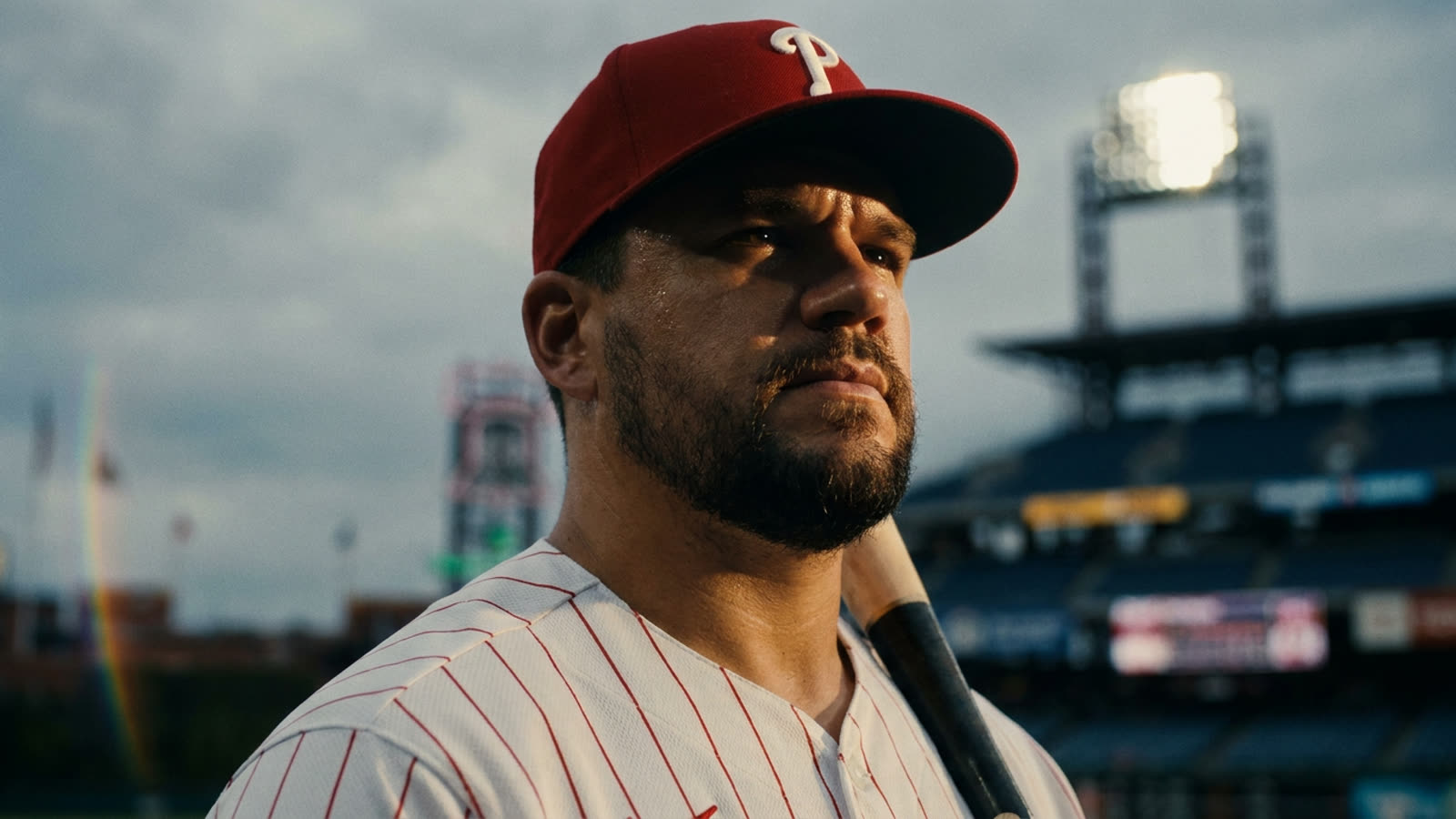
Sixty home runs once seemed like the outer boundary of human capability in baseball. Then it became 61, then 70, then 73. Now Kyle Schwarber is forcing us to ask whether even Barry Bonds's seemingly untouchable 2001 mark might have an expiration date.
The Philadelphia Phillies' designated hitter has been demolishing baseballs at a rate that defies both probability and pitching strategy. His early-season statistics don't merely suggest a big year—they project something unprecedented. The question isn't whether Schwarber can hit 50 home runs; it's whether he can hit 60. Or 70.
The math problem
Projection systems are notoriously conservative. They regress toward career norms, account for slumps, factor in the inevitable decline that accompanies a long season. When those systems start spitting out numbers north of 60, something unusual is happening.
Schwarber has always been a feast-or-famine hitter—the kind of player who strikes out frequently but punishes mistakes with extreme prejudice. What's different now is the frequency of those punishments. His launch angle, exit velocity, and barrel rate have converged into a perfect storm of power production. Pitchers are throwing him their best stuff. He's hitting it anyway.
The historical context matters here. Roger Maris hit 61 in 1961 when the season expanded to 162 games, and the record stood for 37 years. Mark McGwire and Sammy Sosa both surpassed it in 1998, with McGwire reaching 70. Bonds hit 73 in 2001. Since then, the closest anyone has come is Aaron Judge's 62 in 2022—a record for the American League, but still eleven short of Bonds.
Why this time might be different
Schwarber's power isn't coming from nowhere. The 2026 baseball is flying, as it does in cycles. The Phillies' lineup protects him, ensuring he sees hittable pitches rather than constant walks. And Schwarber himself has refined his approach, becoming more selective without sacrificing aggression.
There's also the matter of experience. At 33, Schwarber knows exactly what he is: a left-handed masher who will strike out 150 times and hit the ball harder than almost anyone alive. He's stopped trying to be anything else. That self-knowledge is worth something.
The skeptics will point to regression, to the inevitable cold stretch that brings mortal hitters back to earth. They're probably right—probably. But Schwarber has been defying probability for long enough now that the sample size is starting to mean something.
Our take
Baseball needs this chase. The sport has struggled for attention in an era of shortened attention spans, and nothing captures the public imagination quite like a slugger threatening history. Whether Schwarber reaches 60, 70, or falls short at 45, the pursuit itself is a gift. The Phillies should enjoy every towering fly ball while it lasts—and the rest of us should probably start paying attention before it's too late.