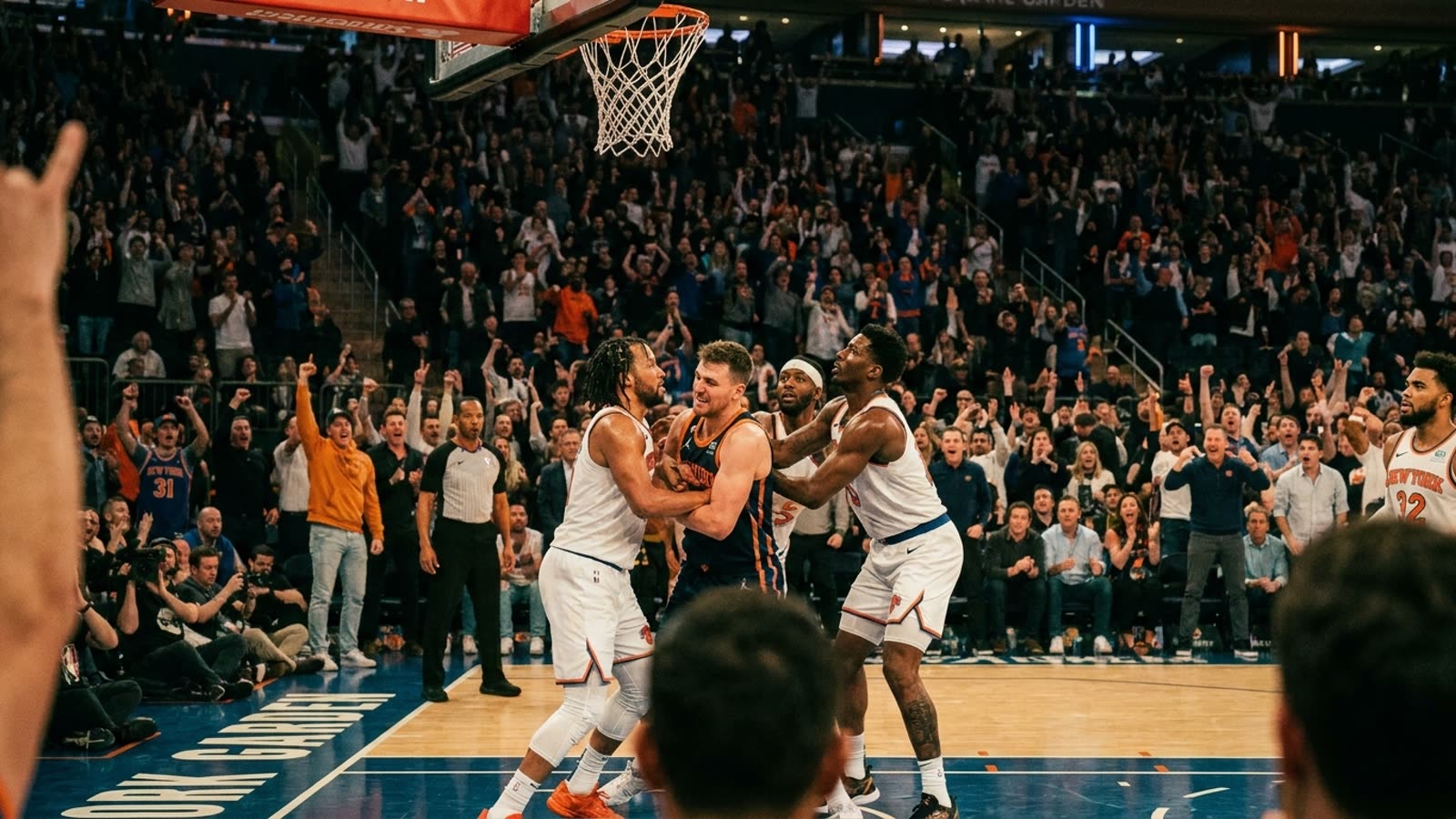
The last time New York genuinely believed in its basketball team, Bill Clinton was in office, Lauryn Hill was inescapable, and the Twin Towers still anchored the downtown skyline. The Knicks' sweep of Cleveland to reach the 2026 NBA Finals has uncorked something primal in a city that spent 25 years pretending it didn't care about basketball.
Within minutes of the final buzzer, crowds materialized outside Madison Square Garden, spilling onto Seventh Avenue and Thirty-Third Street in scenes that veteran New Yorkers compared to the spontaneous celebrations after the 1994 Rangers Stanley Cup—or, more pointedly, to nothing the Knicks themselves have inspired since Patrick Ewing's last meaningful playoff run. Police estimated tens of thousands participated in impromptu gatherings across the five boroughs, from Williamsburg bars to Bronx stoops.
The weight of the wait
Twenty-seven years is a long time to go without a Finals appearance. For context: a child born during the Knicks' 1999 Finals loss to San Antonio is now old enough to have children of their own who've never seen their team play for a championship. The franchise cycled through Isiah Thomas's catastrophic front-office tenure, the Carmelo Anthony era's beautiful futility, and the post-Phil Jackson wilderness years. Madison Square Garden, still marketed as "The World's Most Famous Arena," became famous mostly for celebrity sightings and Taylor Swift residencies.
What changed wasn't simply roster construction—though Leon Rose's patient accumulation of two-way players around Jalen Brunson deserves credit—but the restoration of a particular New York basketball identity. This team defends. It moves the ball. It plays with the controlled fury that older fans associate with the Riley-era squads. The sweep of Cleveland, a team many analysts favored, wasn't just a result; it was a statement of philosophy.
A city's self-image
New York's relationship with its basketball team has always been entangled with municipal ego. The Knicks' irrelevance during the city's post-2008 renaissance—the High Line years, the Brooklyn ascendancy, the tech-money influx—created a strange cognitive dissonance. The city was thriving, but its signature basketball franchise was a punchline. Celebrities still sat courtside, but increasingly as a social obligation rather than genuine investment.
The street celebrations suggest that investment was never truly gone, merely dormant. Social media filled with videos of strangers high-fiving on subway platforms, of car horns forming impromptu symphonies on the FDR Drive, of elderly men in faded Ewing jerseys weeping openly. The imagery carried an almost desperate quality—not just joy, but relief.
Our take
The Knicks haven't won anything yet. The Finals opponent—whether Carolina or Montreal's hockey counterpart reaches their own destination—will present challenges this team hasn't faced. But something has already been accomplished that transcends the bracket. New York has remembered that it cares about basketball, that the Garden can still matter as something more than a concert venue with good sightlines. Whether the championship banner eventually hangs depends on matchups and execution. The street party already happened. That's not nothing.