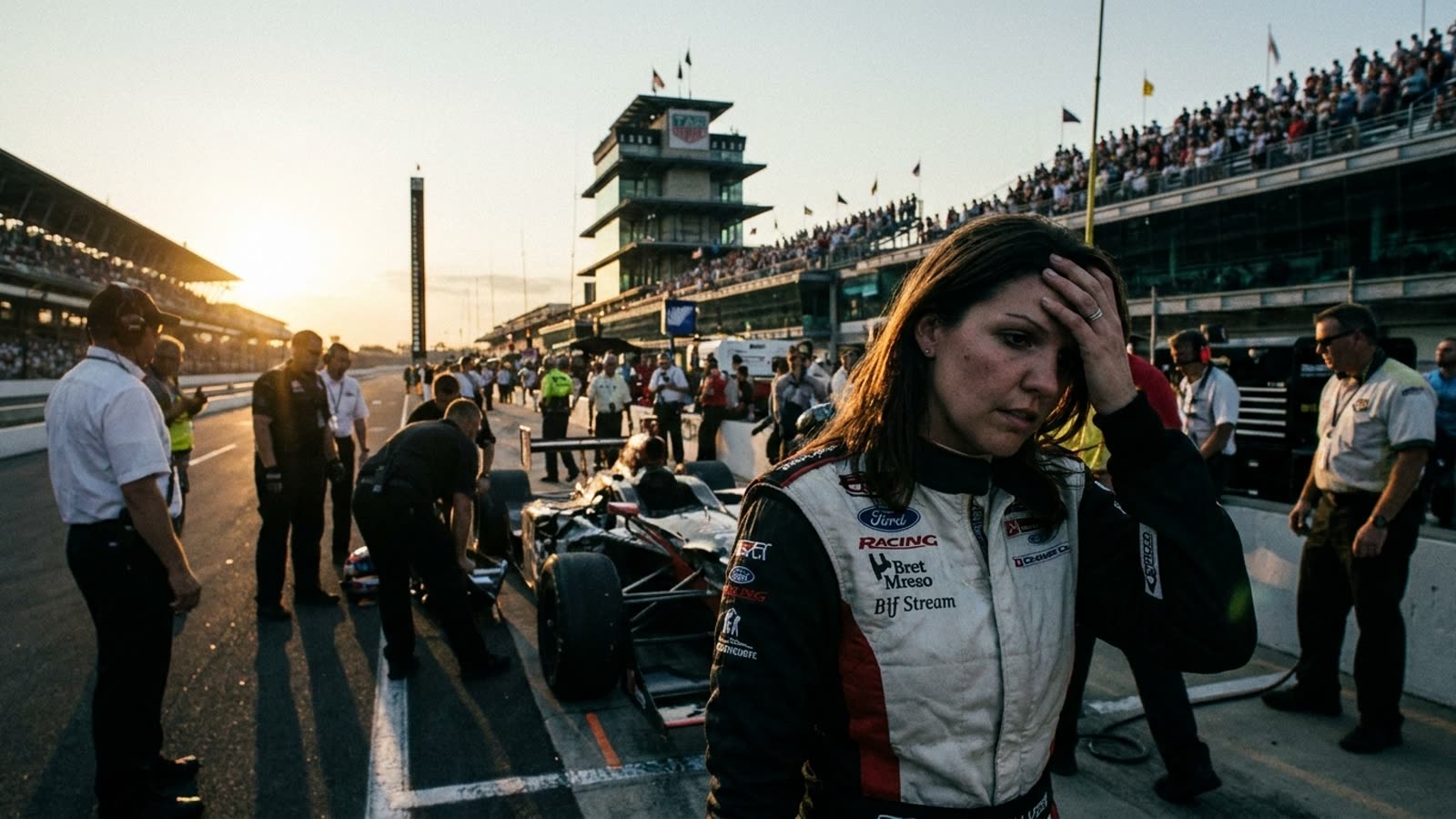
The cruelest thing about the Indianapolis Motor Speedway is how quickly it can end a story. Katherine Legge's 2026 Indy 500 lasted mere laps before contact sent her into the wall at Turn 2, instantly erasing months of preparation and the tantalizing possibility of completing the Memorial Day Double — racing both the Monaco Grand Prix and the Indy 500 within hours of each other.
The crash itself was almost mundane in its execution: the kind of racing incident that happens dozens of times across a season. But context transforms the ordinary into the tragic. Legge wasn't just racing for a finish; she was racing against geography, logistics, and the fundamental limits of human endurance.
The Double's impossible arithmetic
The Memorial Day Double exists in that peculiar space between sporting achievement and publicity stunt. The Monaco Grand Prix finishes Sunday morning European time; the Indy 500 starts Sunday afternoon in Indiana. The math technically works. A supersonic Concorde made it feasible in the 1990s. Commercial aviation makes it merely excruciating today.
But feasibility is not the same as advisability. The drivers who attempt the Double — and there have been precious few — are essentially asking their bodies to perform at the absolute limit of human capability while jet-lagged, sleep-deprived, and switching between two fundamentally different racing disciplines. Monaco's tight street circuit rewards precision and patience. Indianapolis demands sustained aggression at speeds exceeding 230 mph. The mental gear-shift alone would defeat most athletes.
Legge, at 44, was attempting something that younger drivers with fresher reflexes have declined. That's either courage or hubris, depending on your perspective.
The economics of spectacle
The Double persists as a concept because it generates exactly this kind of attention. Sponsors love the narrative. Media outlets love the drama. The racing itself becomes almost secondary to the story of the attempt. Legge's early exit will generate more coverage than a quiet mid-pack finish ever would have.
This is the Faustian bargain of modern motorsport: the spectacle often matters more than the sport. A driver who finishes fifteenth after a clean race is invisible. A driver who crashes spectacularly while attempting something audacious becomes a headline. The incentive structure practically demands these kinds of high-risk, high-reward gambits.
IndyCar, perpetually fighting for attention against NASCAR and Formula 1, benefits from any story that puts the Indy 500 in the conversation. Legge's crash accomplishes that, even if it's not the narrative anyone would have chosen.
Our take
There's something admirable about Legge's refusal to accept the conventional wisdom that the Double is a young driver's game, or that it's not worth the risk. At 44, she knows her remaining opportunities at Indianapolis are finite. Better to attempt something magnificent and fail than to run conservatively and wonder what might have been. The crash hurts, but the regret of never trying would have hurt more. The Double remains unfinished business — for Legge, and for motorsport's collective imagination.