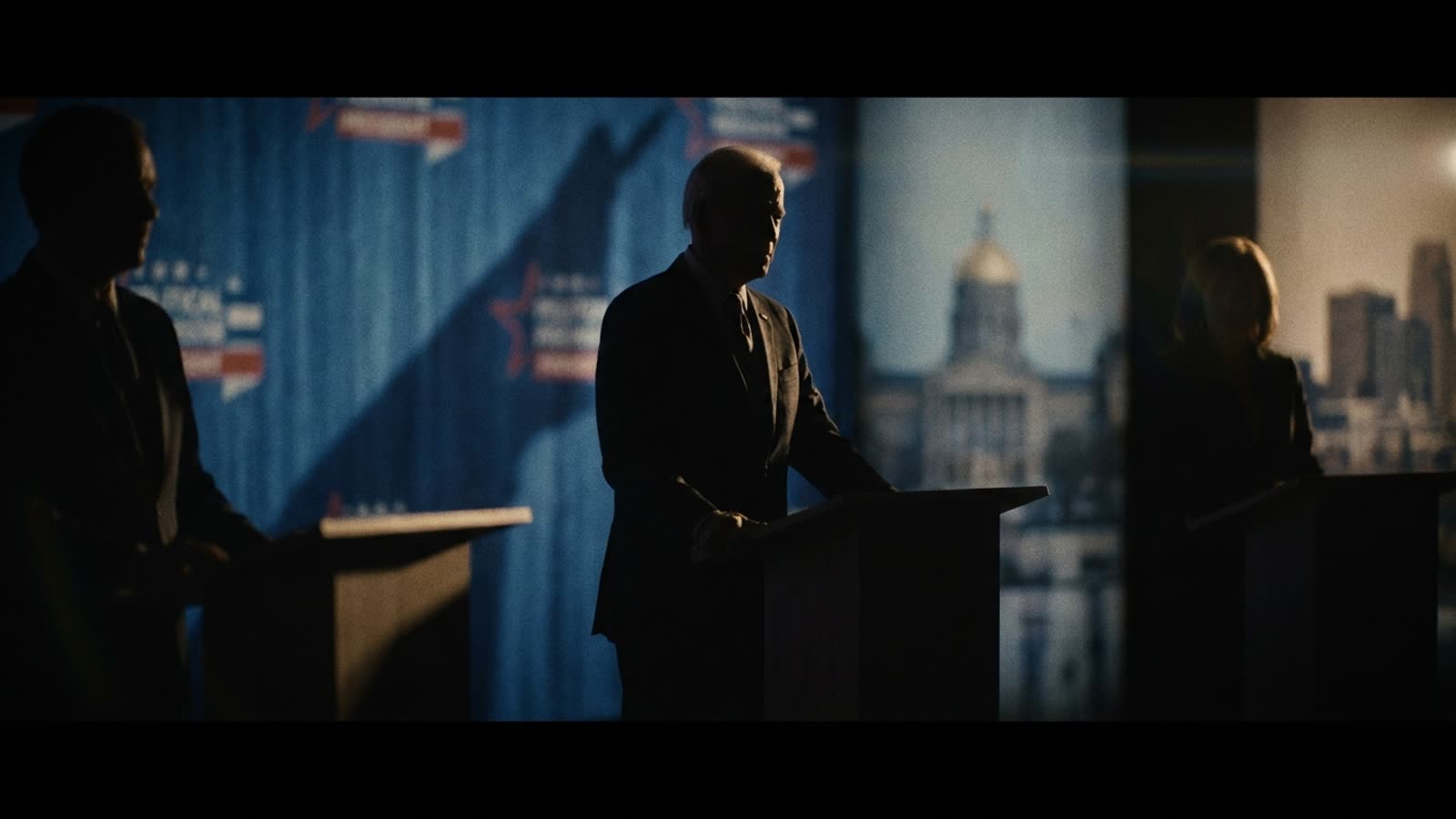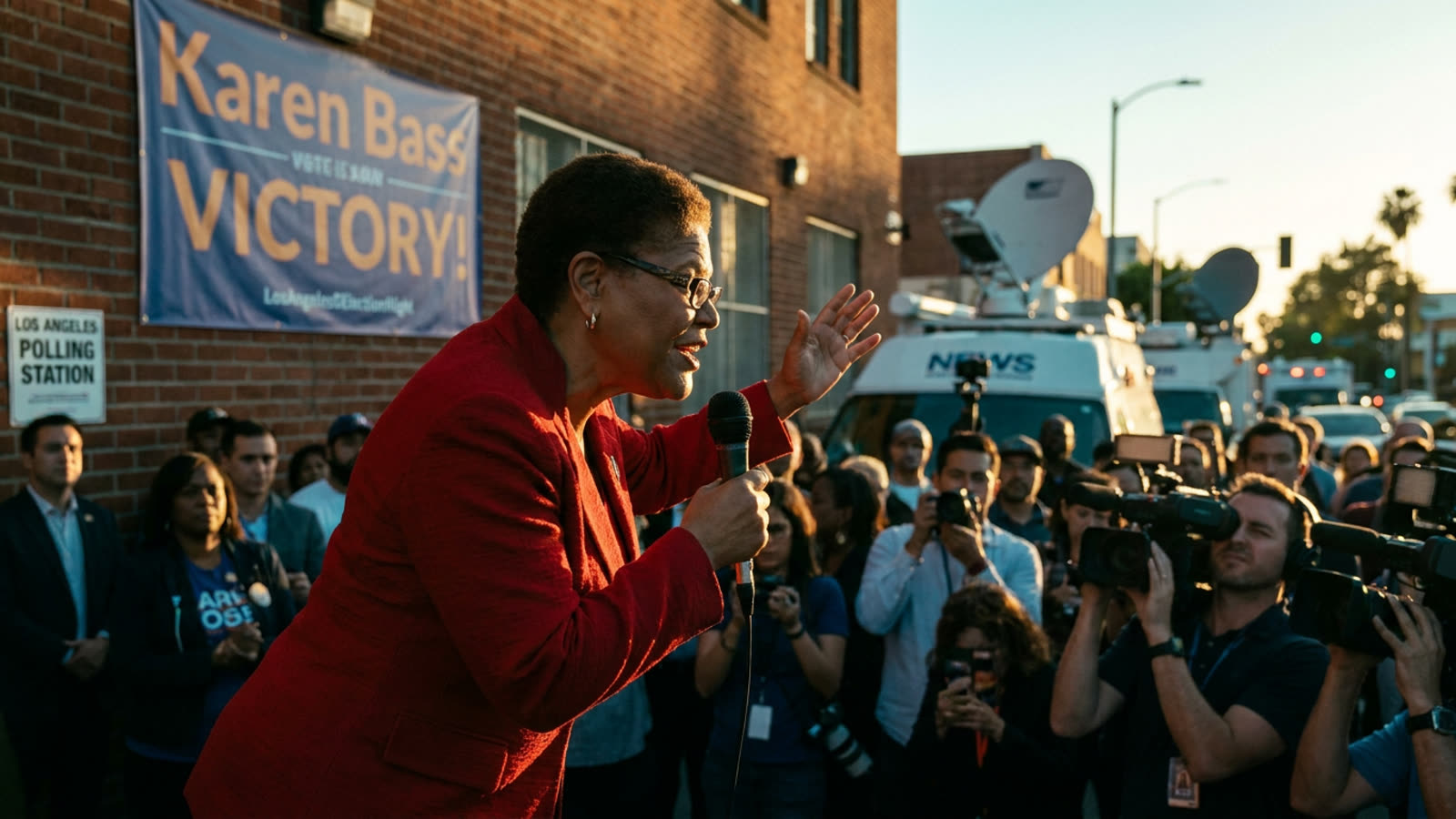
The Los Angeles mayoral race has produced its first definitive result, and its first object lesson in the gulf between social-media momentum and actual votes. Incumbent Karen Bass advanced comfortably to the November general election in Tuesday's primary, while Spencer Pratt—the former Hills villain turned fire-loss sympathizer turned long-shot candidate—remained mired in a too-close-to-call scrum for one of the remaining runoff slots.
Bass's path was never seriously in doubt. She entered the race with the structural advantages of incumbency, a war chest swelled by labor and establishment Democratic donors, and the absence of a credible challenger from her left. Her campaign focused on homelessness metrics and public-safety messaging calibrated to reassure moderate Angelenos rattled by years of encampment growth and retail theft headlines. The strategy was workmanlike, unsexy, and effective.
The Pratt factor
Pratt's candidacy was always more phenomenon than operation. After the Palisades fire destroyed his home in January and he became an unlikely avatar of disaster-zone frustration, his TikTok following exploded and a draft-Spencer movement briefly trended. He filed papers, held a launch rally that drew influencers and curious reporters, and spent the spring toggling between policy forums and podcast appearances. The campaign raised a respectable sum in small-dollar donations but never built the ground game or coalition depth required to compete in a city of four million voters.
As of Wednesday morning, Pratt sat in fourth place, trailing the second-place finisher by several thousand votes with mail ballots still being counted. A path to the runoff remains mathematically possible but would require an improbable surge from outstanding ballots in precincts where he underperformed.
What the results reveal
The broader California primary night confirmed a familiar pattern: voter frustration is real, but it tends to express itself in down-ballot races and ballot measures rather than in wholesale rejection of incumbents. Bass will face a Republican or independent challenger in November—likely businessman Rick Caruso redux or a law-and-order newcomer—but she enters that contest as a clear favorite in a city where registered Democrats outnumber Republicans nearly three to one.
For Pratt, the experience may prove more instructive than humiliating. He generated genuine engagement on housing affordability and fire preparedness, issues that establishment politicians have struggled to dramatize. Whether he parlays that into a future campaign, a media platform, or a return to reality-TV obscurity is an open question.
Our take
Celebrity candidacies are not inherently frivolous—Arnold Schwarzenegger and Donald Trump proved that star power can convert under the right conditions. But those conditions include either a wave election, a uniquely vulnerable opponent, or an infrastructure that matches the candidate's reach. Pratt had none of the above. Bass, meanwhile, demonstrated that in a post-pandemic, post-wildfire Los Angeles, competence still beats charisma when charisma cannot fill a precinct captain roster. The city's voters may be frustrated, but they are not yet desperate enough to hand the keys to a man best known for feuding with Lauren Conrad.