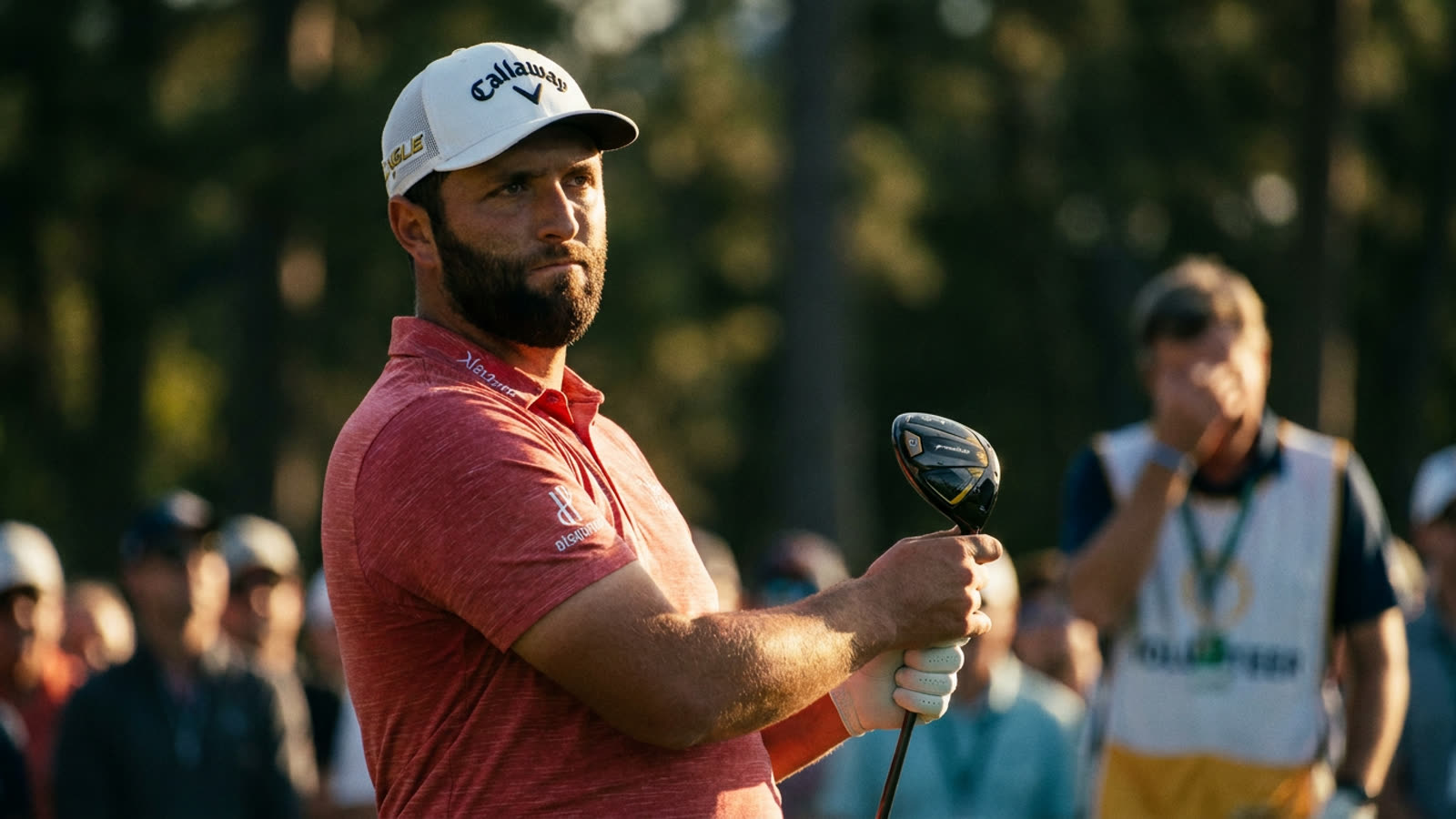
Golf sells itself as the gentleman's game, the sport where competitors call penalties on themselves and shake hands before scorecards are signed. Jon Rahm's first-round tantrum at the PGA Championship—a frustrated swing that sent a divot careening into a volunteer's face and shoulder—punctured that mythology with the force of a well-struck seven iron.
The Spaniard called his behavior "inexcusable," and he's right. But the apology, however sincere, obscures a more uncomfortable truth: what Rahm did was unusual only in its consequences, not its underlying impulse.
The invisible people behind the ropes
Major championships depend on thousands of volunteers who arrive before dawn, stand for hours in whatever weather arrives, and receive nothing but a logo'd polo and a boxed lunch for their trouble. They chase errant balls, hold "quiet please" signs, and occasionally catch the debris of a millionaire's bad mood.
The woman Rahm struck was doing exactly what she'd signed up to do—be present and helpful—when a clump of turf traveling at considerable velocity found her face. Tournament officials confirmed she received medical attention; her name has not been released. The anonymity is telling. Volunteers are essential to professional golf's operation and almost entirely invisible to its broadcast product.
Frustration as performance
Rahm is hardly the first tour professional to take out his displeasure on the course itself. Club slams, profane outbursts, and aggressive divot-taking have become so normalized that broadcasts treat them as color commentary—evidence of competitive fire rather than poor self-regulation.
The difference here is proximity. Most frustrated swings happen in the rough or on the tee, away from the gallery. Rahm's occurred close enough to someone that physics took over. The result wasn't a viral clip of relatable anger; it was an injury requiring first aid.
The apology economy
Rahm handled the aftermath by the modern playbook: immediate acknowledgment, unequivocal language, no hedging. "There's no excuse for it," he told reporters. "I feel terrible." The PGA Tour has not announced any disciplinary action, and given the accidental nature of the contact, none may be forthcoming.
But the incident lingers because it exposes the asymmetry baked into professional sports. Rahm will continue competing for a potential seven-figure payday this weekend. The volunteer went home with a bruise and, presumably, a story she didn't ask to tell. The power imbalance is so vast that even a genuine apology cannot close it.
Our take
Rahm's remorse appears authentic, and dwelling on a single bad moment risks missing the structural point. Professional golf has tolerated—even romanticized—player frustration for decades because it humanizes otherwise robotic performers. But volunteers aren't props in that narrative. They're people who can be hurt when a competitor forgets, however briefly, that anyone else exists. The sport would do well to remember that the next time it celebrates a club toss as passion.