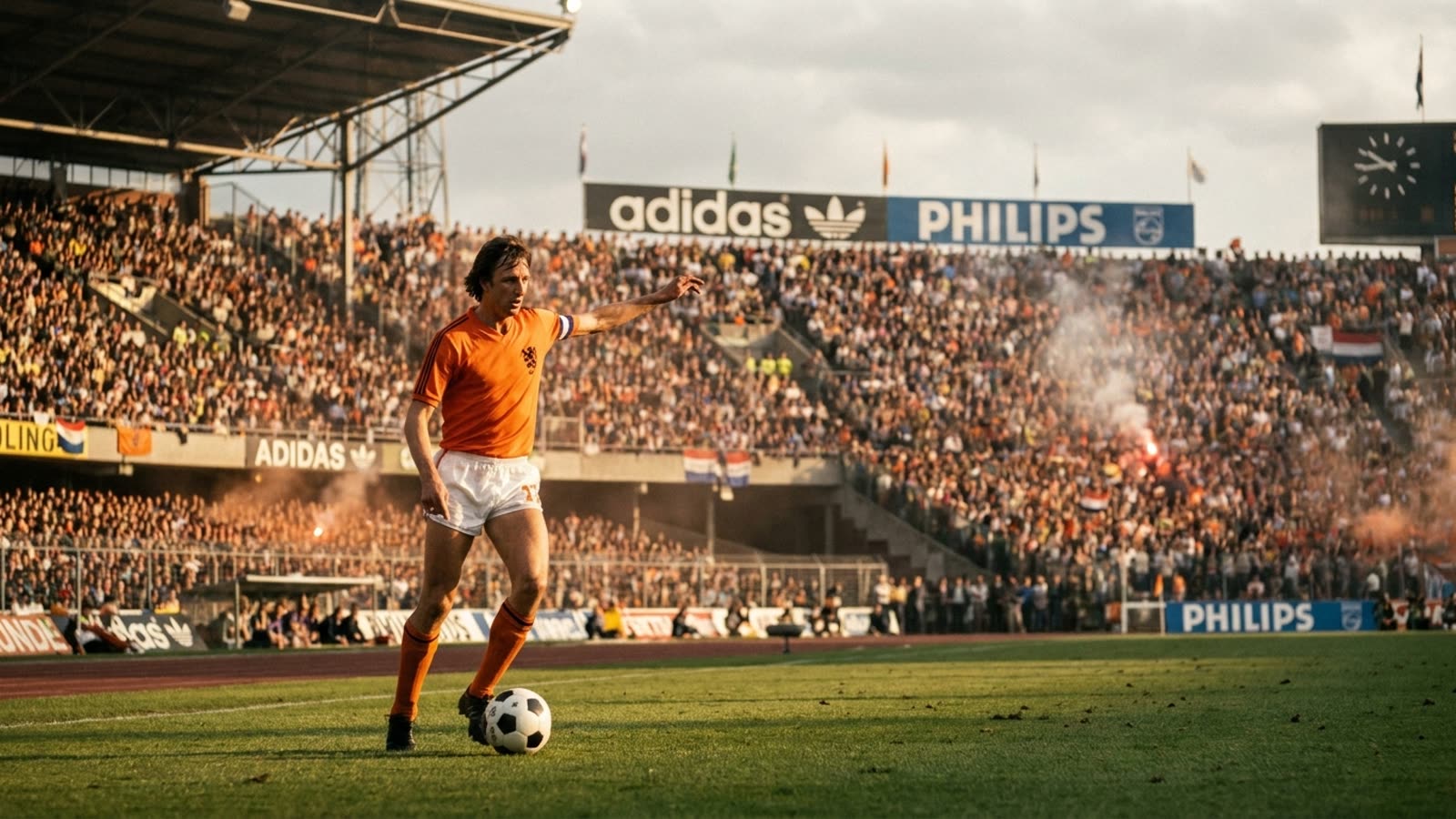
Football before Johan Cruyff was a game of positions; football after him became a game of space. That distinction sounds abstract until you watch any elite team press, rotate, and suffocate opponents with choreographed movement that would have looked like chaos to observers half a century ago. Cruyff did not merely play differently—he thought differently, and then he taught the sport to think his way.
The Dutch concept of totaalvoetbal predates Cruyff, emerging from the coaching laboratories of Rinus Michels at Ajax in the late 1960s. But Cruyff was its supreme embodiment, the player who made the theory legible to audiences worldwide. He was nominally a center forward, yet he drifted everywhere: dropping deep to collect the ball, appearing on either wing, orchestrating attacks from positions that defied the rigid formations of the era. Defenders trained to mark zones suddenly found themselves chasing a ghost.
The turn that became a signature
At the 1974 World Cup, Cruyff performed a feint against Sweden's Jan Olsson that has been studied, replicated, and named after him ever since. The Cruyff Turn—a deceptive drag of the ball behind the standing leg while the body sells a pass in the opposite direction—was not invented in that moment, but it was canonized. More importantly, it captured something essential about Cruyff's genius: the belief that football is fundamentally about deception, about making opponents believe one thing while you do another. Space, in his philosophy, was not found but created through misdirection.
The Netherlands lost that World Cup final to West Germany, and Cruyff never won the tournament. He declined to participate in 1978, a decision shrouded in mystery for decades before he revealed it stemmed from a kidnapping attempt on his family. The absence of football's most influential player from its grandest stage remains one of the sport's great what-ifs.
Barcelona's intellectual inheritance
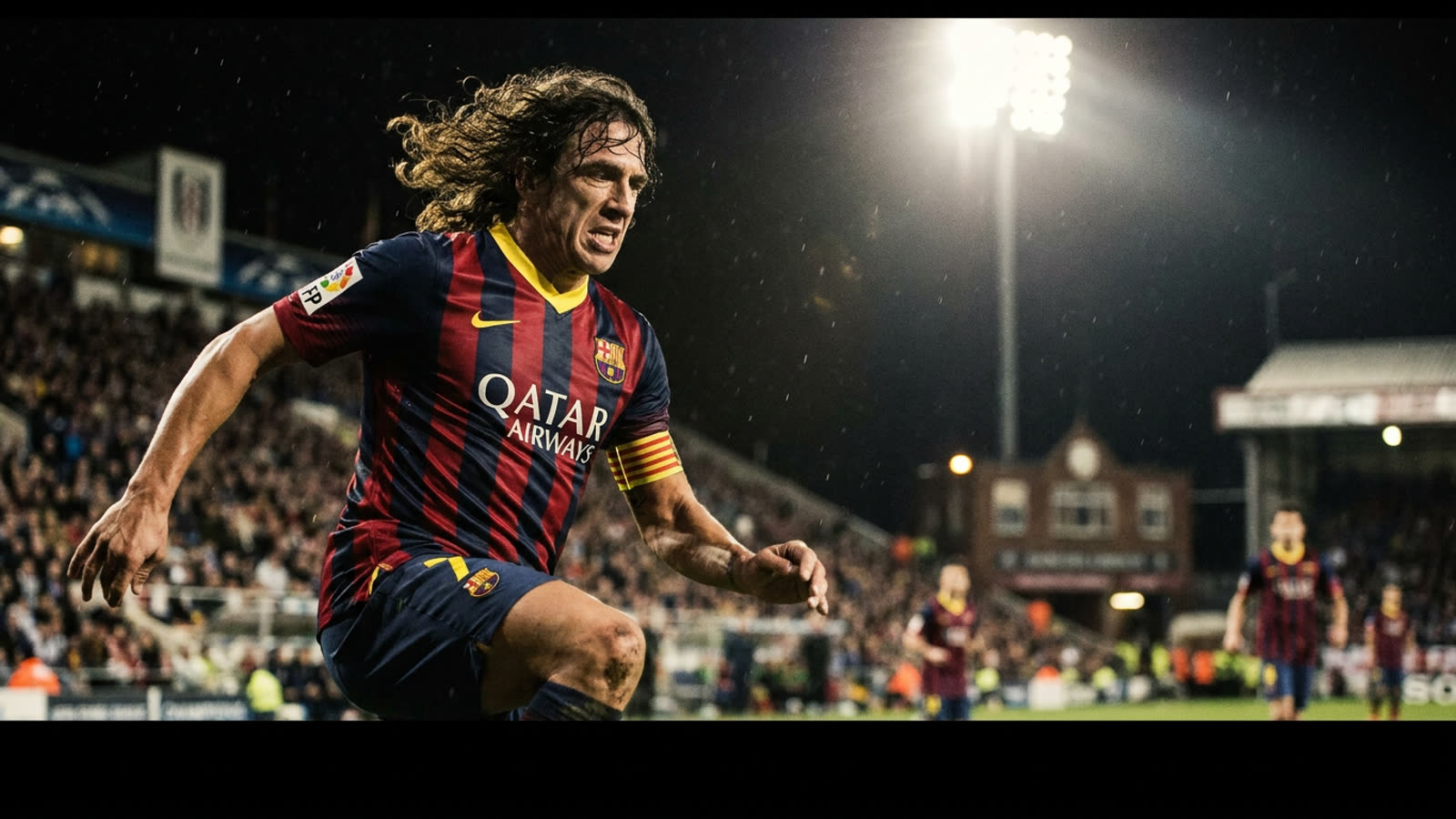
Cruyff's playing career at Barcelona was transformative, but his managerial tenure there reshaped the club's identity permanently. His Dream Team of the late 1980s and early 1990s won four consecutive La Liga titles and the club's first European Cup. More consequentially, he restructured the youth academy, La Masia, around principles of technical excellence, positional awareness, and the courage to play out from the back regardless of pressure.
The graduates of that system—Pep Guardiola, Xavi Hernández, Andrés Iniesta, Lionel Messi—became the most decorated generation in club football history. Guardiola's Barcelona and subsequent teams at Bayern Munich and Manchester City are direct descendants of Cruyff's ideology, refined and intensified but philosophically unchanged. When you watch a team build patiently from the goalkeeper, overload one flank to exploit the opposite side, or press with synchronized ferocity the instant possession is lost, you are watching Cruyff's ideas in motion.
Our take
The most radical element of Cruyff's philosophy was not tactical but psychological: the insistence that football should be played beautifully even when pragmatism might win. He believed entertainment was not a byproduct of success but a precondition for it, that players who enjoyed expressing themselves would ultimately outperform those grinding through systems they found tedious. Modern football, obsessed with data and marginal gains, often forgets this. The sport's most watchable teams still tend to be those that have absorbed Cruyff's conviction that joy and victory are not opposites. He died in 2016, but his argument continues every weekend.