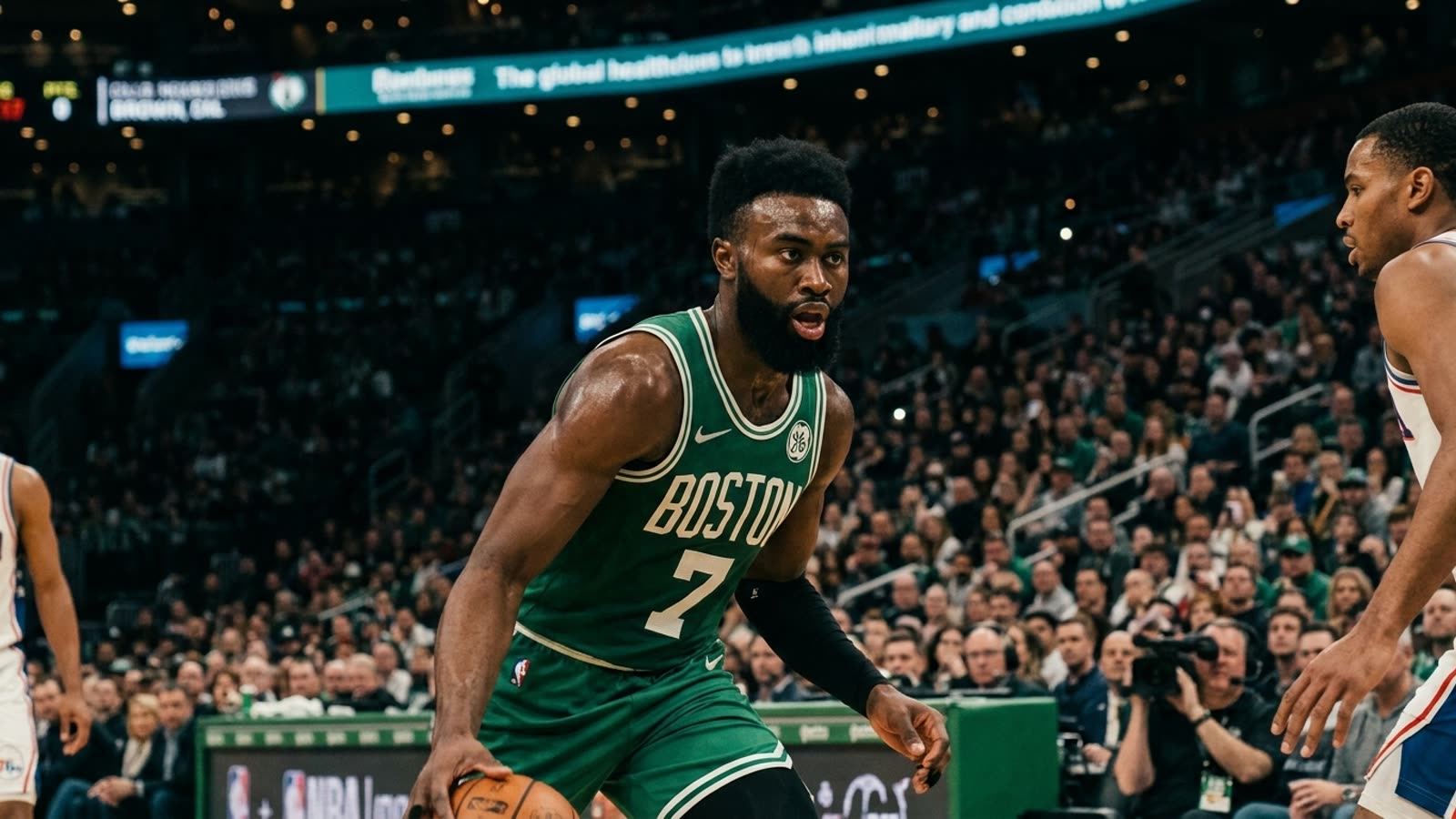
The Jaylen Brown trade saga has become the clearest illustration of a structural problem the NBA spent years engineering and is now desperately trying to manage: the league's new collective bargaining agreement has made certain max contracts functionally untradeable, and front offices are only beginning to reckon with the consequences.
Brown, a two-time All-Star and the 2024 Finals MVP, signed a supermax extension worth roughly $304 million over five years last summer. At the time, it seemed like a reasonable investment in a 27-year-old wing who had just led Boston to a championship. Twelve months later, league executives are privately describing contracts of that magnitude as organizational anchors — not because the players aren't worth the money, but because the CBA's second apron creates cascading penalties that make acquiring such salaries nearly impossible for contending teams.
The second apron trap
The 2023 CBA introduced a hard second apron — currently around $189 million in total payroll — that triggers severe restrictions. Teams above it cannot aggregate salaries in trades, cannot take back more money than they send out, and face limitations on using draft picks and sign-and-trade mechanisms. The practical effect is that any team already near the apron cannot absorb a $50-plus million salary without gutting its roster.
This was by design. The league wanted to prevent superteams from simply buying their way to championships. What the architects perhaps underestimated was how quickly this would create a two-tier market: teams well below the apron can theoretically absorb big contracts, but those teams are usually rebuilding and have no interest in acquiring expensive veterans. Contenders who actually want players like Brown are structurally prohibited from acquiring them.
Why Brown became the test case
Boston's situation is instructive. The Celtics are already deep into luxury-tax territory and face the prospect of paying a historically punitive repeater tax. Moving Brown's contract would provide significant financial relief and roster flexibility. But finding a trade partner has proven nearly impossible. The teams with cap space — Detroit, Utah, San Antonio — are in asset-accumulation mode and have no incentive to take on a max deal for a player in his prime. The teams that want Brown — Milwaukee, Phoenix, Miami — are already above the second apron and cannot make the math work.
Brian Windhorst's reporting this week confirmed what league insiders have been whispering for months: multiple executives believe the current structure has created a class of contracts that are essentially permanent. Once a player signs a supermax, he may be with that team until the deal expires, regardless of whether either party wants to continue the relationship.
Our take
The NBA's attempt to legislate parity has produced an unintended rigidity. The second apron was meant to prevent the Warriors-style dynasty model; instead, it has created a system where teams are punished for success and rewarded for mediocrity. Brown is a legitimate star stuck in contractual amber, and he won't be the last. The league will eventually need to revisit these rules, but not before several more franchises learn the hard way that signing a supermax is easier than escaping one.