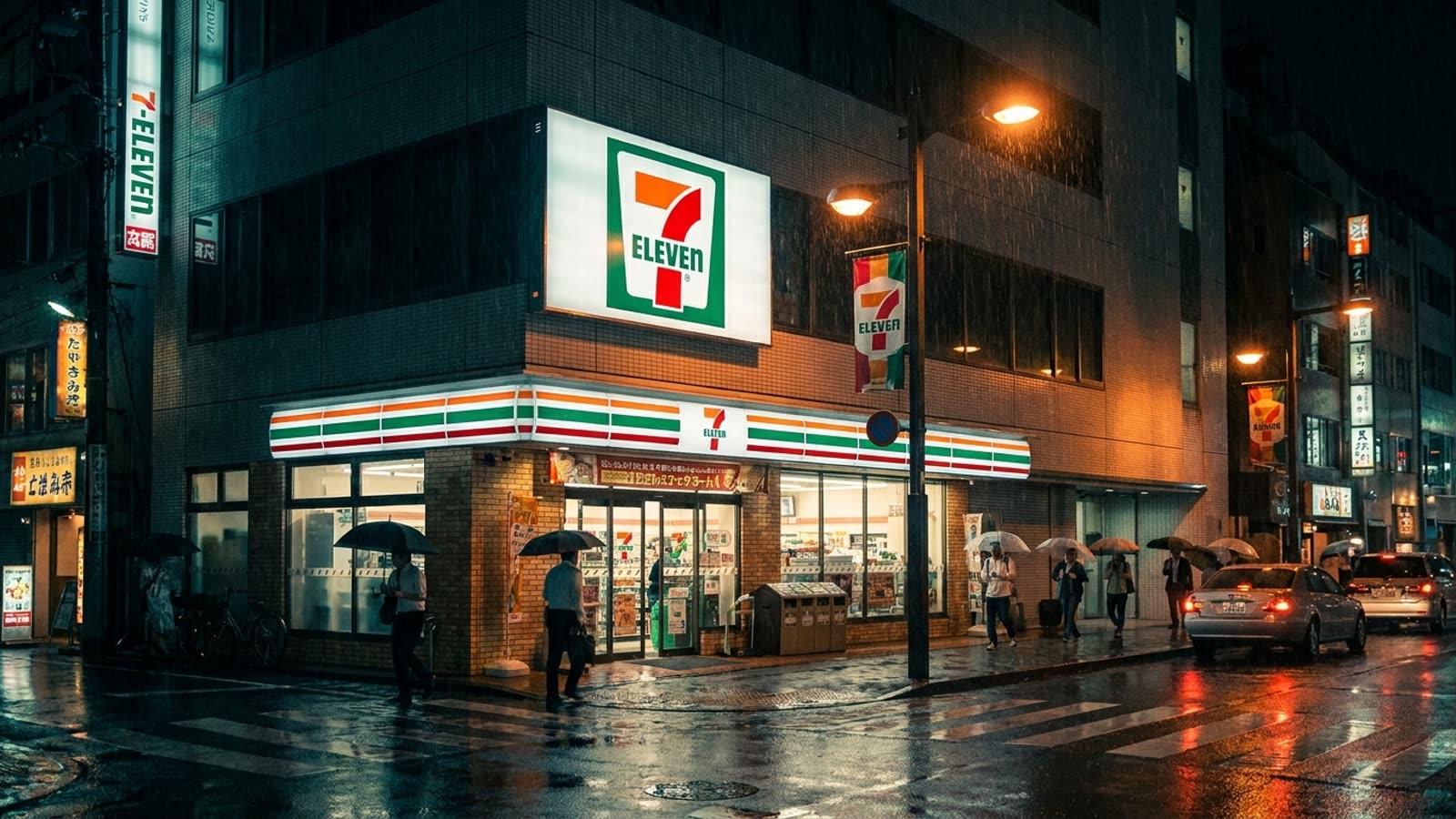
The konbini — Japan's ubiquitous convenience store — occupies a peculiar position in the global food hierarchy: simultaneously mundane and miraculous, utterly quotidian to the Japanese and genuinely revelatory to everyone else. Visitors arrive expecting snacks and leave having eaten one of the best egg salad sandwiches of their lives, wrapped in packaging so precisely engineered it keeps the bread from touching the filling until the moment of consumption.
This is not an accident. It is the product of a food system so obsessively refined that it makes Western convenience retail look like a war crime against the human palate.
The infrastructure of freshness
The typical Japanese konbini receives deliveries three times daily. Not weekly, not every other day — three times in a single twenty-four-hour period. This logistics apparatus, developed over decades by the three dominant chains, enables a product rotation that would bankrupt any Western operator attempting to replicate it. Onigiri rice balls are pulled from shelves if they have been there for more than eight hours. Sandwiches rarely survive past their manufacture date. The entire system is predicated on the assumption that freshness is non-negotiable, and that consumers will notice the difference between an eight-hour-old rice ball and a twelve-hour-old one.
They do notice. The Japanese consumer's palate has been calibrated by decades of exposure to this standard, creating a feedback loop that punishes any chain foolish enough to let quality slip.
The tyranny of the product cycle
Each major konbini chain releases hundreds of new products annually, most of which disappear within weeks. This relentless churn serves multiple purposes: it keeps regular customers curious, provides data on emerging taste preferences, and maintains the illusion of novelty in what is fundamentally a commodity business. The seasonal fried chicken variant you loved in autumn may never return. The limited-edition matcha dessert sells out in three days. Scarcity, whether manufactured or genuine, drives urgency.
The result is a retail environment that functions more like a rotating omakase menu than a corner store. Regulars develop relationships with specific products, mourn their discontinuation, celebrate their occasional return. The konbini has accidentally created the conditions for food fandom.
Why export fails
Western attempts to replicate the konbini model have uniformly disappointed. 7-Eleven in the United States bears almost no resemblance to its Japanese counterpart, despite sharing a name and corporate lineage. The reasons are structural: American labor costs, real estate economics, and supply chain limitations make the three-deliveries-daily model financially impossible. More fundamentally, American consumers have been trained to expect convenience stores to be terrible, and they shop accordingly.
Japan's konbini culture emerged from specific conditions — dense urban populations, a cuisine that prizes rice-based portable foods, and a manufacturing sector capable of producing packaging innovations that seem almost absurdly overengineered to foreign eyes. These factors cannot be imported.
Our take
The konbini represents something Western food culture struggles to comprehend: that convenience and quality are not opposites, that mass production can coexist with genuine craft, and that the most democratic food institutions are sometimes the best ones. A society's values are revealed in what it considers acceptable for a quick lunch. Japan decided that acceptable means excellent, and built the infrastructure to deliver it at scale. The rest of us are still buying gas station hot dogs and pretending that is just how things have to be.