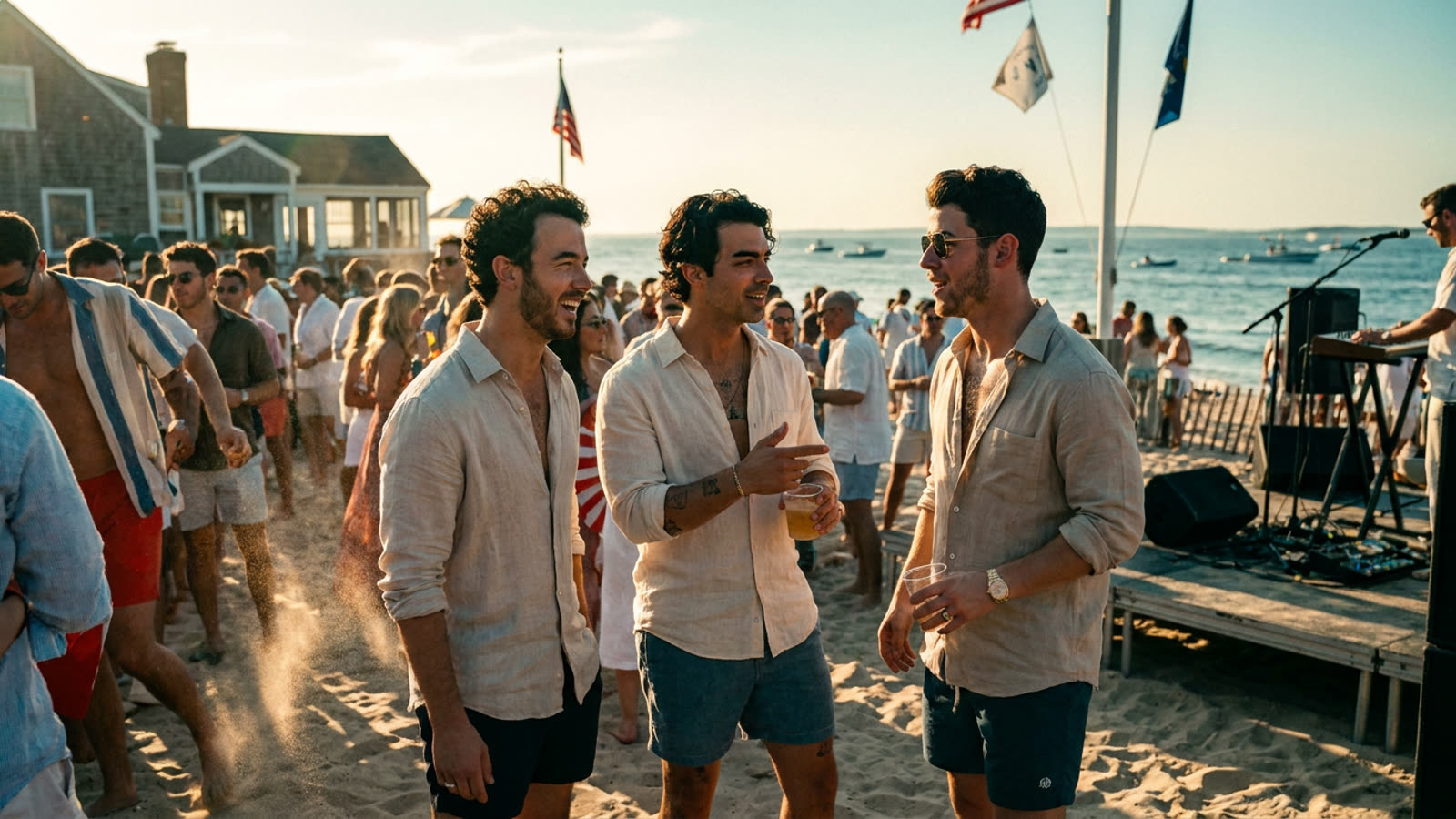
The Independence Day weekend migration to the Hamptons has long served as Hollywood's unofficial census—a headcount of who still commands enough social capital to secure an invitation, enough wealth to justify the helicopter, and enough relevance to make the party photographer's cut. This year's convergence of the Jonas Brothers, Ryan Seacrest, Jimmy Fallon, and Justin Timberlake in the same sandy zip code offers a fascinating snapshot of celebrity's current hierarchy.
What we're witnessing isn't simply rich people enjoying fireworks. It's a carefully orchestrated display of alliance-building, brand maintenance, and the peculiar anxiety that afflicts famous Americans when they sense their cultural moment may be passing.
The strategic geography of fame
The Hamptons have always functioned as a sorting mechanism. East Hampton signals old money and discretion; Montauk suggests you're still young enough to care about seeming cool; Bridgehampton and Sagaponack split the difference for those who want privacy without irrelevance. Where each celebrity positions themselves this weekend reveals more than their real estate preferences—it telegraphs their career strategy.
The Jonas Brothers, having successfully navigated the treacherous passage from Disney-era teen idols to adult artists with credibility, represent the gold standard of the millennial celebrity pivot. Their presence at any gathering now carries genuine cachet rather than nostalgia-tinged curiosity. Seacrest, meanwhile, continues his remarkable run as television's most durable utility player, his recent "Wheel of Fortune" hosting gig proving that his particular brand of anodyne charm remains commercially viable even as the medium he mastered continues its decline.
The Timberlake question
Justin Timberlake's inclusion in this weekend's circuit carries a different valence entirely. Following his DWI arrest last month in Sag Harbor—yes, the Hamptons themselves—his social calendar has become a subject of intense scrutiny. Every party appearance now reads as either rehabilitation or defiance, depending on one's sympathies.
The entertainment industry's relationship with personal scandal has grown increasingly complicated. A generation ago, such an incident might have required a period of public penance; today, the calculus involves social media sentiment analysis, brand partnership contractual language, and the peculiar math of whether controversy generates more attention than it costs in endorsement deals.
The Fallon factor
Jimmy Fallon's presence completes the tableau. His trajectory—from "Saturday Night Live" breakout to Tonight Show host to figure of occasional tabloid concern—mirrors a certain strain of American celebrity that peaked in the early 2010s and now exists in a kind of comfortable stasis. Not declining, exactly, but no longer ascending. The Hamptons weekend circuit is perfectly calibrated for this demographic: prestigious enough to validate continued relevance, relaxed enough to avoid the performance demands of a premiere or awards show.
Our take
The Fourth of July Hamptons gathering has evolved into something more interesting than mere celebrity congregation—it's become a live demonstration of fame's current operating system. The fact that these four acts, spanning different eras and facing different career pressures, all find themselves on the same stretch of beach this weekend suggests the entertainment industry's social infrastructure remains remarkably stable even as its business models collapse. Whether that's reassuring or depressing depends entirely on how you feel about watching wealthy people network while wearing linen.