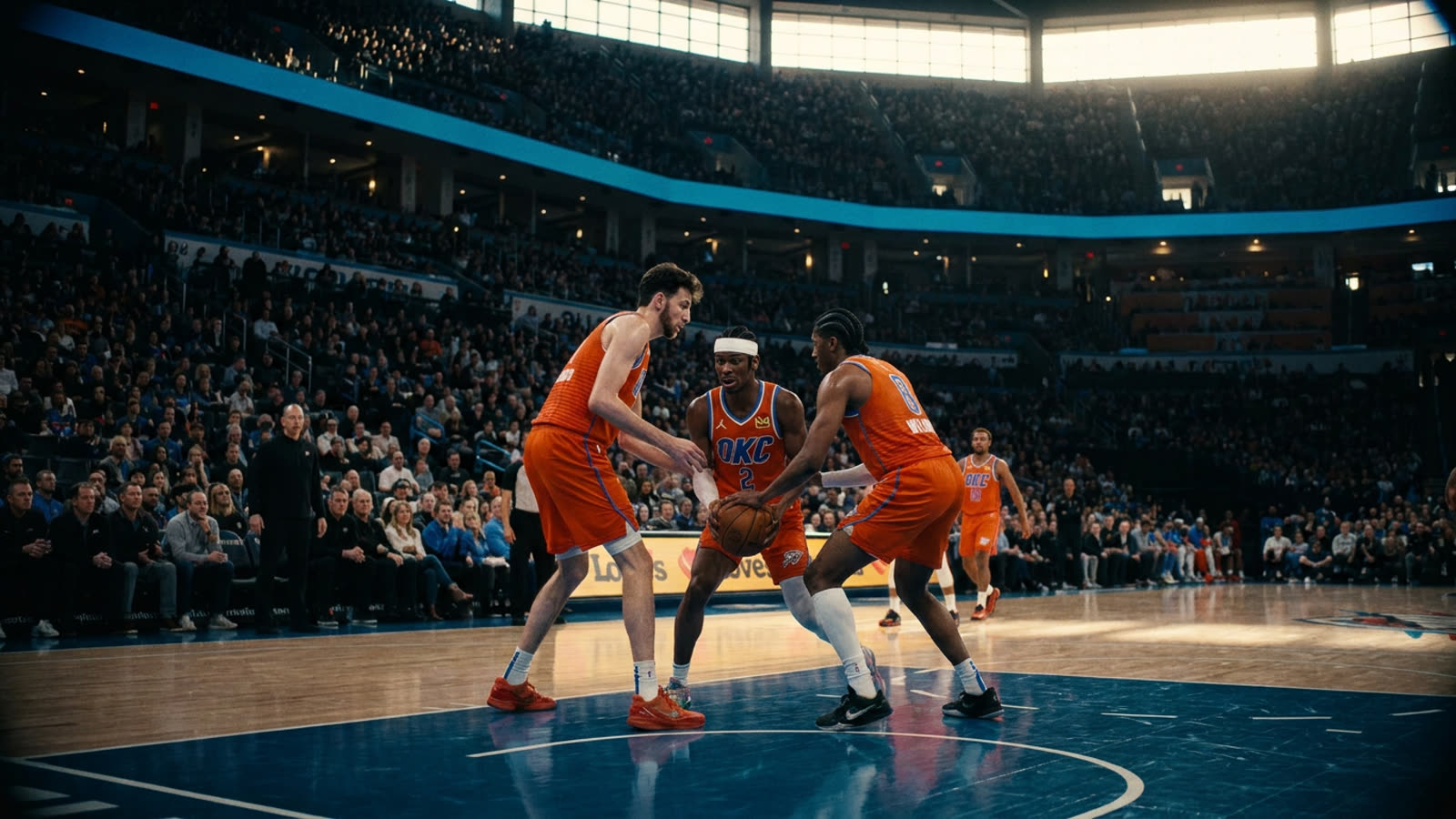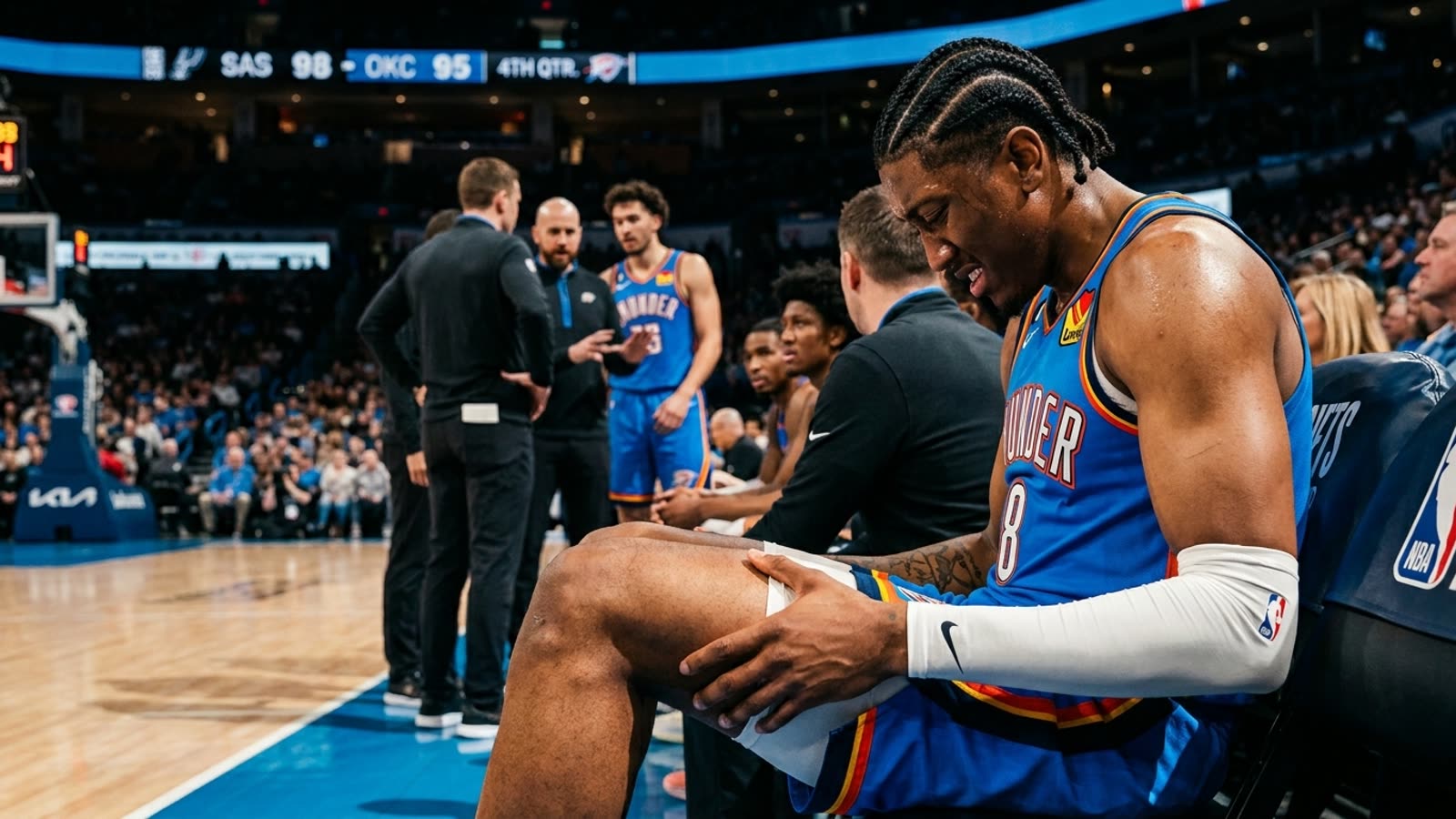
Sam Presti built the Oklahoma City Thunder to absorb precisely this kind of blow. For years, the architect of OKC's rebuild has preached roster construction over star accumulation, depth over top-heaviness, system over singular brilliance. Now, with Jalen Williams ruled out of Game 3 against the San Antonio Spurs due to a hamstring injury, Presti's philosophy faces its most consequential examination.
Williams, the 24-year-old All-Star who has emerged as the Thunder's most complete two-way player, represents exactly the kind of loss that separates contenders from pretenders in May. His absence against a Spurs team featuring Victor Wembanyama—whose defensive presence already complicates every possession—transforms a heated series into an existential test.
The depth theory meets playoff reality
The Thunder entered this postseason as betting favorites precisely because they appeared to have solved the depth problem that has plagued championship aspirants for decades. Unlike top-heavy rosters that collapse when a star goes down, OKC's rotation featured seven players averaging double-digit minutes who could credibly defend multiple positions. The theory was elegant: spread the load, minimize single points of failure, survive the grind.
But playoff basketball has a way of exposing theoretical elegance. Williams averaged 21 points, 6 rebounds, and 5 assists during the regular season while anchoring defensive schemes that neutralized opposing guards. More critically, he served as the connective tissue between Shai Gilgeous-Alexander's isolation brilliance and the Thunder's motion offense. Without him, OKC must find 35-plus minutes of production from players who have never carried such weight in a playoff environment.
San Antonio smells opportunity
The Spurs, who have exceeded every external expectation this postseason, now face a strategic windfall. Wembanyama's defensive impact—already substantial—becomes magnified when opponents lack the secondary playmakers to punish his help rotations. Gregg Popovich, whose tactical adjustments have befuddled younger coaching staffs throughout these playoffs, will surely scheme to force the ball into the hands of whichever Thunder player looks least comfortable under pressure.
The timing compounds the difficulty. Game 3 shifts to San Antonio, where the Frost Bank Center crowd has proven hostile enough to rattle experienced playoff performers. For Thunder reserves suddenly thrust into expanded roles, the combination of road atmosphere and heightened stakes creates conditions that have historically produced ugly basketball.
Our take
Presti deserves credit for building a roster that can theoretically survive this moment. But theories don't win championships—execution under duress does. The Thunder have preached organizational patience for nearly a decade, enduring rebuilding winters to position themselves for exactly this kind of playoff spring. If they cannot navigate a few games without Williams, all that patience was merely prologue to another premature exit. Oklahoma City's championship window remains open, but hamstring injuries have a way of making windows feel considerably smaller than they appeared the day before.