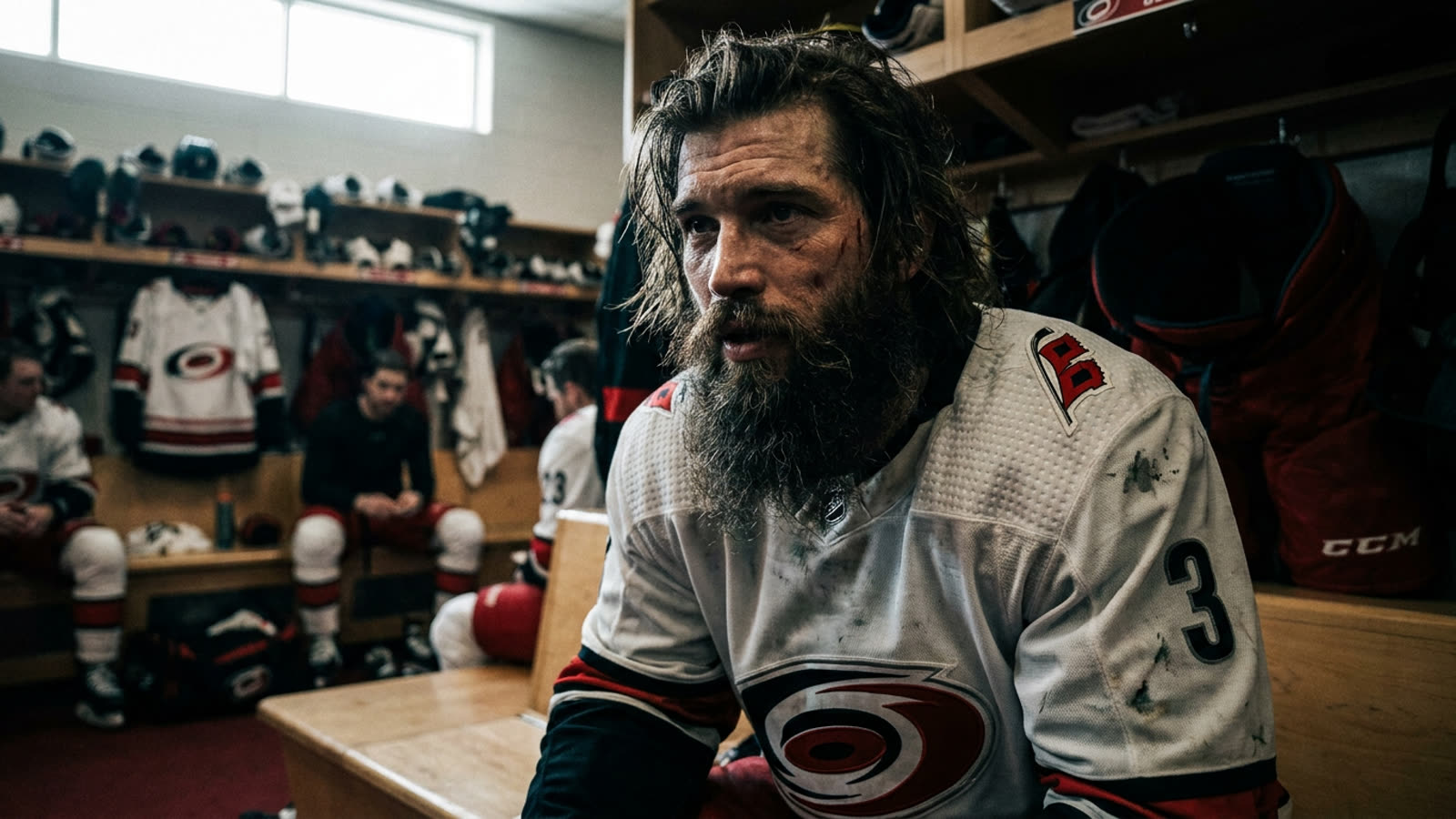
The Stanley Cup Playoffs have a way of manufacturing narratives, but Brent Burns didn't need any help. At 41, with a beard that has achieved sentient status and a playing style that defies actuarial tables, the Carolina Hurricanes defenseman has become the postseason's most improbable protagonist—a cult figure whose popularity transcends the usual tribal loyalties of hockey fandom.
Burns's journey to this moment is the kind of story the NHL rarely produces anymore. Traded to Carolina in 2022 when San Jose began its teardown, he was supposed to be a transitional piece, a veteran presence to mentor younger players while the Hurricanes figured out their long-term defensive core. Instead, he became the core.
The longevity anomaly
Defensemen in the NHL typically hit a wall somewhere around 36. The position demands too much skating, too much physicality, too much split-second decision-making for bodies to sustain elite performance into their forties. Burns has treated this conventional wisdom as a suggestion rather than a rule.
His ice time this postseason has actually increased from the regular season. He's logging north of 24 minutes per game, playing on the top power-play unit, and somehow looking faster than he did three years ago. The analytics community, which once questioned whether his offensive contributions outweighed his defensive lapses, has largely come around. His expected goals-against numbers have improved markedly since his San Jose days, suggesting either late-career adaptation or simply better team structure around him.
Why the hockey world adopted him
The Burns phenomenon isn't purely about performance. It's about aesthetics, personality, and timing. The beard—a wilderness unto itself—has become hockey's most recognizable visual signature. His gap-toothed smile and genuinely weird hobbies (exotic animals, taxidermy, off-grid living) make him feel like a character from a different era, when hockey players were allowed to be eccentric rather than media-trained into blandness.
Social media has amplified what might once have been regional affection into something approaching universal adoption. Opposing fans find themselves rooting for him even as he scores against their teams. It's the kind of crossover appeal that the NHL, perpetually struggling for mainstream attention, desperately needs but cannot manufacture.
Our take
Brent Burns won't play forever, though at this point it feels unwise to bet against him. What he's doing matters beyond Carolina's championship aspirations. He's demonstrating that professional sports' obsession with youth sometimes misses the value of players who have simply figured things out—who have accumulated enough reps to know where to be, when to pinch, how to read a play before it develops. The NHL would be wise to study his case rather than dismiss it as an outlier. In an era of load management and early retirements, Burns is making an argument for showing up, staying weird, and letting the beard grow.