Wars end in one of three ways: decisive victory, negotiated settlement, or mutual exhaustion that simply freezes the lines where they stand. The Israel-Hamas conflict, now approaching its third year, appears headed for the third option—and that may be the worst outcome for everyone involved, including the United States.
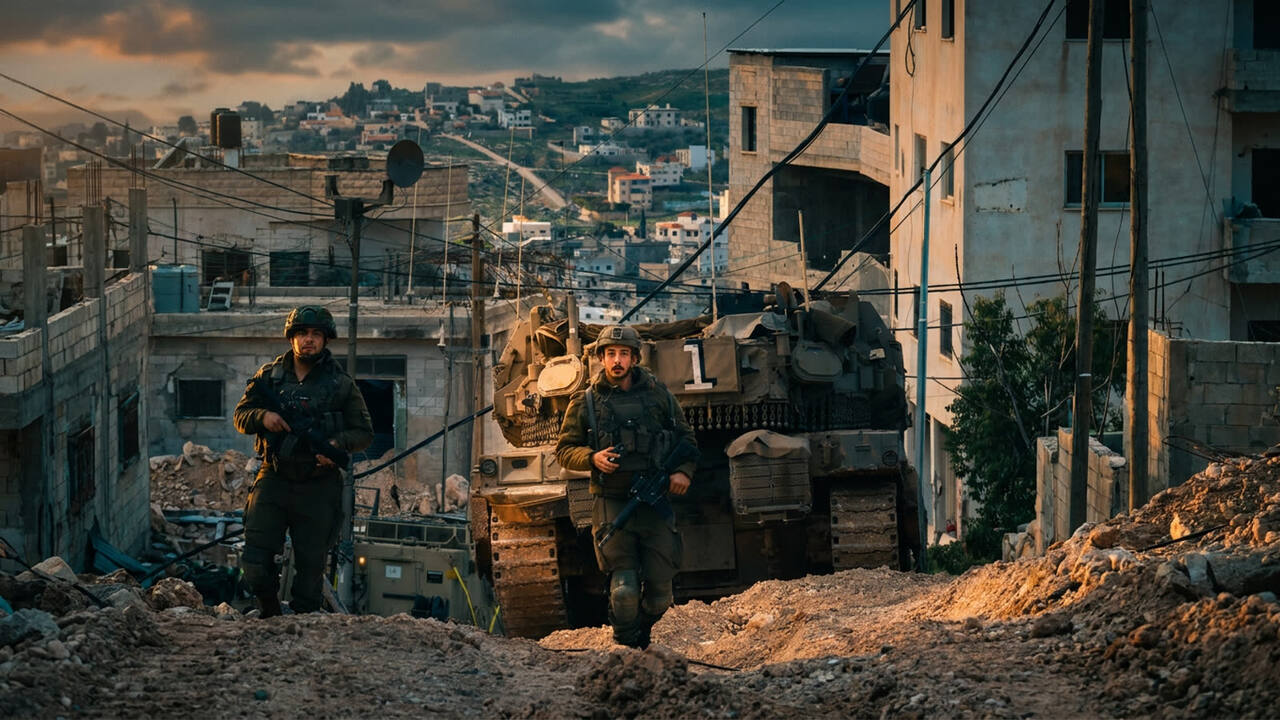
The fighting continues at a lower intensity than the devastating early months, but continues nonetheless. Israeli forces maintain operational presence in key corridors while Hamas, though degraded, has proven impossible to fully eradicate from Gaza's dense urban terrain. Hostages remain unaccounted for. Humanitarian conditions remain catastrophic. And the international community has largely moved on to fresher crises.
The attention deficit
The drift of global focus is understandable if not forgivable. The US-Iran confrontation, with its direct military exchanges earlier this year, commands headlines. The World Cup preparations consume diplomatic bandwidth. European elections and economic anxieties crowd out coverage of a conflict that has settled into grim routine.
But inattention does not mean irrelevance. The war's continuation shapes regional dynamics in ways that will outlast the current news cycle. Hezbollah's calculus in Lebanon, Iran's posture toward normalization talks, Saudi Arabia's willingness to proceed with Israeli rapprochement—all remain hostage to events in Gaza that fewer people are watching.
The exhaustion trap
Both primary combatants face constraints that make continuation costly but conclusion elusive. Israel's military has achieved tactical successes but cannot declare strategic victory while Hamas leadership survives and hostages remain captive. The domestic political pressure on Prime Minister Netanyahu's government has not abated, even as international pressure has somewhat diffused.
Hamas, for its part, has absorbed extraordinary losses but retains enough organizational coherence to deny Israel the clean ending it sought. The group's leadership, dispersed between Gaza, Qatar, and elsewhere, faces no immediate existential pressure to accept terms that would mean its political extinction.
The result is a conflict that grinds forward not because either side sees a path to victory, but because neither can accept the terms of defeat.
Our take
Frozen conflicts are not peaceful conflicts. They are merely conflicts that have stopped producing enough casualties to command attention, while continuing to produce enough to prevent healing. Gaza is becoming the Middle East's next forever war—a wound that never closes, a grievance that never resolves, a justification for the next round of violence that will eventually arrive. The world's distraction is not neutral; it is permission for this outcome. Someone with leverage needs to use it before exhaustion hardens into permanence.