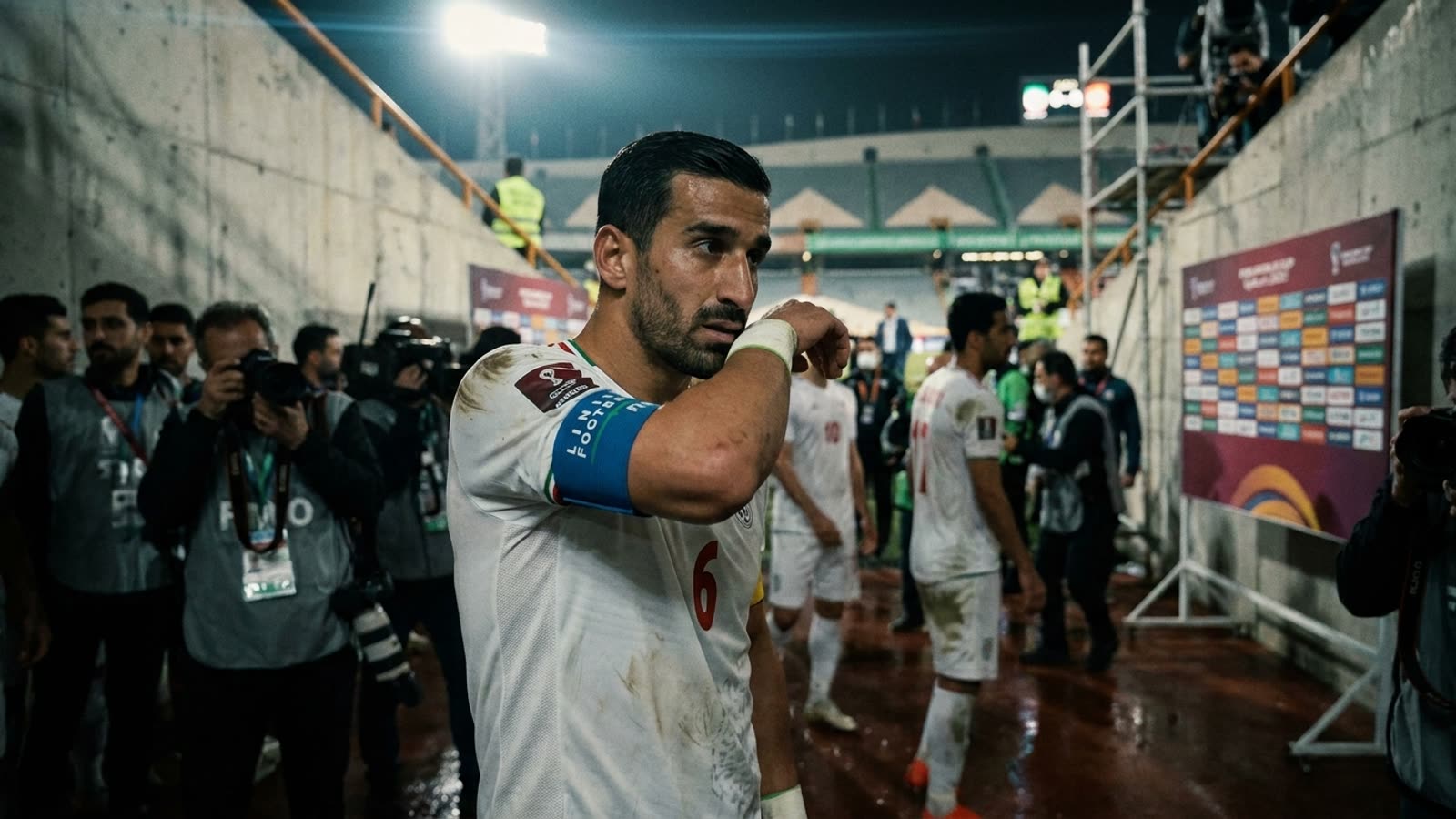
When Iran's captain Ehsan Hajsafi stood before reporters after his team's group-stage exit and declared that FIFA had staged a "disaster World Cup," he was doing what few active players dare: saying what half the tournament's participants are thinking.
The 36-year-old defender, playing in what is almost certainly his final World Cup, did not mince words. His accusation lands at a moment when the expanded 48-team format—implemented for the first time this summer—has exposed every structural weakness that critics predicted. Longer group stages, more dead-rubber matches, travel schedules that treat players like cargo, and a sense that the tournament has been stretched to accommodate sponsors rather than sport.
The logistics of exhaustion
Iran's complaint is not unique, merely the loudest. Teams from outside Europe and South America have borne the brunt of the expanded format's demands. The 2026 tournament, spread across the United States, Canada, and Mexico, has required some squads to traverse three time zones in a single group stage. Iran played their opener in Seattle, their second match in Atlanta, and their finale in Monterrey—a cumulative journey of more than 6,000 kilometers in twelve days.
Compare that to the European heavyweights, several of whom have enjoyed the convenience of matches clustered in the American Northeast or the Texas triangle. The scheduling, ostensibly neutral, has produced outcomes that look suspiciously like competitive advantage for the nations FIFA can least afford to disappoint.
The television imperative
Hajsafi's use of the word "staged" carries a particular sting. He was not alleging match-fixing; he was suggesting something more systemic—that the entire tournament has been choreographed for broadcast rather than competition. Kickoff times have been set to maximize European and American prime-time audiences, leaving African and Asian teams playing in the brutal midday heat of a North American summer. The 48-team format itself exists primarily because more matches mean more advertising inventory, more hospitality packages, more revenue streams for an organization that reported $7.5 billion in income for the current World Cup cycle.
FIFA president Gianni Infantino has dismissed such criticisms as the complaints of eliminated teams. But the pattern is difficult to ignore: the expansion has diluted quality, extended the tournament to seven weeks, and created a group stage where mathematical elimination often arrives before the third match has even kicked off.
Our take
Hajsafi will likely face a fine for his comments, perhaps a suspension from international football that his age makes irrelevant. But his willingness to speak has given voice to a sentiment that has been building since the expansion was announced in 2017. The World Cup was once football's purest expression—a month-long festival where every match mattered. The 2026 edition has revealed what happens when commercial logic overwhelms sporting logic. FIFA got the tournament it wanted. Whether anyone else did remains an open question.