Every democracy promises majority rule, yet majorities routinely fail to get what they want. Healthcare reform stalls. Climate legislation dies in committee. Tax codes remain fossilized for decades despite widespread public frustration. The culprit is rarely a single villain—it is the accumulated weight of veto players, the institutional actors whose agreement is required before any policy change can occur.
The concept, formalized by political scientist George Tsebelis in his landmark work on comparative politics, offers a deceptively simple insight: count the number of actors who can block change, measure how far apart their preferences sit, and you can predict whether a political system will produce bold reform or grinding stasis. A country with many veto players spread across the ideological spectrum will struggle to move in any direction. One with few, or with veto players who agree, can pivot sharply—for better or worse.
The arithmetic of paralysis
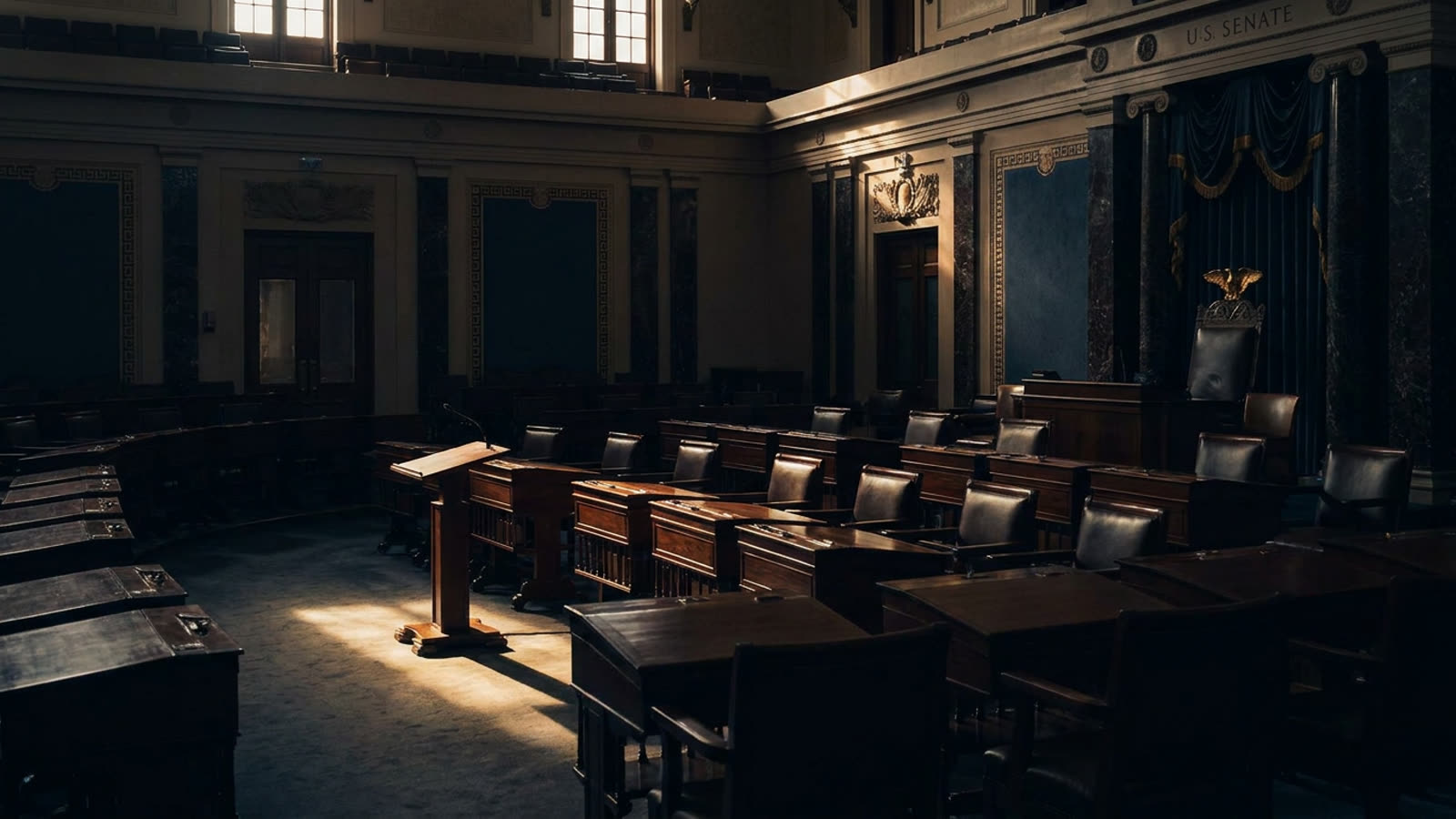
Consider the United States. A bill must survive the House, the Senate (including the practical requirement of sixty votes to overcome procedural hurdles), and the presidency. The Supreme Court can strike down what passes. State governments can refuse implementation. Each chamber is internally divided by committee chairs, party leadership, and individual holdouts who extract concessions. The American system was designed with veto players in mind—the founders called them "checks and balances"—but the sheer multiplication of blocking points means that policy windows open rarely and close fast.
Contrast this with Westminster systems. A British prime minister commanding a parliamentary majority faces almost no domestic veto players. The House of Lords can delay but not permanently block. The monarchy is ceremonial. Courts traditionally deferred to parliamentary sovereignty, though this has evolved. The result is a system capable of dramatic reversals: nationalization, privatization, Brexit—each enacted with speed that would be structurally impossible in Washington.
When veto players vanish
The framework cuts both ways. Systems with few veto players can reform quickly, but they can also unravel quickly. Hungary's constitutional structure concentrated power so thoroughly that a determined government could reshape the judiciary, media landscape, and electoral rules within a single term. Poland followed a similar trajectory before recent political shifts. The absence of veto players is not freedom—it is exposure.
Federal systems deliberately multiply veto players to protect regional interests. Germany's Bundesrat gives state governments direct blocking power over legislation affecting their competencies. Switzerland layers cantonal vetoes atop referenda requirements. These structures make sweeping national policy difficult by design, privileging stability and consensus over rapid action.
Coalition math and the hidden veto
In multiparty democracies, coalition partners become veto players by contract rather than constitution. A junior party holding fifteen percent of seats can block policy central to the senior partner's agenda simply by threatening to collapse the government. The Netherlands has seen cabinets fall over pension reform. Israel's fragmented Knesset has produced governments held hostage by single-issue parties commanding a handful of seats. The formal institutional map tells only part of the story; coalition agreements create invisible chokepoints that shift with each election.
Our take
The veto player framework is not a counsel of despair but a diagnostic tool. It explains why identical proposals succeed in one country and fail in another, why some reforms require crisis conditions to pass, and why institutional design matters as much as electoral outcomes. Citizens frustrated by gridlock often blame politicians' character when the structure itself is the constraint. Understanding where the veto points sit—and who occupies them—is the first step toward realistic expectations about what democracy can deliver, and how quickly.