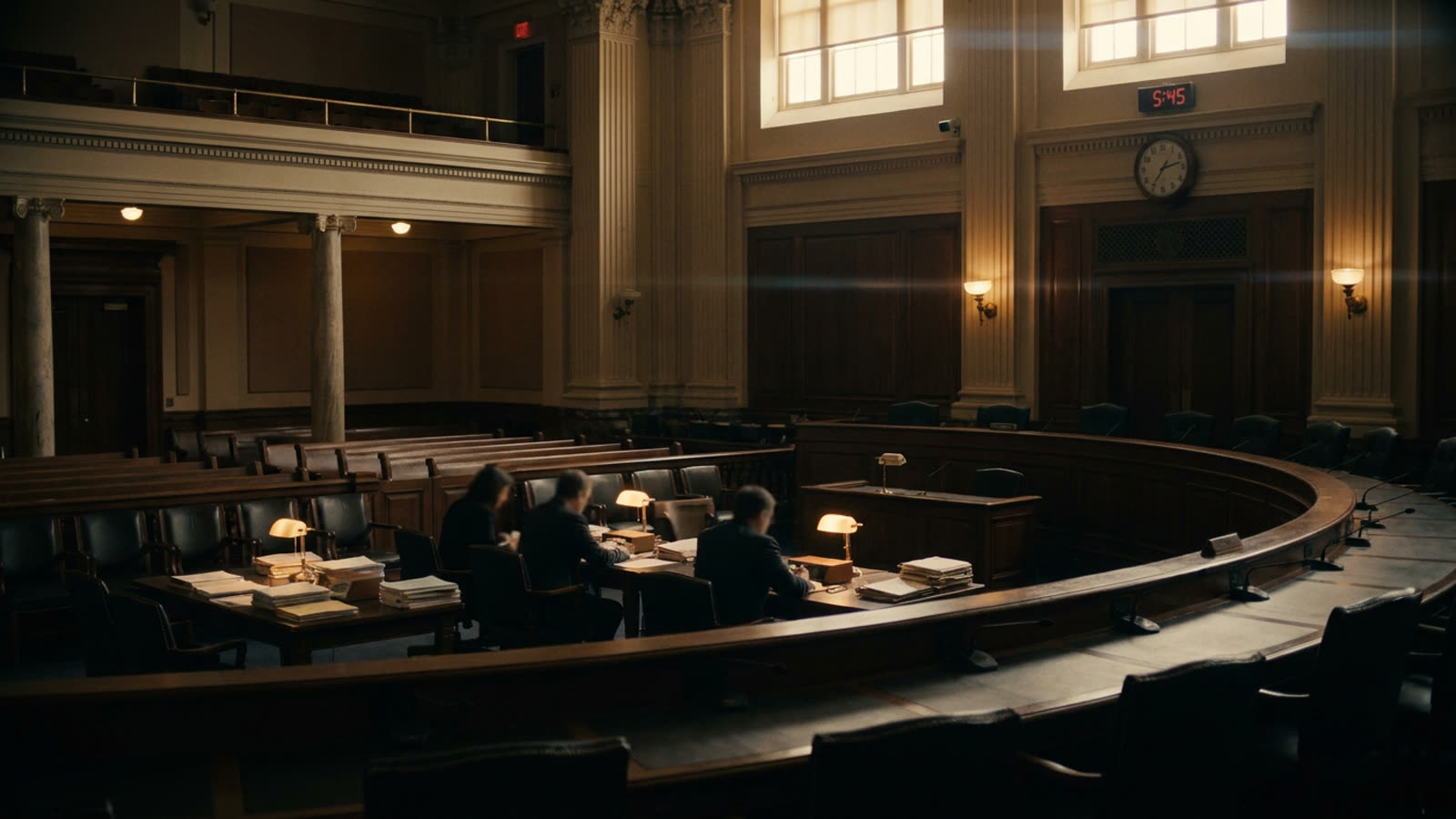
Most Americans picture the filibuster as a lone senator reading the phone book until dawn, a romantic act of legislative defiance. That version of the filibuster is largely extinct. What remains is something more peculiar: a procedural tripwire that allows the minority party to block legislation without speaking a single word, without staying on the floor, and without any personal cost whatsoever.
The modern filibuster is, in essence, a polite fiction. When a senator signals intent to filibuster, the majority leader typically does not force a talking filibuster. Instead, the Senate moves on to other business, and the contested bill simply languishes. The result is that sixty votes—not fifty-one—have become the de facto threshold for passing most legislation, despite the Constitution's silence on supermajorities for ordinary bills.
The accidental supermajority
The filibuster does not appear in the Constitution. It emerged from a procedural accident in 1806, when the Senate dropped a rule allowing simple-majority cutoff of debate. For decades, this mattered little; senators rarely exploited the loophole. The cloture rule, adopted in 1917, allowed two-thirds of senators to end debate, later reduced to sixty in 1975. But the critical transformation came in the 1970s, when the Senate adopted a two-track system permitting other business to proceed while a filibustered bill remained stalled. This innovation, intended to improve efficiency, inadvertently made filibustering costless. No more all-night sessions; no more physical endurance tests. Just a quiet objection and a supermajority requirement materializes.
The carve-outs multiply
If the filibuster were truly sacred, it would apply uniformly. It does not. Budget reconciliation, created in 1974, allows certain fiscal legislation to pass with fifty-one votes. Executive nominations and federal judges, including Supreme Court justices, now require only a simple majority after rule changes in 2013 and 2017. These exceptions reveal an uncomfortable truth: the Senate has repeatedly decided that some matters are too important to leave to the sixty-vote threshold, while others—voting rights, immigration reform, climate policy—apparently are not.
The mythology of minority protection
Defenders argue the filibuster protects minority viewpoints and encourages bipartisan compromise. The historical record is more complicated. For much of the twentieth century, the filibuster's most prominent use was blocking civil rights legislation. Strom Thurmond's twenty-four-hour speech against the 1957 Civil Rights Act remains the longest solo filibuster in history, a monument to obstruction rather than deliberation. Today's silent filibuster lacks even that theatrical commitment; it is obstruction without accountability, a veto exercised from the cloakroom.
Our take
The filibuster survives not because it works but because neither party trusts itself to govern without it when relegated to the minority. This mutual fear has calcified into institutional paralysis. The Senate could restore the talking filibuster tomorrow, forcing senators to hold the floor and bear public scrutiny for their obstruction. That it chooses not to suggests the quiet version serves everyone's interests except the public's. The filibuster is less a safeguard of deliberation than a monument to the Senate's preference for inaction dressed as principle.