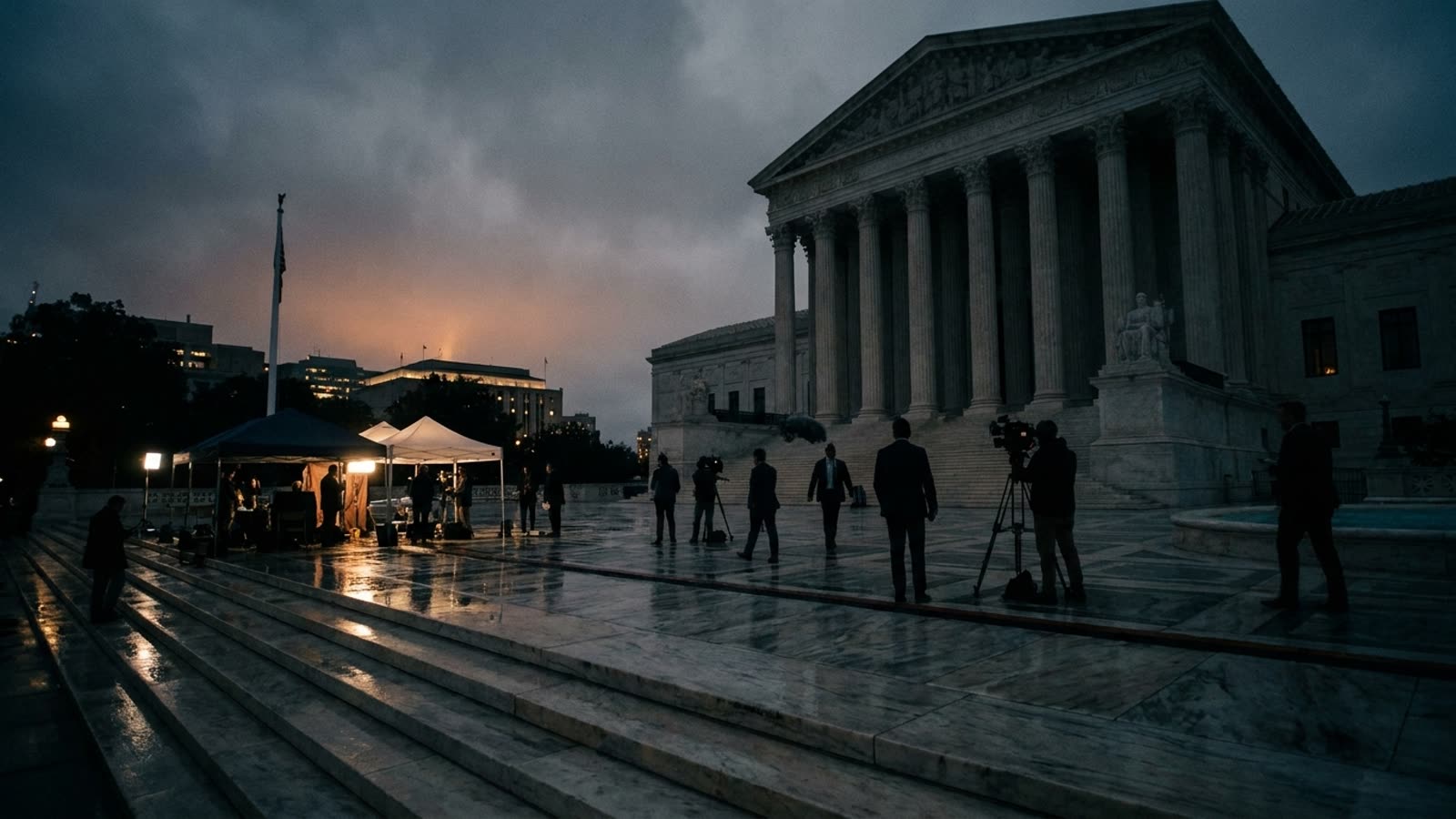
The popular image of Supreme Court oral arguments—passionate advocates swaying undecided justices with eloquence—is almost entirely fiction. By the time lawyers stand at the lectern, the justices have already read hundreds of pages of briefs, consulted with their clerks, and formed provisional views. What unfolds in that marble chamber is something far more subtle: a coded conversation among nine jurists who use questions to test theories, shore up votes, and lay rhetorical groundwork for opinions they will write months later.
The modern oral argument evolved into its current form largely after the 1970s, when the Court shifted from allowing hours of argument per case to the current model of tightly rationed time. Chief Justice Warren Burger introduced the white-light warning system—counsel gets a white light at five minutes remaining, a red light at time's end—that transformed advocacy into a high-wire act of interruption management.
The question as signal
Justices rarely ask questions to learn new information. Instead, they perform for an audience of eight colleagues. A pointed hypothetical from a conservative justice during a regulatory case is often an invitation to the Court's right wing to join a particular limiting principle. A series of questions from a liberal justice may be building a dissent, laying down markers for future litigation. Experienced advocates learn to recognize when a justice is not engaging with them at all, but rather drafting aloud.
The most consequential exchanges often involve justices interrogating the implications of their own coalition's logic. A swing vote testing whether a proposed rule would produce absurd results in edge cases is negotiating the scope of a future majority opinion in real time. The lawyer at the lecturis less advocate than prop in this judicial deliberation.
The solicitor general's special role
When the United States government appears as a party or amicus, the Solicitor General's office enjoys structural advantages that distort the theater. The SG's lawyers argue before the Court dozens of times per term, developing fluency in each justice's concerns and rhetorical tics. They also benefit from institutional deference—justices are more likely to credit the government's representations about how a ruling will affect federal operations. This repeat-player advantage means the SG's office wins a disproportionate share of cases, not through superior argument but through accumulated credibility and strategic case selection.
The rise of the "hot bench"—where all nine justices pepper counsel with questions from the opening sentence—has made oral argument more gladiatorial but less informative. Advocates now spend their preparation gaming out question trees rather than crafting affirmative narratives. The result is a session that feels urgent and combative but rarely changes outcomes.
Our take
The Supreme Court could abandon oral arguments tomorrow with little loss to jurisprudence—the briefs contain everything that matters, and justices' questions reveal more about internal Court dynamics than about case merits. But the institution will never give up the ritual, because oral argument serves a different function: it creates the appearance of adversarial testing that legitimates decisions already reached. The theater is the point. What looks like persuasion is really just the visible surface of a negotiation happening in chambers, over drafts, in the margin notes that the public never sees. Understanding this does not diminish the Court's work—it clarifies it. The law is made in writing, but the performance matters for reasons that have nothing to do with changing minds.