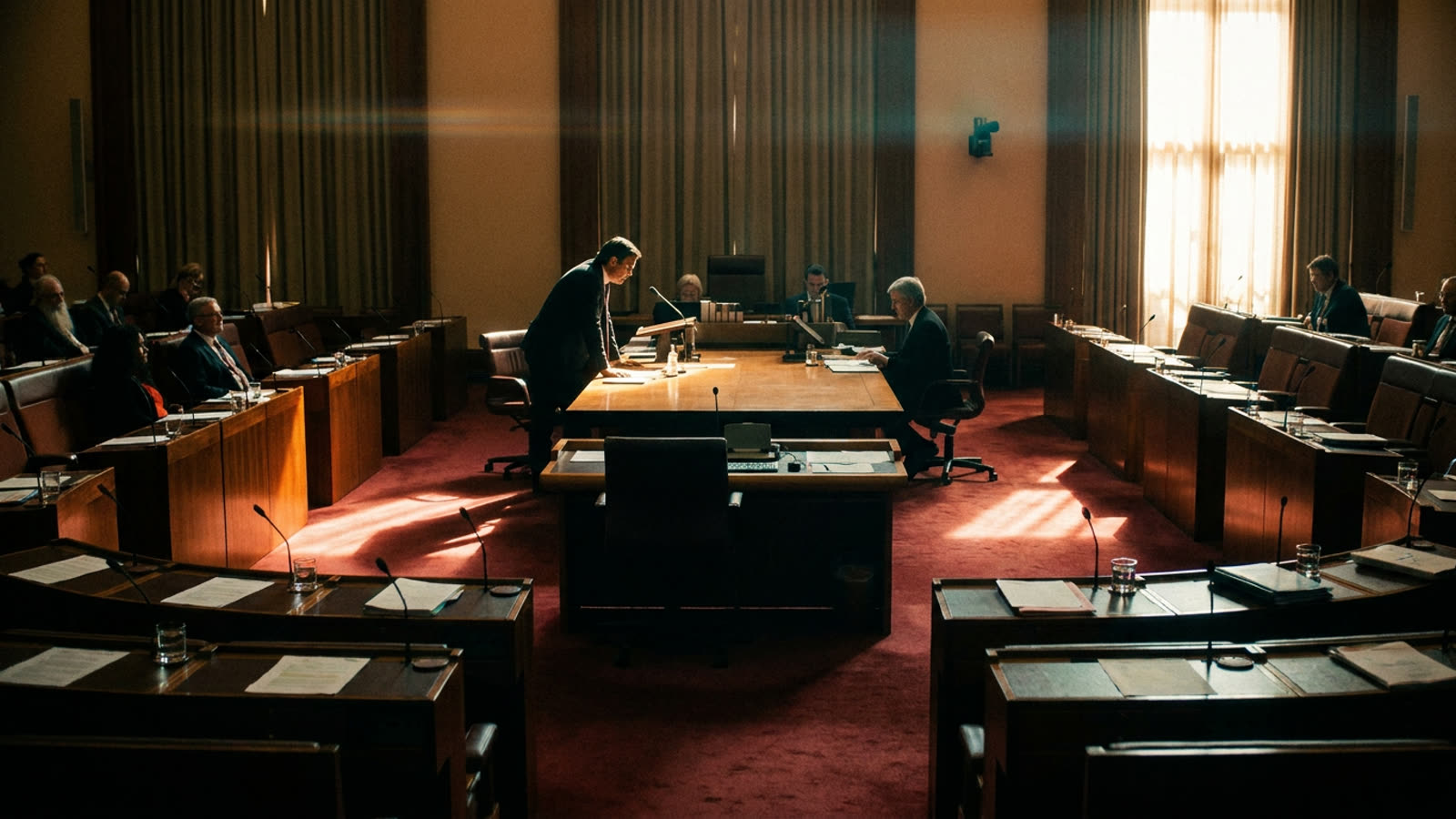
In the popular imagination, elections produce winners and losers, and winners govern. The reality across parliamentary democracies is messier and, arguably, more interesting: a substantial number of governments rule without commanding a majority of seats, surviving instead on the sufferance of smaller parties who agree not to bring them down. This is the confidence and supply arrangement, a constitutional halfway house between full coalition and minority chaos that has shaped policy from Dublin to Wellington to Ottawa.
The mechanism is deceptively simple. A minor party pledges to vote with the government on two specific matters: confidence motions (which, if lost, would trigger the government's fall) and supply bills (the budget and spending authorizations without which the state cannot function). Beyond those commitments, the supporting party retains its freedom to oppose, amend, or abstain on everything else. The government stays in office; the junior partner stays out of cabinet.
Why parties choose this awkward dance
For the larger party, confidence and supply offers the prize of governing without the price of sharing ministries or diluting its brand. For the smaller party, the calculus is subtler. Entering a full coalition often proves electorally fatal—junior partners tend to receive blame for compromises while the senior partner claims credit for achievements. The British Liberal Democrats learned this painfully after their 2010-2015 coalition with the Conservatives, losing forty-nine of their fifty-seven seats. Confidence and supply allows a party to extract concessions while maintaining a distinct identity and the freedom to criticize.
The 2017 arrangement between the UK Conservatives and Northern Ireland's Democratic Unionist Party illustrates the leverage involved. The DUP's ten MPs secured over one billion pounds in additional funding for Northern Ireland in exchange for keeping Theresa May's government afloat. Critics called it a bribe; the DUP called it good negotiating. Either way, a tiny parliamentary bloc had extracted resources wildly disproportionate to its size.
The inherent fragility
Confidence and supply governments walk a permanent tightrope. Every controversial bill becomes a potential crisis. The supporting party faces constant pressure from its own base to extract more or walk away. Governments must legislate cautiously, often pre-negotiating with their nominal opponents before bills reach the floor. This can produce moderation—or paralysis.
New Zealand's experience offers a useful contrast. The country's mixed-member proportional system has made outright majorities rare since 1996, and confidence and supply has become almost routine. Successive governments have learned to manage these arrangements with relative stability, suggesting that institutional experience and political culture matter as much as the formal rules. What feels like crisis in Westminster can feel like normal politics in Wellington.
Our take
Confidence and supply deserves more attention than it receives. In an era when polarization makes coalition-building harder and voters punish parties seen as sellouts, this arm's-length arrangement offers a pressure valve. It is not elegant, and it invites accusations of horse-trading and instability. But it also forces governments to negotiate, to moderate, and to earn their survival vote by vote. For democracies where no single vision commands majority support, that may be less a bug than a feature—a reminder that governing without consensus requires something rarer than a mandate: the daily practice of persuasion.