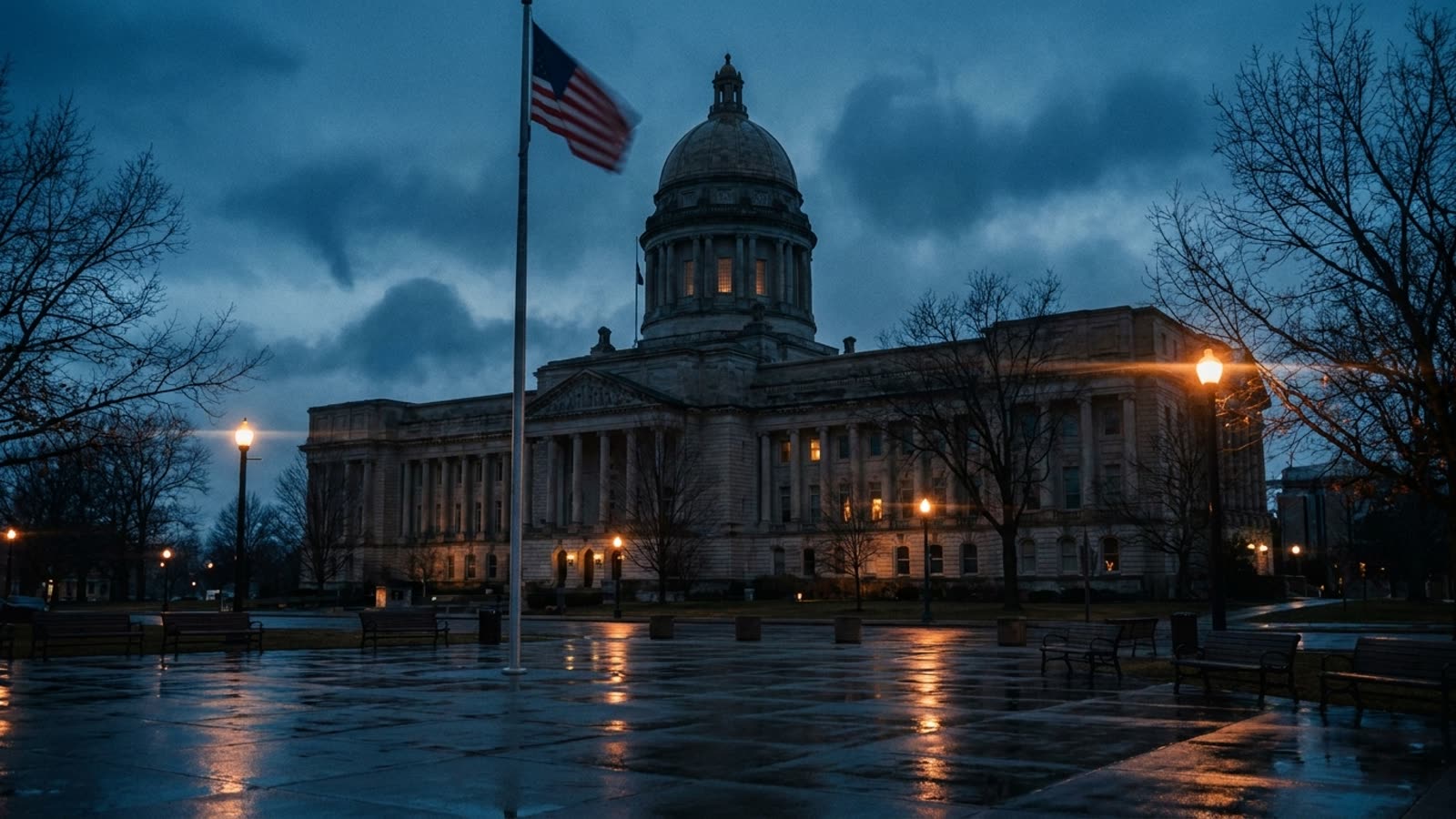
The most consequential political decisions affecting ordinary Americans are made by people most Americans cannot identify, in buildings most Americans have never entered, during sessions most Americans do not know are occurring.
State legislatures—those 7,383 seats spread across 50 capitols—determine how congressional districts are drawn, how elections are administered, how schools are funded, how roads are built, whether you can carry a concealed weapon, and whether your employer must provide paid leave. They ratify constitutional amendments. They can, in certain circumstances, choose presidential electors. They are, by any reasonable measure, the load-bearing walls of American democracy. And they operate in near-total obscurity.
The attention deficit
The asymmetry between power and scrutiny is staggering. A single tweet from a backbench member of Congress generates more coverage than an entire legislative session in most states. Local newspapers, which once stationed reporters in state capitols year-round, have largely withdrawn. The result is a vacuum filled by lobbyists, ideological activists, and legislators themselves—who increasingly arrive pre-polarized through party pipelines rather than local political ecosystems.
This matters because state legislatures are where policy actually gets written. Congress passes a few dozen public laws per term; state legislatures collectively pass tens of thousands. The federal government sets broad parameters; states fill in the operational details that determine whether those parameters mean anything. Medicaid expansion, voting access, abortion availability, cannabis legalization, police accountability—all of these have become patchworks precisely because state legislatures, not Congress, hold the relevant levers.
The redistricting lever
No power matters more than drawing district lines. In most states, the legislature itself controls this process, meaning the people who benefit from certain maps are the same people who draw them. The incentives are obvious and the results predictable: districts that protect incumbents, entrench majorities, and reduce competitive races to a handful of swing seats. Reformers have pushed independent commissions in some states, with mixed results. But the fundamental reality remains: whoever controls the state legislature after a census controls the shape of American democracy for the following decade.
This is why national parties pour resources into state races during census years. It is why certain state legislative elections—often decided by a few thousand votes—carry consequences that ripple through federal politics for a generation.
The professionalization gap
State legislatures vary wildly in their capacity. California's is a full-time operation with substantial staff; New Hampshire's pays legislators $100 per year and convenes part-time. This creates enormous disparities in legislative quality. Part-time citizen legislators may sound appealingly democratic, but they often lack the bandwidth to scrutinize complex legislation, leaving that work to lobbyists and executive agencies. Full-time legislatures can become insular professional classes disconnected from constituents. Neither model is obviously superior, but the variation means that "state legislature" describes vastly different institutions depending on where you live.
Our take
The fixation on Washington is understandable—the president is a single character in a comprehensible narrative—but it is also a category error. American federalism means that the texture of daily life is shaped primarily at the state level, by officials who face minimal accountability because almost no one is watching. If you want to understand why American policy varies so dramatically from state to state, why certain reforms seem perpetually stalled, and why gerrymandering persists despite broad public opposition, the answer is not in Congress. It is in the building downtown that you drive past without noticing, where a few hundred people you have never heard of are making decisions that will outlast any presidency.