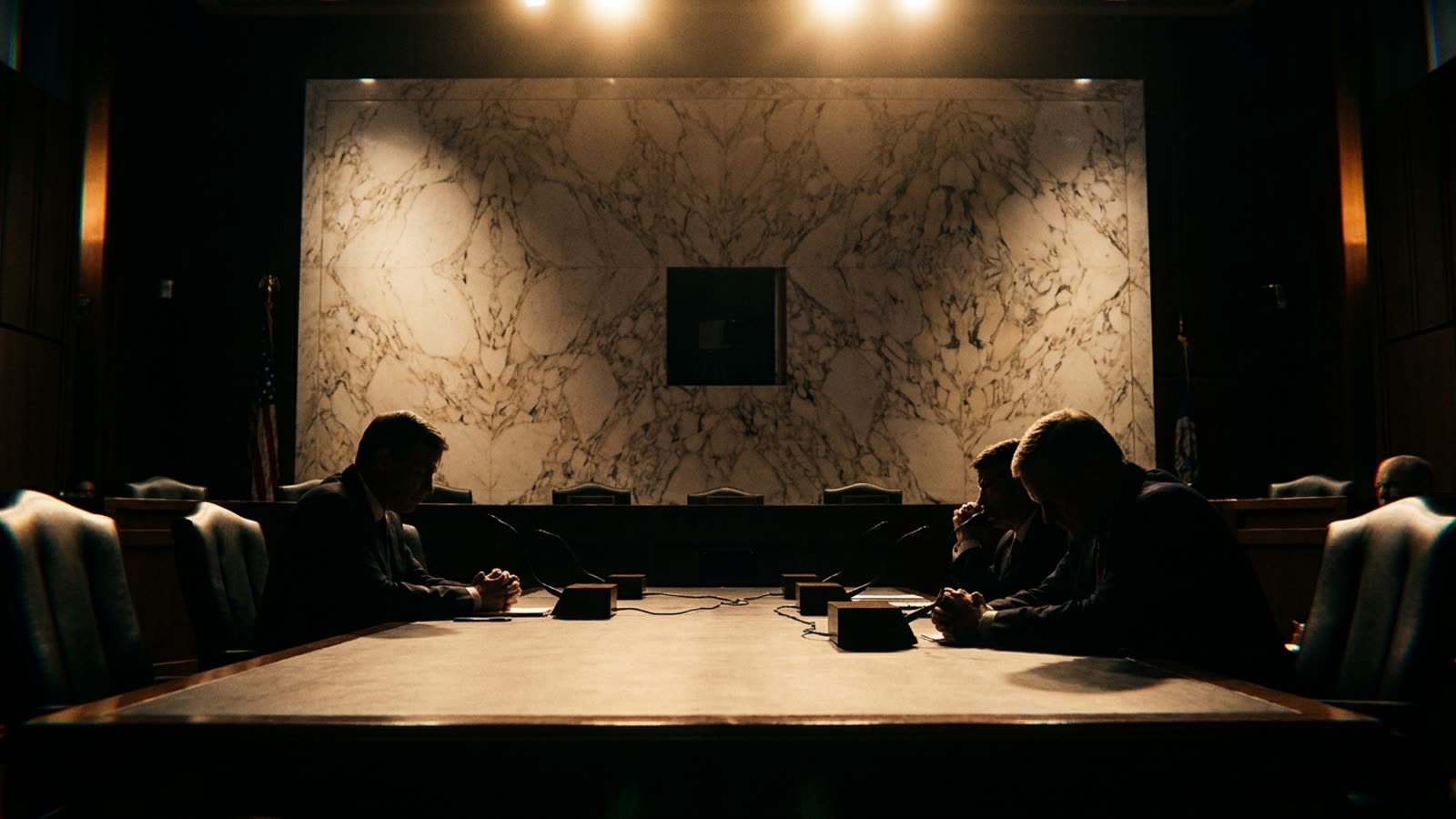
The Senate Select Committee on Intelligence and its House counterpart occupy a peculiar position in American democracy: they are among the most powerful bodies in Congress, yet most citizens cannot name a single member. They receive briefings on operations that will never appear in newspapers, vote on budgets that remain classified for decades, and exercise oversight over agencies that have, at various points in history, toppled governments, surveilled American citizens, and conducted assassinations. The intelligence committees are where the constitutional theory of checks and balances meets the operational reality of a superpower's shadow work.
Their strangeness is structural. Unlike most congressional committees, which accumulate institutional knowledge through long-tenured members, the intelligence committees enforce term limits — typically eight years — to prevent any single legislator from becoming too embedded with the agencies they oversee. The theory is sound: rotation prevents capture. The practice is messier. By the time a member truly understands the baroque architecture of the intelligence community, they are often rotating off.
The architecture of secrecy
The committees operate in Sensitive Compartmented Information Facilities, windowless rooms where members surrender their phones and staff access is severely restricted. This creates an information asymmetry that shapes everything. A senator on the Armed Services Committee can bring a dozen staffers into a hearing; a senator on the intelligence committee might have two cleared aides who can follow the full conversation. The agencies being overseen often know more about the committee's internal deliberations than the committee knows about the agencies.
This asymmetry compounds over time. The CIA, NSA, and other agencies maintain dedicated congressional liaison offices staffed by career professionals who have spent years learning which members respond to which arguments. Committee members, meanwhile, juggle intelligence work alongside their other responsibilities, rarely developing the same institutional fluency.
The power of the purse, obscured
The committees' most significant power is budgetary. The intelligence community's annual budget — the precise figure remains classified, though it is widely understood to exceed $90 billion — flows through these committees before reaching the full appropriations process. But even here, the power is constrained. Much of the budget is locked into multi-year programs, personnel costs, and infrastructure that cannot be easily adjusted. A committee member who objects to a particular surveillance program may find that the technical systems, contractor relationships, and trained personnel represent sunk costs that make termination more expensive than continuation.
The committees also receive notifications of covert actions, a requirement established after the Church Committee revelations of the 1970s exposed decades of unaccountable operations. In theory, this gives Congress a check on executive adventurism. In practice, notification often comes after operations are well underway, and the committees have limited ability to halt programs they find objectionable without public disclosure that could compromise sources and methods.
The bipartisan exception
Perhaps the most remarkable feature of these committees is their historical bipartisanship. While the rest of Congress has polarized dramatically, the intelligence committees have generally maintained a culture of cross-party cooperation — not out of sentiment, but necessity. Partisan warfare over classified information creates risks that both parties have traditionally sought to avoid. When that norm has broken down, as it did during certain high-profile investigations in recent years, the committees' effectiveness has visibly suffered.
Our take
The intelligence committees represent American democracy's awkward compromise between self-governance and operational secrecy. They are neither the robust oversight mechanism their defenders claim nor the rubber stamps their critics allege. They are something more interesting: institutions that reveal how power actually operates when constitutional ideals collide with the requirements of running a global intelligence apparatus. Understanding their limitations is not cause for cynicism but for clearer thinking about what democratic accountability can and cannot achieve in the shadows.