The framers of the American Constitution anticipated many threats to republican government — foreign invasion, executive tyranny, factional capture — but they did not foresee that the simple act of drawing lines on a map would become the republic's most consequential political act. Gerrymandering, the practice of manipulating electoral district boundaries to favor particular parties or groups, has evolved from an 18th-century expedient into a sophisticated science that now shapes the composition of legislatures before a single ballot is cast.
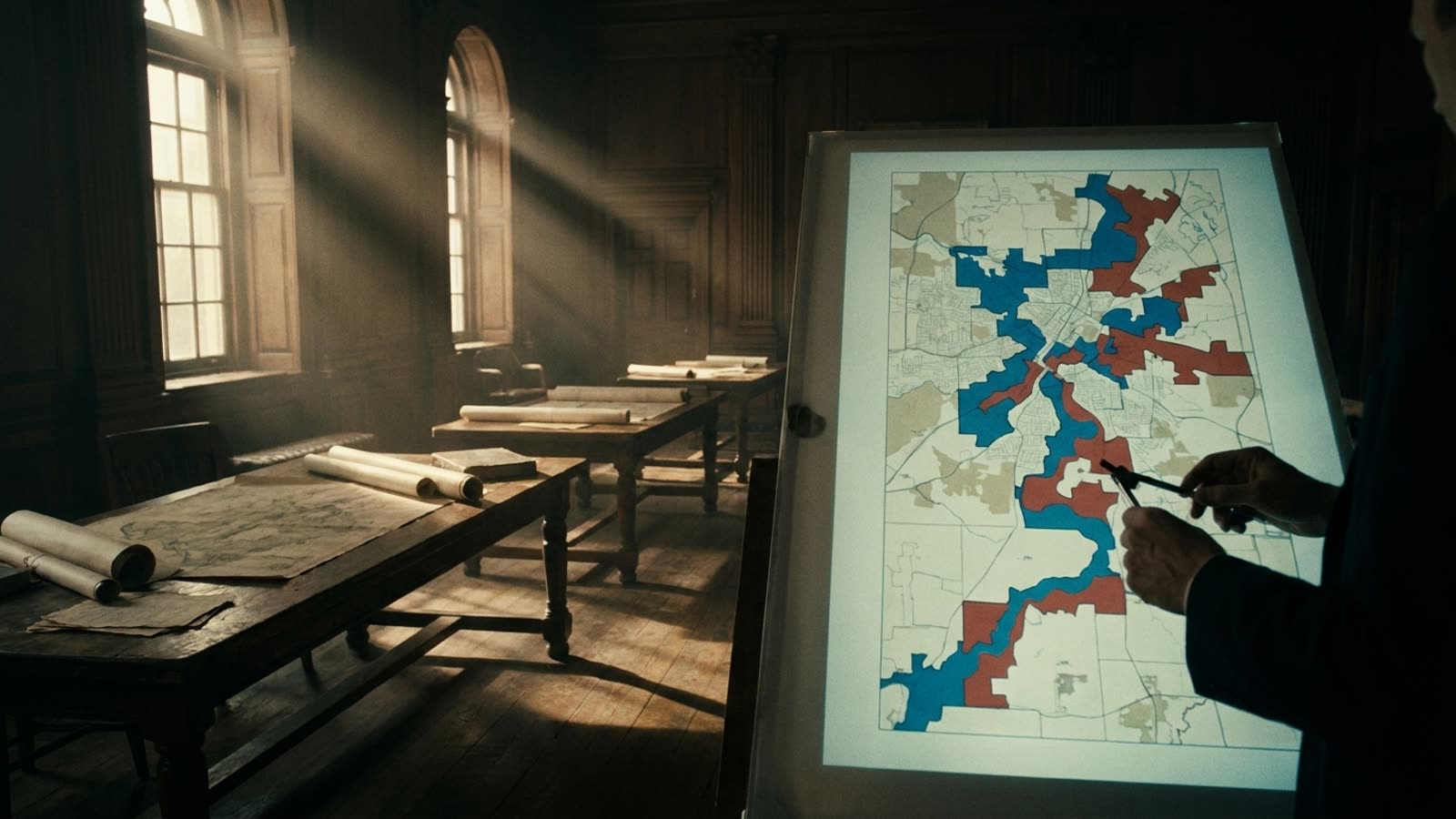
The term itself dates to 1812, when Massachusetts Governor Elbridge Gerry signed a redistricting plan that created a district so contorted it resembled a salamander. A Boston newspaper dubbed the creature a "Gerry-mander," and the portmanteau stuck. But the practice predates its naming by decades, and its logic is elegantly brutal: by concentrating your opponent's voters into a few districts ("packing") or spreading them thinly across many ("cracking"), you can translate a minority of votes into a majority of seats.
The decennial ritual
American redistricting follows the census, conducted every ten years. Once population counts are certified, states must redraw their congressional and state legislative districts to reflect demographic shifts. In most states, this task falls to the state legislature itself — meaning the politicians who benefit from district lines are the same ones drawing them. The fox, as the saying goes, guards the henhouse.
The process has grown increasingly precise. Modern mapping software allows line-drawers to analyze voter behavior at the household level, incorporating data on party registration, voting history, race, income, and consumer preferences. A skilled cartographer can now predict with startling accuracy how a district will vote years into the future. The result is a kind of electoral predestination: representatives choose their voters rather than voters choosing their representatives.
Why it matters beyond partisanship
Gerrymandering's most obvious effect is partisan advantage, but its subtler consequences may be more corrosive. Safe districts — those drawn to guarantee one party's victory — eliminate meaningful general elections. When the primary becomes the only competitive race, candidates face incentives to appeal to their party's most committed voters rather than the broader electorate. This structural pressure toward ideological purity helps explain why compromise has become a dirty word in American politics.
The practice also intersects uncomfortably with race. The Voting Rights Act of 1965 required the creation of "majority-minority" districts to ensure Black and Latino voters could elect representatives of their choice. But packing minority voters into a few districts can simultaneously satisfy legal requirements and dilute their influence elsewhere. Courts have struggled for decades to distinguish permissible race-conscious redistricting from unconstitutional racial gerrymandering — a distinction that often seems to depend more on the composition of the bench than on any clear legal principle.
Reform and its discontents
Several states have attempted to remove redistricting from legislative control. Independent commissions now draw lines in California, Arizona, Michigan, and a handful of other states, with mixed results. These bodies can reduce the most egregious partisan manipulation, but they cannot eliminate politics from an inherently political process. Commissioners must still make choices about which communities to keep together, how to balance competing legal requirements, and what "fairness" means in a system designed for single-member districts.
The Supreme Court has largely declined to intervene. In 2019, the Court ruled that federal courts cannot adjudicate claims of partisan gerrymandering, calling such questions "political" rather than legal. The decision effectively blessed the practice at the federal level, leaving reform to state courts, state constitutions, and the uncertain mercies of ballot initiatives.
Our take
Gerrymandering persists because it works — not for democracy, but for the politicians who practice it. Both parties gerrymander when they can; the difference is merely one of opportunity. Until Americans decide that competitive elections are more valuable than guaranteed victories, the map will continue to determine the message. The framers built a system of checks and balances, but they forgot to check the cartographers.