The most consequential decisions in representative democracy often happen in rooms without cameras, made by people whose names appear in no campaign advertisement. Redistricting — the decennial ritual of redrawing legislative boundaries to reflect population shifts — is among the least glamorous and most powerful forces in modern politics. Whoever controls the lines controls, to a remarkable degree, the outcome of elections before a single vote is cast.
The mathematics of manufactured majorities
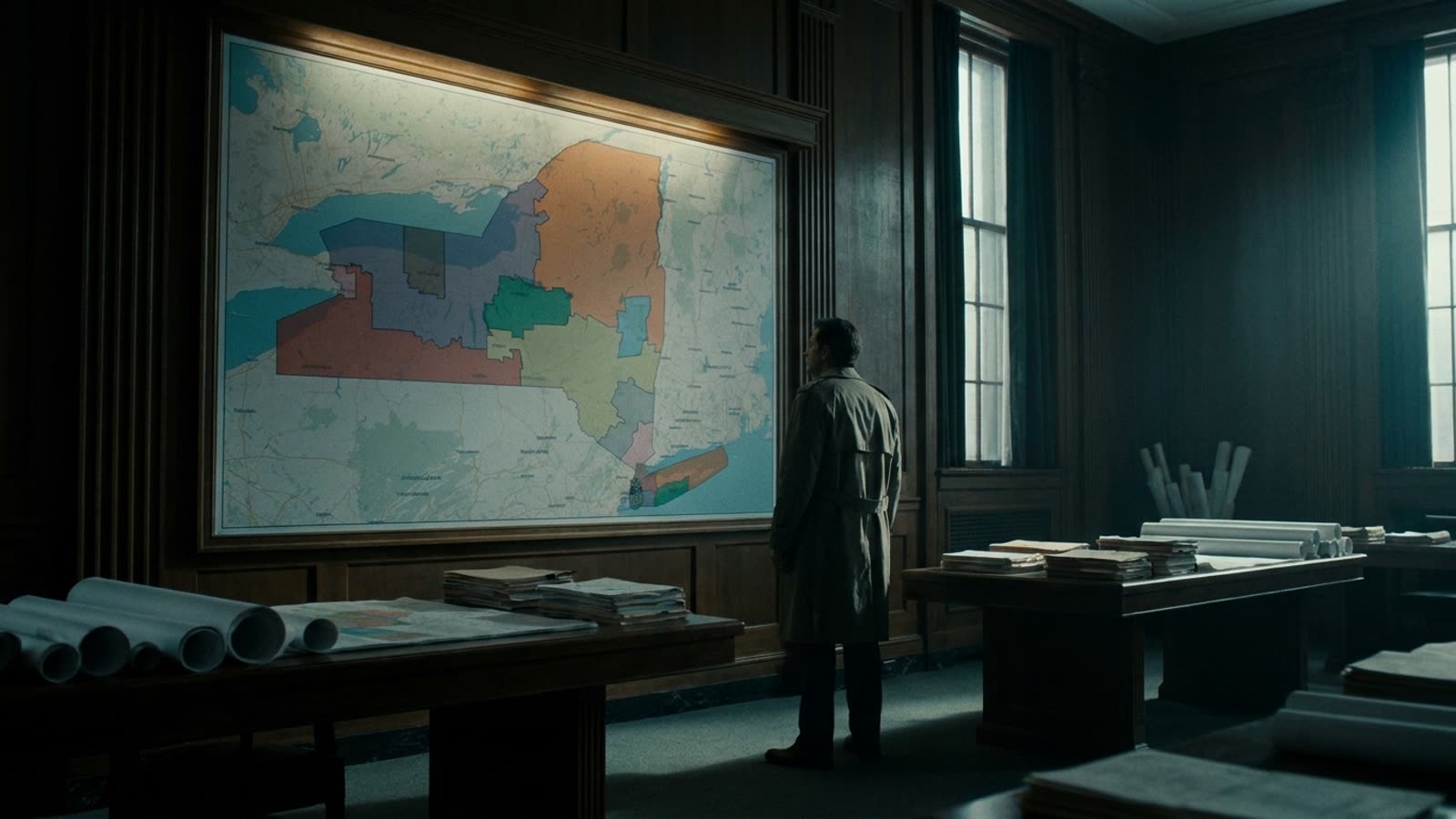
The principle is simple: legislative seats represent geographic areas, and those areas must be redrawn as populations move. The practice is anything but. In most systems, the party that controls the redistricting process can "pack" opposition voters into a small number of districts they win overwhelmingly, while "cracking" the remainder across many districts where they form ineffectual minorities. A party winning forty-five percent of votes statewide can, through artful cartography, secure sixty percent of seats.
The United States offers the starkest laboratory. After each census, state legislatures in most states redraw their own congressional and state legislative maps — an arrangement critics compare to letting football teams design the pitch mid-match. The 2010 Republican sweep of state houses, timed perfectly before redistricting, produced a decade of structural advantage that persisted through multiple election cycles where Democrats won more total votes but fewer seats.
The reform archipelago
Some democracies have removed the fox from the henhouse. Australia's independent electoral commissions, Canada's non-partisan boundary agencies, and the United Kingdom's Boundary Commissions operate with varying degrees of insulation from partisan pressure. Their maps still generate controversy — no line is truly neutral — but the process at least aspires to fairness rather than advantage.
Within the United States, California's Citizens Redistricting Commission, created by ballot initiative, represents one model: fourteen randomly selected citizens, balanced by party registration, draw maps with explicit prohibitions on protecting incumbents. Arizona, Colorado, and Michigan have adopted variations. Yet most states retain politician-controlled processes, and recent Supreme Court rulings have largely declined to police partisan excess, holding that federal courts lack manageable standards to adjudicate such claims.
Why reform struggles
The fundamental obstacle is that those with power to reform redistricting are precisely those who benefit from the status quo. Proposing independent commissions requires legislators to vote against their own job security. Ballot initiatives offer an end-run, but only in states that permit them — and even successful initiatives face legal challenges and implementation battles.
Moreover, redistricting's effects are diffuse and delayed. Voters experience the symptoms — uncompetitive elections, polarized representatives, legislative gridlock — without connecting them to boundary lines drawn years earlier. The issue lacks the emotional immediacy of healthcare or taxation, making it a poor vehicle for political mobilization despite its structural importance.
Our take
Redrawing maps is not a procedural footnote; it is the architecture of representation itself. The quiet rooms where boundaries are negotiated deserve the scrutiny reserved for Supreme Court nominations and constitutional amendments. Until democracies treat line-drawing as the high-stakes power struggle it actually is, they will continue wondering why their legislatures feel so disconnected from their electorates. The answer is often hiding in plain sight, etched into the cartography.