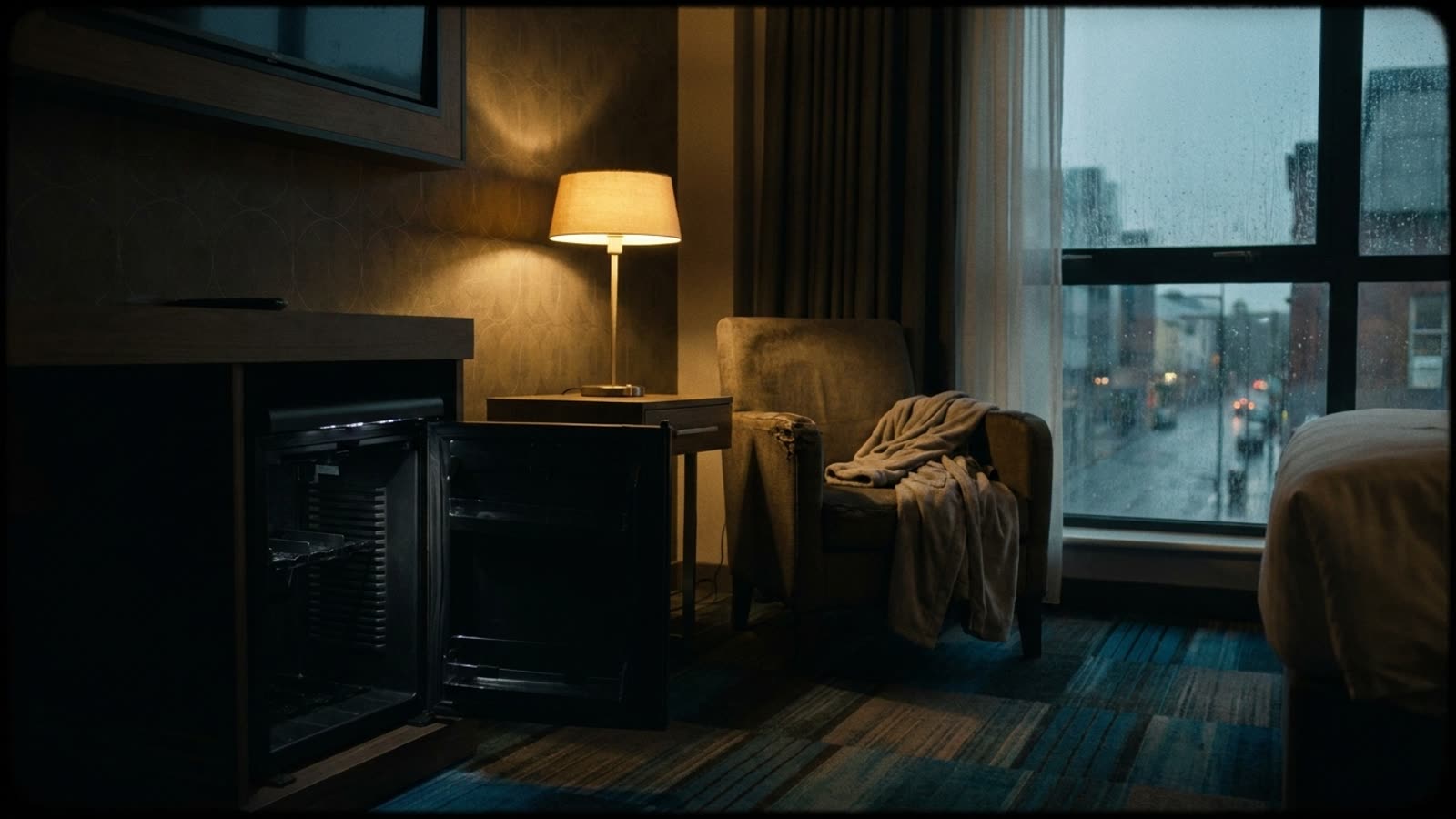
The minibar was never really about convenience. It was about the fantasy of consequence-free consumption — the notion that at two in the morning, in a room you're paying handsomely to occupy, you might reach for a seven-dollar Toblerone without doing the math. Hotels understood this psychology perfectly. They also understood that most guests would do the math anyway, feel vaguely insulted, and raid the vending machine down the hall.
The result is a fixture that has spent decades annoying more customers than it delights, while generating surprisingly thin margins for the properties that stock them. The minibar's slow disappearance from hotel rooms tells a larger story about how hospitality's old revenue tricks are failing in an age of transparent pricing and shifting guest priorities.
The economics never quite worked
Hotel minibar revenue peaked in the early 2000s and has declined steadily since. The reasons are structural. Restocking requires labor — someone must physically check each room, note what's missing, replace items, and update billing systems. Spoilage is constant. Theft and billing disputes are endemic. The sensor-equipped smart minibars introduced in the mid-2000s, which automatically charged guests for removing items, created their own problems: guests who merely examined a product found surprise charges on their bills, generating complaint volumes that often exceeded the revenue collected.
Meanwhile, the markup model that made minibars theoretically attractive — selling a two-dollar bottle of water for eight — backfired as travelers grew more price-conscious and comparison-enabled. A guest who has just used an app to find the best room rate is not psychologically primed to pay quadruple retail for peanuts.
The hospitality pivot
Smarter hotel brands have recognized that the minibar's real estate is more valuable as a gesture than as a profit center. Many boutique and upper-midscale properties now offer complimentary snacks and non-alcoholic beverages, treating the minibar as an amenity rather than a revenue stream. The logic is straightforward: a guest who feels nickel-and-dimed on water is unlikely to spend freely at the hotel bar or restaurant, where margins are far healthier.
Others have eliminated the minibar entirely, reclaiming the space for USB charging stations, better lighting, or simply less clutter. The pandemic accelerated this shift as hygiene concerns made shared-touch surfaces less appealing and remote work made functional desk space more valuable than decorative snack displays.
What the minibar reveals about hospitality
The fixture's decline reflects a broader tension in the hotel industry between legacy revenue assumptions and contemporary guest expectations. The minibar belonged to an era when hotels could treat captive guests as extraction opportunities — when information asymmetry favored the property and switching costs were high. That era is functionally over. Today's traveler arrives armed with reviews, rate comparisons, and a keen sense of when they're being played.
The hotels thriving now are those that have internalized this shift, recognizing that perceived generosity often generates more revenue than visible charges. A complimentary bottle of water costs the hotel pennies and signals respect; an eight-dollar bottle costs the same and signals contempt.
Our take
The minibar deserves its extinction not because it was greedy but because it was lazy — a relic of hospitality's less competitive past, when properties could monetize inconvenience rather than solve for delight. Its replacement by complimentary amenities or functional space represents genuine progress. The best hotels have always understood that luxury is not about extracting maximum payment for minimum effort; it's about making guests feel that their comfort matters more than the accounting. The minibar failed that test for decades. We won't miss it.