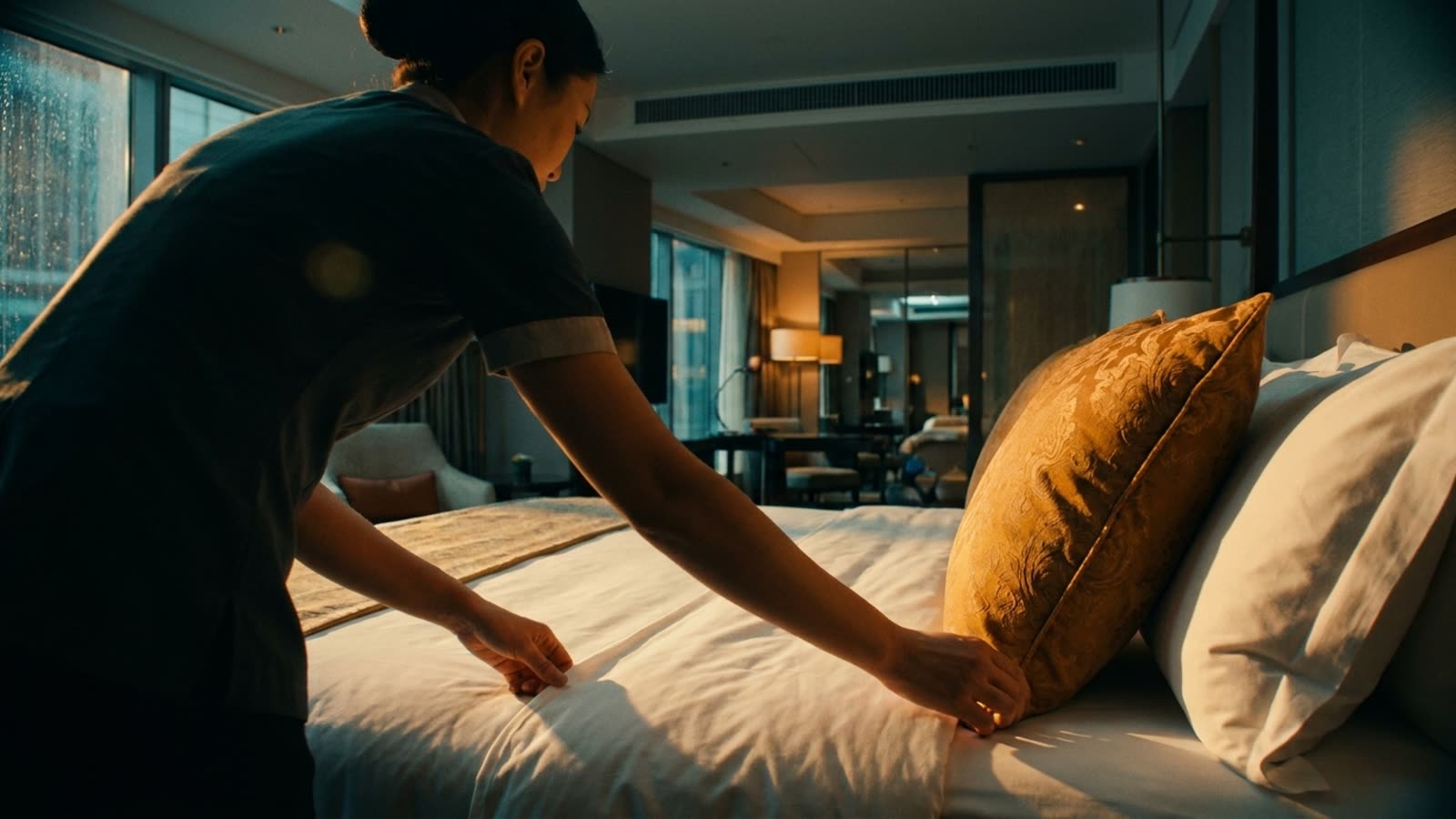
Every evening, as the sun sets over the world's finest hotels, an army of housekeepers fans out through corridors to perform a ritual that makes no operational sense whatsoever. They will close drapes, fold back duvets at a precise angle, place slippers in parallel formation, leave a chocolate on the pillow, and perhaps scatter rose petals or light a candle. The guest could do all of this in thirty seconds. The hotel pays someone to do it in seven minutes. This is turndown service, and its persistence in an age of self-check-in kiosks and robot room service reveals something essential about what luxury actually means.
The economics of theatrical care
Turndown service costs a five-star hotel somewhere between fifteen and forty dollars per room per night in labor alone, depending on the market. Multiply that across hundreds of rooms, and you have a line item that any efficiency consultant would circle in red. The service generates no direct revenue. Guests rarely request it; they simply expect it to have happened while they were at dinner. Yet eliminating it is unthinkable at the top tier of hospitality. The reason is that turndown service is not really about turning down the bed. It is about proving that someone was thinking about you, specifically, while you were away. The chocolate is not a snack. It is evidence of attention.
This explains why the details matter so obsessively. At certain properties, housekeepers are trained to note which side of the bed the guest slept on the previous night and turn down only that side. They observe whether the guest moved the clock, adjusted the thermostat, or rearranged the toiletries, and they restore nothing, respecting the guest's modifications as sovereign. The message is unmistakable: we see you, we remember you, we will not impose upon your preferences. In an era when algorithms claim to personalize everything, this analog personalization—performed by a human who entered your private space and chose to leave it better—carries a weight that no app notification can match.
Why automation keeps failing
Hotels have automated nearly everything else. Check-in can happen on your phone. Concierge recommendations come from chatbots. Room service arrives via delivery robot in some properties. But turndown resists. The short answer is that the tasks are too varied and too delicate for current robotics. The longer answer is that even if a robot could fold a duvet, guests would hate it. The point of turndown is the implication of human care. A robot performing the ritual would expose it as the theater it is, and theater only works when the audience can suspend disbelief. A person closing your curtains suggests solicitude. A machine doing it suggests surveillance.
There is also the matter of discretion. Turndown staff are trained to notice without reporting—the empty wine bottles, the prescription medications, the second toothbrush that appeared. They tidy around the evidence of private life without acknowledging it. This requires judgment that no algorithm possesses and that most guests would not trust a machine to exercise. The housekeeper's silence is part of the service.
Our take
Turndown service is magnificently irrational, which is precisely why it endures. Luxury, at its core, is the refusal to optimize. It is the insistence that some things should cost more than they are worth in any transactional sense because the excess itself is the product. The chocolate on the pillow is a tiny, edible monument to inefficiency, and that is what makes it sweet.