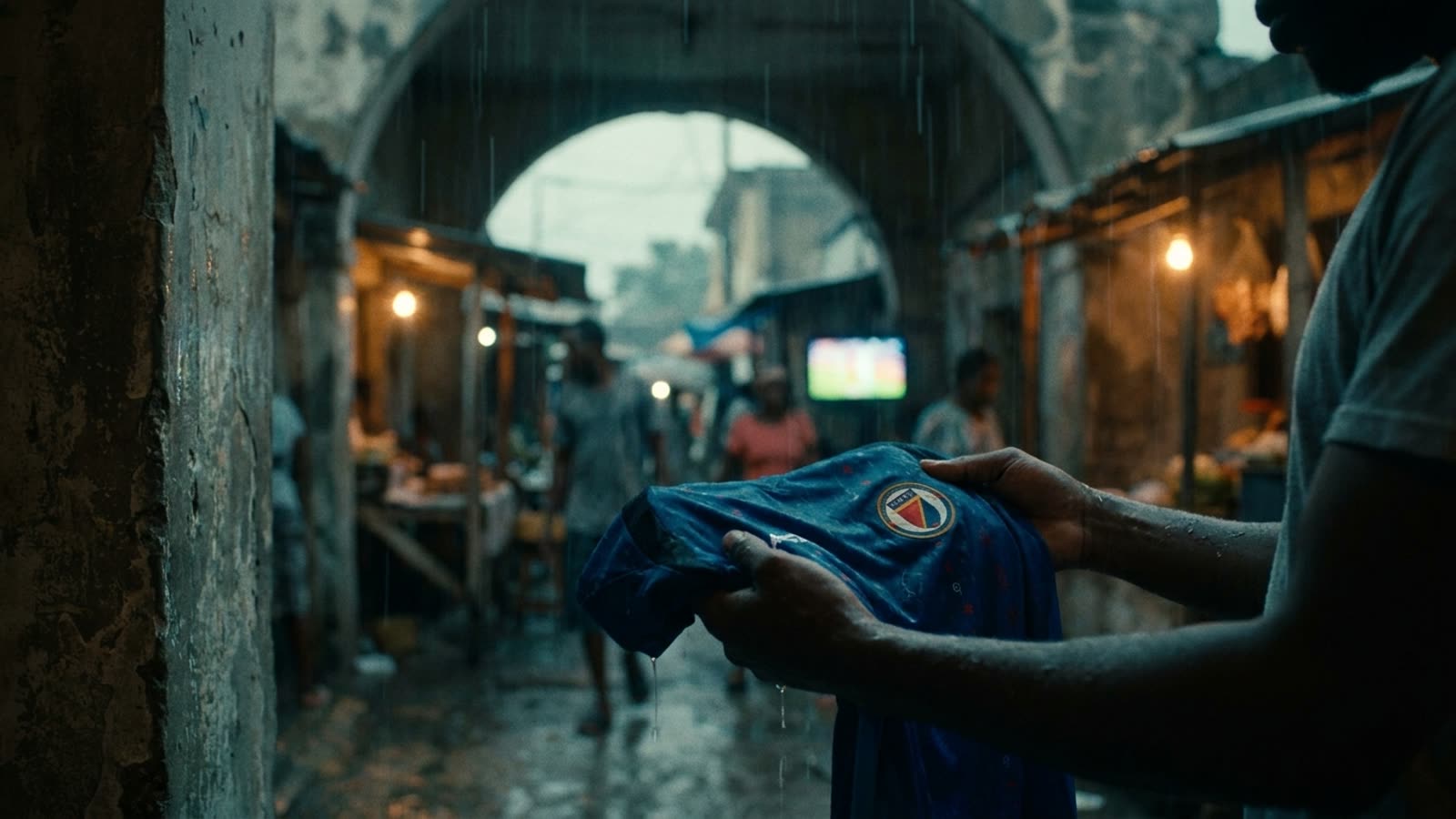
The Haitian national team arrived at the 2026 World Cup with a jersey that told a story. Designed to commemorate the revolution that made Haiti the first nation founded by formerly enslaved people, the kit featured imagery evoking the 1804 declaration of independence — a moment that terrified slaveholding empires and inspired liberation movements across the Americas. FIFA looked at this shirt and saw a problem.
The governing body's decision to ban the jersey, forcing Haiti to wear an alternate kit for their opening match against Scotland, has ignited a debate that cuts to the heart of international football's contradictions. FIFA insists on political neutrality while hosting tournaments in nations with troubling human rights records, plastering stadiums with corporate logos while policing what stories a jersey can tell.
The neutrality paradox
FIFA's regulations prohibit "political, religious, or personal slogans, statements, or images" on team equipment. The rule exists, ostensibly, to keep football above the fray of geopolitical disputes. In practice, its application has been wildly inconsistent.
England's poppy armbands have been permitted after public pressure. Qatar hosted an entire World Cup despite international criticism of its labor practices and social policies. The 2018 tournament proceeded in Russia without meaningful political restrictions on host-nation messaging. But a Caribbean nation's celebration of its own founding — an event that occurred more than two centuries ago — apparently crosses a line.
The Haitian Football Federation has lodged a formal protest, arguing that commemorating national independence is no more political than the Three Lions on England's crest or the tricolor symbolism woven into France's kit. The distinction FIFA draws, critics argue, is not between political and apolitical imagery but between politically convenient and inconvenient stories.
What the jersey actually showed
The banned design reportedly incorporated elements referencing Jean-Jacques Dessalines, the revolutionary leader who declared Haitian independence, and visual motifs associated with the Bois Caïman ceremony that helped spark the uprising. For Haitians, these are foundational national symbols equivalent to the American eagle or the French Marianne.
The jersey's designer intended it as a celebration of resilience — particularly meaningful given Haiti's recent struggles with political instability and natural disasters. The team's improbable World Cup qualification, their first since 1974, was already a story of triumph against overwhelming odds. The kit was meant to complete that narrative.
Instead, Haiti took the pitch in a generic alternate jersey, their story literally stripped from their backs.
Our take
FIFA's position is intellectually incoherent but institutionally predictable. The governing body has always preferred the appearance of neutrality to actual principle, which is why it can ban a jersey commemorating a slave revolution while accepting sponsorship money from virtually any source. The Haitian jersey wasn't too political — it was political in a way that made powerful people uncomfortable. There's a difference, and FIFA would rather not examine it too closely.