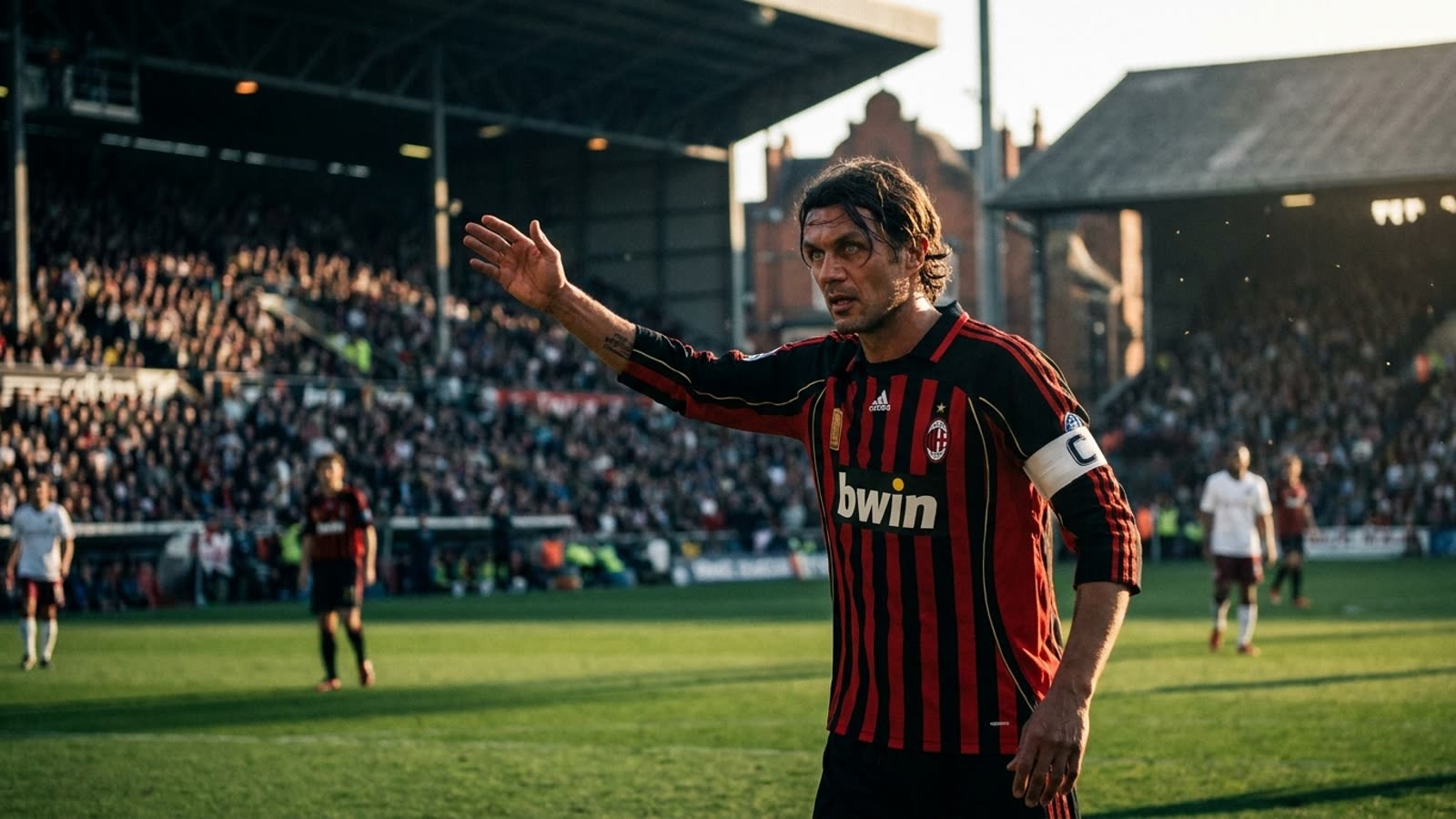
The modern football discourse has developed an unfortunate habit of treating defending as a necessary evil — something to be minimized through possession, pressed through with intensity, or papered over with expensive insurance policies in goal. Paolo Maldini spent a quarter-century at the highest level demonstrating that this framing misses something essential about the sport.
The AC Milan and Italy legend retired having played more than a thousand professional matches, won five European Cups, and anchored defenses that made opponents look not merely ineffective but somehow philosophically mistaken in their approach. He did this while rarely resorting to the agricultural methods that defenders of lesser gifts must employ. The sliding tackle, that desperate last resort of the beaten man, was something Maldini deployed perhaps a handful of times per season. He considered it evidence of positional failure.
The geometry of anticipation
What separated Maldini from his contemporaries was not athleticism, though he possessed plenty, nor aggression, though he could be ruthless when required. It was his understanding of space as a living thing — something to be shaped, denied, and ultimately controlled through positioning rather than intervention. Watching him defend was like watching a chess player who had already seen the next several moves: the attacker's options would narrow invisibly until only the wrong choice remained.
This approach demanded an almost scholarly attention to opponents. Maldini famously studied wingers for hours, learning their preferred feet, their tendencies under pressure, the tells that preceded their favorite moves. By the time he faced them, he had already played the match in his mind. The physical contest was merely confirmation.
The longevity question
Maldini played at the elite level until he was forty, an age at which most defenders have long since retreated to punditry or coaching. His durability was not merely physical but intellectual — he adapted his game as his pace diminished, compensating with ever-more-refined positioning and an almost preternatural sense of when to commit and when to contain. In his final seasons, he was defending on accumulated wisdom rather than athletic reserves, and it was somehow enough.
This longevity carries lessons that contemporary football seems determined to ignore. The pressing-intensive systems that dominate the modern game burn through defenders at alarming rates, treating them as replaceable components in a high-turnover machine. Maldini's career suggests an alternative model: the defender as craftsman, improving with experience rather than degrading with mileage.
Our take
Football analytics have given us extraordinary tools for measuring defensive contributions, yet they struggle to capture what Maldini actually did. His gift was making things not happen — a fundamentally negative space that resists quantification. The sport is poorer for having moved away from valuing this kind of mastery. Every generation produces attackers who dazzle; defenders who elevate the position to an art form come perhaps once or twice a century. Maldini was one, and we have not seen his like since.