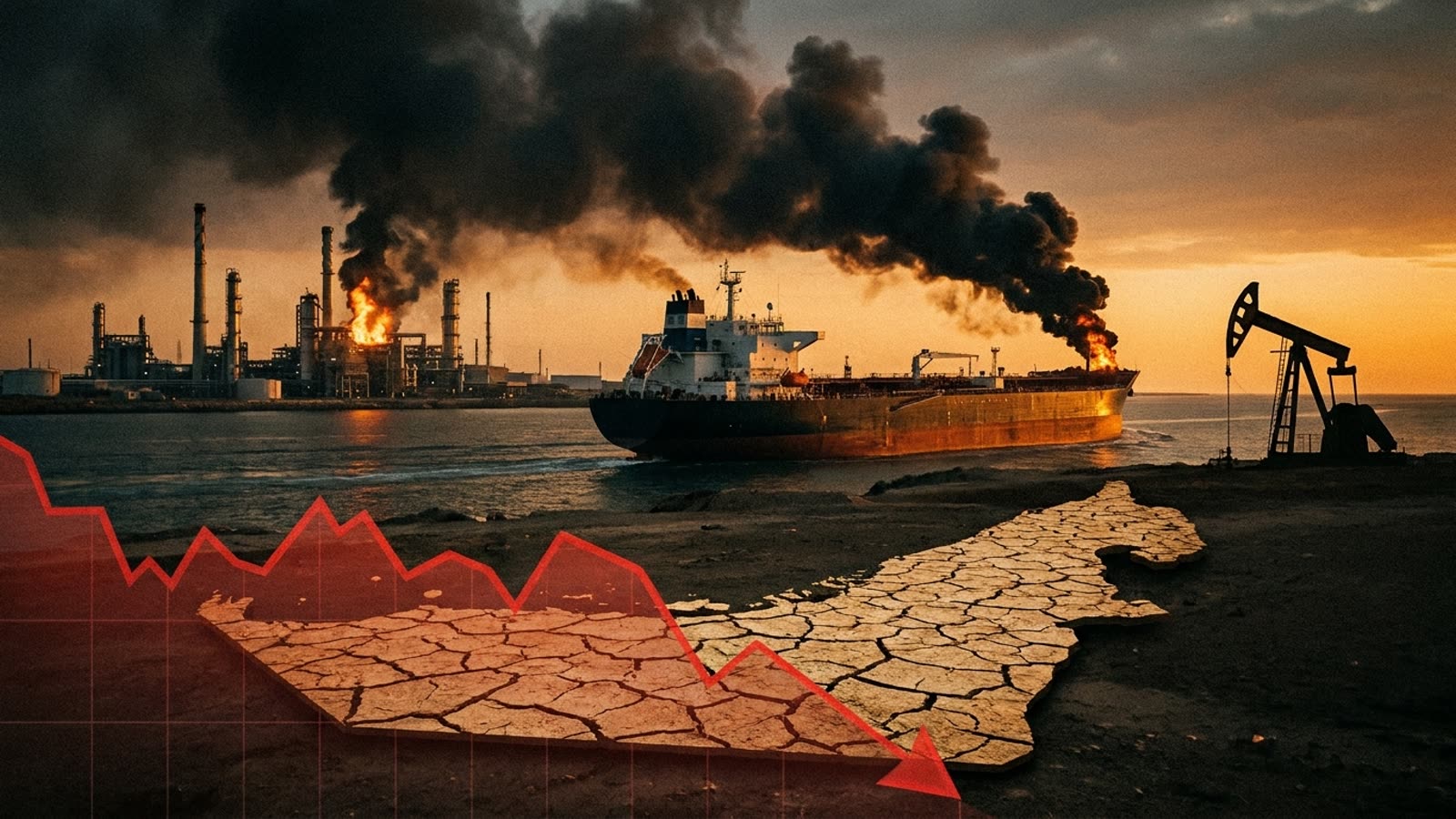
The Gulf Cooperation Council spent the better part of a decade telling anyone who would listen that the future was tourism, tech, and sovereign wealth — not hydrocarbons. Then Iran happened, and the spreadsheets stopped mattering.
Saudi Arabia, the United Arab Emirates, Qatar, and their neighbors are now staring at growth figures that would have been unthinkable two years ago. The diversification strategies that were supposed to insulate these economies from oil-price volatility have proven powerless against something far more disruptive: actual regional war. Shipping through the Strait of Hormuz remains fraught. Insurance premiums for Gulf-bound cargo have tripled. Foreign direct investment, the lifeblood of Vision 2030 and its imitators, has slowed to a trickle as multinationals reconsider their exposure.
The numbers tell a grim story
Saudi non-oil GDP growth, which had been clocking in above 4 percent annually, has fallen sharply as construction projects stall and tourism bookings evaporate. The UAE's vaunted logistics sector — Dubai's raison d'être — is bleeding volume as shippers route around the Gulf entirely. Qatar, insulated somewhat by its LNG contracts, is nonetheless watching real estate prices soften as expatriate workers reassess their risk tolerance.
The irony is bitter: these economies diversified precisely to avoid being held hostage to geopolitical instability. But diversification into services, tourism, and finance creates a different kind of vulnerability — one where perception and confidence matter as much as barrels per day.
Sovereign wealth as shock absorber
The saving grace, for now, is the sheer scale of accumulated reserves. Abu Dhabi's ADIA, Saudi's PIF, and Qatar's QIA collectively manage trillions in assets, enough to backstop government spending for years even if revenues crater. But sovereign wealth funds are not infinite, and the temptation to raid them for current expenditure grows as deficits widen.
More concerning is the signal this sends to the foreign capital these countries have courted so aggressively. The Gulf's pitch to global investors was simple: stable, business-friendly jurisdictions with deep pockets and long time horizons. A year of war has complicated every part of that sentence.
Our take
The Gulf states made a reasonable bet that economic diversification would reduce their exposure to commodity cycles. What they underestimated was that their geography is itself a liability — one that no amount of theme parks or fintech hubs can hedge away. The war will end eventually, and these economies will recover. But the myth of the Gulf as a risk-free investment destination has been punctured, and that reputation damage may prove costlier than the war itself.