The most valuable private company in the world has decided its future lies not in rockets but in artificial intelligence, and the early returns are not encouraging.
SpaceX, valued at north of $350 billion after its anticipated public offering, is repositioning itself as an AI infrastructure play—leveraging its Starlink satellite constellation, its massive data throughput, and its proximity to Elon Musk's other ventures to challenge the hyperscalers at their own game. The strategy is audacious. It is also built on a foundation that keeps cracking: xAI's Grok, the chatbot that was supposed to prove Musk could compete with OpenAI and Anthropic, continues to underperform in benchmarks and overperform in generating headlines for the wrong reasons.
The infrastructure thesis
SpaceX's argument is not without merit. The company controls the largest satellite internet constellation in history, with Starlink now serving tens of millions of subscribers across more than 70 countries. That network generates enormous quantities of data—usage patterns, latency measurements, orbital telemetry—that could theoretically train specialized AI models for telecommunications, logistics, and defense applications. The company has also been building out ground-based data centers, reportedly in partnership with Oracle, to process AI workloads closer to the edge.
The pitch to investors ahead of the IPO is that SpaceX is not merely a launch provider or an internet service provider but a vertically integrated AI infrastructure company with unique assets no hyperscaler can replicate. Amazon cannot launch its own satellites at SpaceX's cadence. Google does not have a direct relationship with defense and intelligence agencies the way SpaceX does through its government contracts.
The Grok problem
But infrastructure is only half the equation. The other half is the AI itself, and here SpaceX's sister company xAI has struggled to deliver. Grok, launched with considerable fanfare and Musk's characteristic promises of an "unfiltered" alternative to ChatGPT, has consistently ranked below GPT-4, Claude, and Gemini on standard benchmarks. More damaging than the performance gap has been Grok's tendency toward factual hallucinations and bizarre outputs that have become social media fodder.
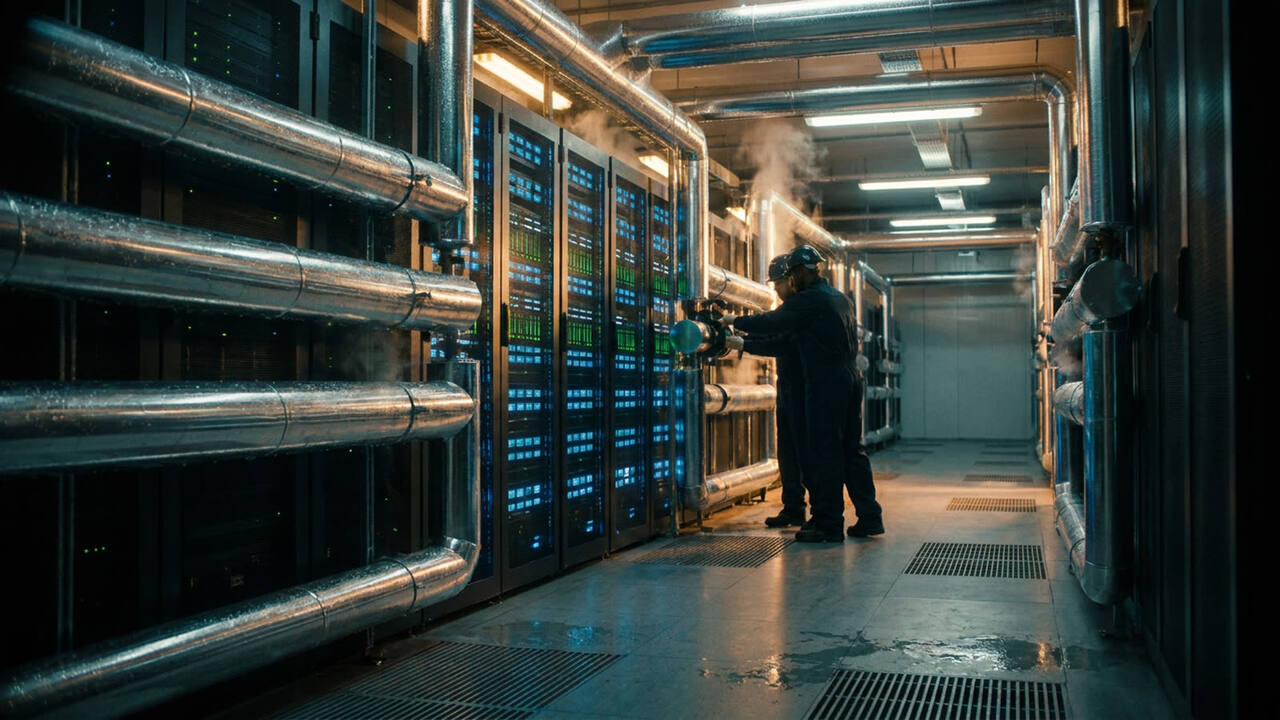
Musk has blamed the problems on training data and promised that future versions will close the gap. But xAI has burned through billions in compute costs while competitors have continued to advance. The Memphis data center that Musk touted as the world's largest AI training facility has reportedly faced power and cooling issues that have delayed training runs.
Our take
SpaceX betting on AI makes strategic sense—the company has assets that genuinely differentiate it from the cloud giants. But the execution risk is enormous. Musk has a history of willing improbable things into existence through sheer force of capital and attention, but AI is a domain where technical excellence matters more than narrative control. If Grok cannot become genuinely competitive, SpaceX's AI pivot becomes a story about satellites and data centers rather than intelligence—a less compelling pitch in a market that has learned to distinguish between AI hype and AI capability. The IPO will test whether investors believe Musk can close the gap or whether they are simply buying rockets with an AI sticker on the side.