No player has ever carried a nation's footballing hopes quite like George Weah carried Liberia's. Not because he was merely talented—talent is common enough at the highest levels—but because he was essentially alone. When Weah won the Ballon d'Or in 1995, becoming the first and still only African-born player to claim the prize, he did so while representing a country with no professional league, no infrastructure, and a population smaller than many European cities. He was not the product of a system. He was the system.
The weight of singular excellence
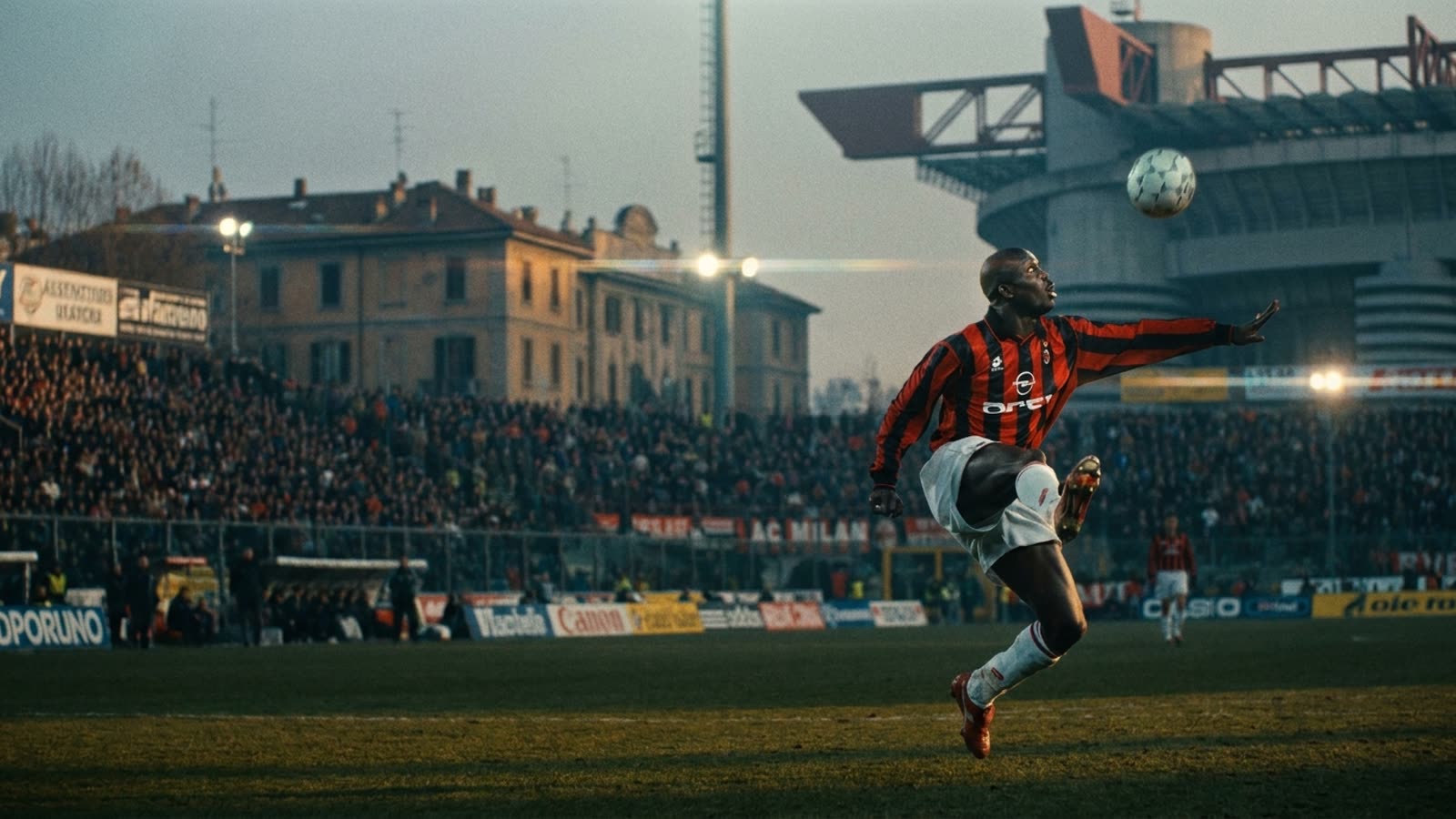
Weah's technical gifts were never in question. At Monaco, Paris Saint-Germain, and AC Milan, he demonstrated the complete forward's toolkit: pace that terrified defenders, strength that made him nearly impossible to dispossess, and a finishing instinct that produced goals of almost casual beauty. His solo effort against Verona in 1996—collecting the ball in his own penalty area and running the length of the pitch to score—remains one of the great individual goals in Serie A history.
But statistics and highlight reels miss the essential Weah story. Liberia never qualified for a World Cup during his career, not because he failed them but because one player, however transcendent, cannot compensate for the absence of everything else. He reportedly paid for his national team's travel expenses, their equipment, their accommodation. When Liberia came agonizingly close to qualifying for the 1998 World Cup, losing out to Nigeria on goal difference, Weah had done everything humanly possible. It simply was not enough.
The Ballon d'Or's geography problem
Weah's 1995 victory arrived during a brief window when the award seemed ready to recognize African excellence. He beat Paolo Maldini and Jürgen Klinsmann, both European champions that year, on the strength of a season where he had won Serie A and the Champions League with Milan. The margin was not close. And yet no African-born player has won since.
This is not because African football has declined—quite the opposite. The intervening decades have produced Didier Drogba, Samuel Eto'o, Yaya Touré, and Mohamed Salah, players who dominated at the highest club level. None won. The reasons are complex: voting patterns that favor certain leagues, the timing of continental competitions, the persistent sense that African players must be twice as good to receive equal recognition. Weah's victory looks less like a door opening and more like a door briefly ajar.
Our take
Weah's post-football career—he served as Liberia's president from 2018 to 2024—invites easy narrative completion, the champion who returned home to lead his nation. Reality proved messier, as it always does. But his footballing legacy requires no qualification. He showed that African players could not merely compete at the highest level but dominate it, and he did so while carrying burdens that no European star has ever had to shoulder. That the path he blazed remains so narrow says less about him than about the sport's persistent inequities.