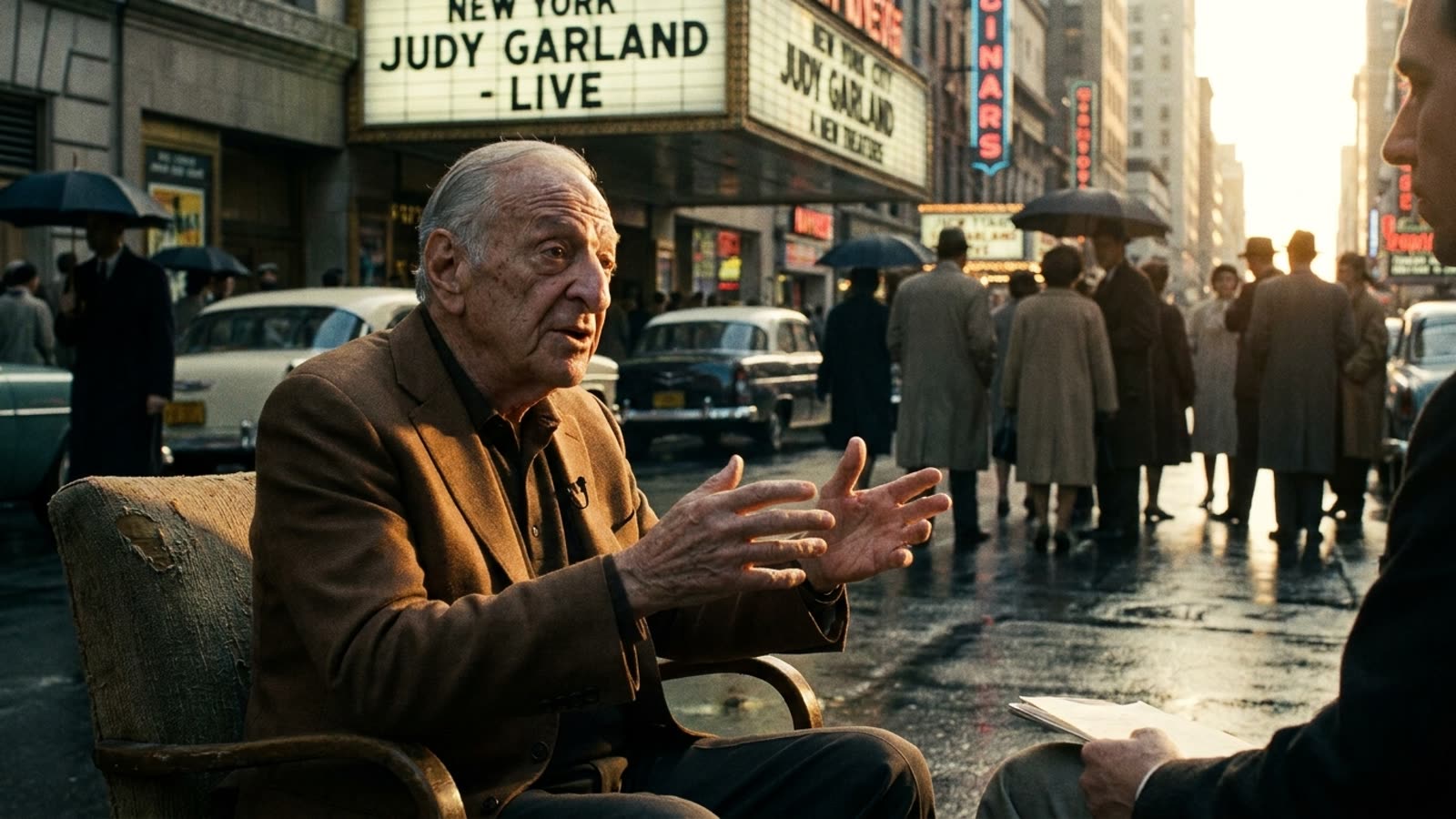
When Gene Schwam died Friday in Los Angeles at 96, he took with him the playbook for a profession that no longer quite exists. The Hollywood publicist—not the social media manager, not the crisis communications consultant, not the influencer liaison—was once the invisible architect of stardom itself. Schwam built the public personas of Elvis Presley, Judy Garland, and Julie Andrews, three figures whose images remain so fixed in cultural memory that we forget someone had to construct them.
The work was both simpler and more sophisticated than today's equivalents. Schwam operated in an era when a well-placed item in a gossip column could manufacture romance, when a studio could suppress scandal through gentlemen's agreements with editors, when the machinery of fame was controlled by a handful of gatekeepers who understood that mystique required distance. His clients weren't accessible; they were untouchable. That was the point.
The architecture of mystique
Consider what Schwam accomplished with his three most famous clients. Elvis arrived as a threat to decency; Schwam helped position him as a patriotic soldier and devoted son. Judy Garland's troubles were an open secret in Hollywood; Schwam managed to keep the focus on her transcendent talent rather than her pharmaceutical dependencies. Julie Andrews could have been dismissed as merely wholesome; instead, she became synonymous with a certain kind of sophisticated warmth. None of this happened by accident.
The publicist's toolkit was the planted story, the strategic denial, the carefully choreographed candid photograph. It required relationships built over decades with columnists like Hedda Hopper and Louella Parsons, editors who understood that access was currency. The entire system depended on scarcity—of information, of images, of the stars themselves.
The Instagram dissolution
That architecture has collapsed entirely. Today's celebrities are expected to be their own publicists, posting unfiltered glimpses of their lives to maintain the parasocial relationships that drive engagement. The distance Schwam cultivated is now considered inauthentic, even suspicious. When Taylor Swift posts a casual selfie, she's doing work that once employed entire departments.
The modern celebrity publicist exists primarily to manage crises rather than build images—to suppress stories rather than plant them, to negotiate with outlets that can no longer be controlled. The job has become defensive rather than creative. No one is constructing mystique anymore; they're merely trying to survive the transparency.
Our take
Schwam's death is a reminder that stardom used to be manufactured by professionals who understood it as a craft. The celebrities he represented weren't more talented than today's; they were better protected, more carefully presented, more deliberately mysterious. Whether that was healthier for the stars or the public is debatable. What's certain is that we've traded the curated illusion for the exhausting performance of authenticity—and lost something ineffable in the exchange.