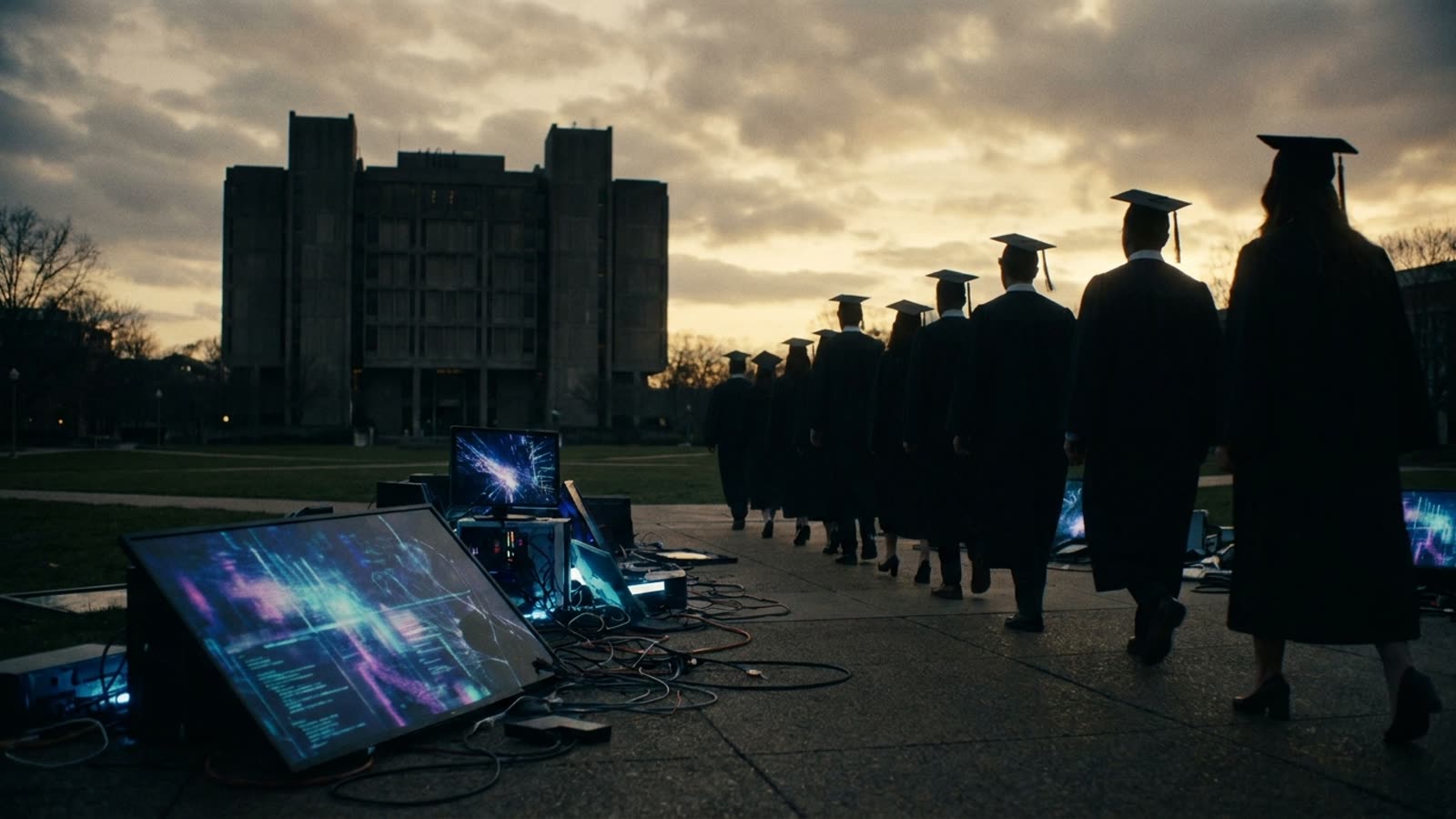
The boos started at Stanford, spread to MIT, and by last weekend had become a fixture of graduation ceremonies across the country. When speakers mention artificial intelligence—even in passing—members of the Class of 2026 are responding with something between a groan and a jeer. The generation that came of age with Siri, grew up on TikTok's algorithmic feed, and wrote college essays with ChatGPT has decided, rather publicly, that it wants nothing to do with the technology's next chapter.
This is not the reception Silicon Valley expected. For years, the working assumption among AI developers was that younger users would be the technology's natural evangelists—digital natives who'd seamlessly integrate large language models into their workflows the way previous generations adopted smartphones. Instead, something closer to the opposite is happening.
The intimacy problem
Unlike their parents, who encountered AI as a novelty, today's graduates have lived with algorithmic systems long enough to develop grievances. They've watched recommendation engines polarize their feeds, seen friends lose creative gigs to generative tools, and spent four years being told their degrees might be obsolete before the ink dries. The resentment is less about technology itself than about a perceived bait-and-switch: they were promised AI would handle drudgery so humans could do meaningful work, but the opposite seems to be materializing.
Interviews with recent graduates reveal a recurring theme: AI feels less like a tool than a competitor. "I spent years learning to write," one journalism graduate told reporters, "and now every editor wants to know if I can 'work with' the thing that's replacing me." The complaint echoes across creative fields, from graphic design to music production.
A political undercurrent
The backlash is also picking up political valence. Student protests have increasingly linked AI development to labor displacement, environmental costs of massive data centers, and what organizers call "algorithmic colonialism"—the extraction of training data from communities that see few benefits. At several campuses, graduates wore pins reading "Not Trained On My Data" alongside their caps and gowns.
Tech executives have largely dismissed the protests as youthful idealism that will fade once graduates enter the workforce and discover AI's productivity benefits. But the timing is awkward: this wave of discontent arrives just as Elon Musk's lawsuit against OpenAI collapsed in court, removing one of the few legal brakes on the industry's acceleration. The juxtaposition—regulatory defeat and grassroots revolt in the same news cycle—suggests the fight over AI's trajectory is shifting from courtrooms to culture.
Our take
Generational backlash tends to be a lagging indicator, not a leading one. By the time young people are booing at graduations, the underlying anxieties have usually been simmering for years. What makes this moment different is that the boos are coming from the demographic that was supposed to be AI's core constituency. If the industry cannot win over people who've never known a world without algorithmic recommendation, it may find that technical capability matters less than social license. The long hot AI summer is here, but so is the discontent.