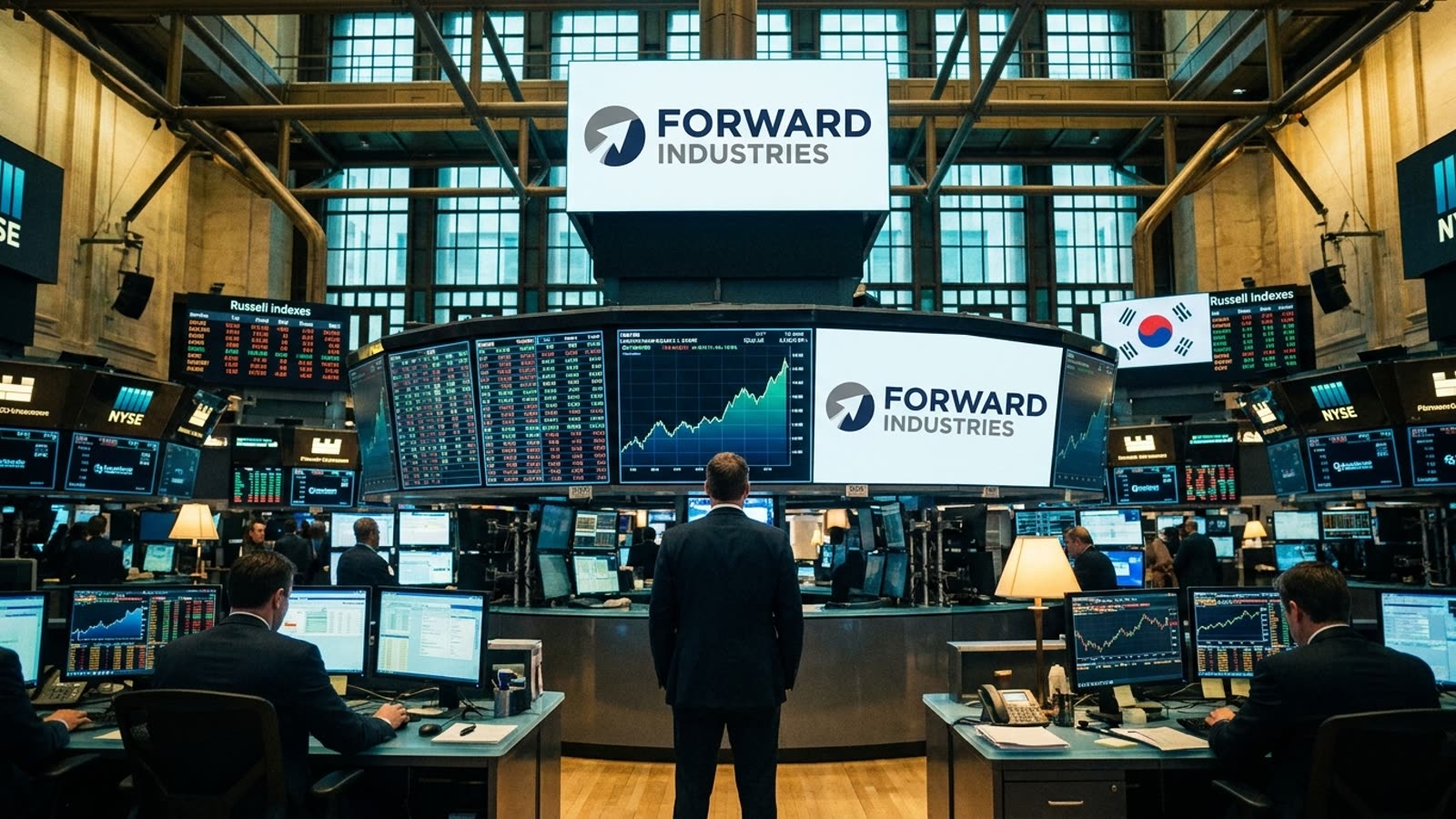
The Russell index rebalancing, that annual ritual of passive-fund plumbing, has become an unlikely window into how deeply cryptocurrency has burrowed into American corporate finance. Forward Industries, a company that has pivoted to holding Solana on its balance sheet, will join the Russell 2000 and Russell 3000 indexes this June, alongside SharpLink Gaming, the Ethereum treasury firm that secured its spot earlier this month.
The development matters less for what it says about Forward Industries—a small-cap company with a complicated history—than for what it reveals about the indexing machinery that now channels trillions of dollars into equities. When a crypto treasury firm meets the Russell's market-cap and liquidity thresholds, every index fund tracking those benchmarks must buy shares, regardless of the fund manager's views on digital assets.
The mechanics of forced buying
Russell index inclusion triggers automatic purchasing from the vast constellation of passive vehicles—ETFs, mutual funds, pension allocators—that track these benchmarks. The Russell 2000 alone serves as the reference for roughly $10 trillion in assets. Forward Industries and SharpLink are not large companies, but the marginal demand from index funds can meaningfully move share prices for small-caps, creating a self-reinforcing dynamic that crypto treasury advocates have been counting on.
This is the Strategy playbook, miniaturized. Michael Saylor's company demonstrated that a publicly traded entity could become a leveraged bet on Bitcoin, attracting shareholders who wanted crypto exposure through traditional brokerage accounts. The newer entrants are applying the same logic to Ethereum and Solana, betting that index inclusion will provide a structural bid for their shares.
The Solana angle
Forward Industries' choice of Solana rather than Bitcoin or Ethereum is notable. The company is positioning itself as a pure-play on the network that has emerged as the preferred chain for retail speculation, memecoins, and high-throughput applications. Solana's treasury firms have been less prominent than their Bitcoin counterparts, making Forward's index inclusion a small milestone for the ecosystem.
The timing coincides with Solana's continued resilience in developer activity and transaction volume, even as its token price has lagged Bitcoin's in recent months. For investors who believe Solana will capture a larger share of on-chain activity, Forward offers equity-market exposure without the complications of direct token custody.
Our take
The indexification of crypto treasury companies is neither good nor bad—it simply is. Passive investing's logic is indifferent to whether a company manufactures widgets or holds digital tokens; if it meets the criteria, it enters the index. The result is that millions of retirement savers now have trace exposure to Solana and Ethereum through their 401(k)s, whether they realize it or not. The crypto industry spent years seeking legitimacy through ETF approvals. It may have found a quieter backdoor through the Russell rebalance.