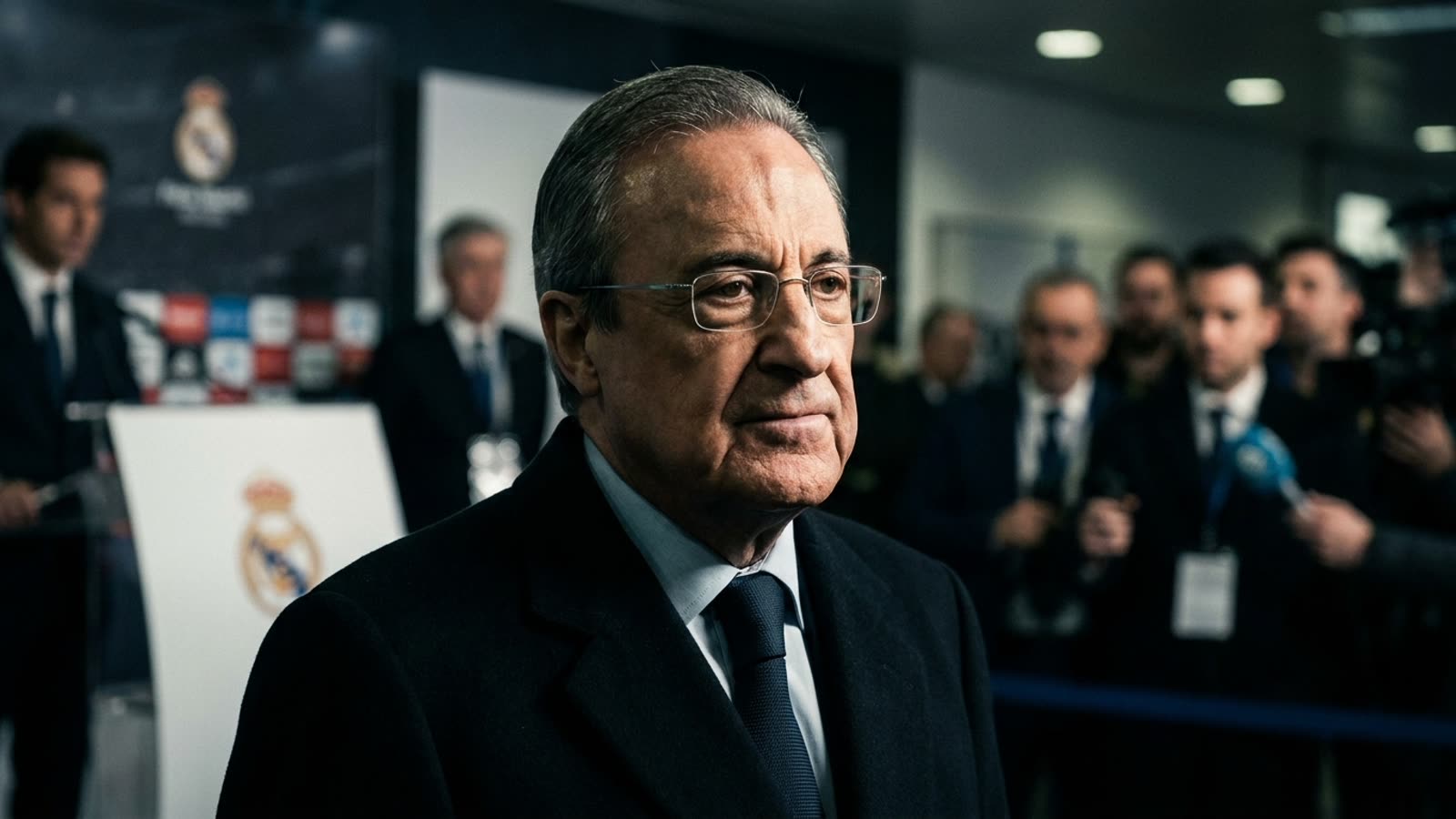
The most powerful man in European football held a press conference on Tuesday, and for once he did not look like he was enjoying himself.
Florentino Pérez, the 79-year-old construction magnate who has presided over Real Madrid for two decades across two separate stints, called for elections at the club he has ruled with imperial authority since 2009. He argued with journalists. He insisted, with the particular vehemence of someone who suspects the opposite, that he is going nowhere. The occasion was a trophyless season — the first of his current tenure — and the subtext was unmistakable: the Bernabéu is restless, and even Pérez can feel the ground shifting.
The weight of nothing
A blank trophy cabinet is almost unprecedented in the Pérez era. Since returning to the presidency in 2009, he has delivered six Champions League titles, five La Liga crowns, and an assortment of lesser silverware. The formula has been consistent: spend lavishly on galácticos, hire managers willing to work within the institution's gravitational pull, and trust that talent will eventually overwhelm opposition. This season, it did not. Real finished third in La Liga, were eliminated in the Champions League quarterfinals by Manchester City, and lost the Copa del Rey to Athletic Bilbao. By any normal club's standards, this would be a disappointing campaign. By Real Madrid's, it is an existential event.
The election gambit
Pérez's call for elections is a classic defensive maneuver dressed as democratic virtue. Under Real Madrid's statutes, the president can call for a vote of confidence at any time. By doing so preemptively, Pérez forces potential challengers to organize on his timetable rather than theirs. It also allows him to frame the narrative: he is not clinging to power, he is submitting himself to the will of the socios. The reality is that unseating Pérez would require a candidate with both the financial resources to guarantee the club's debts and the political appetite for a bruising campaign against an incumbent who has delivered more European trophies than any president in history. Such candidates are not exactly queuing up.
The succession question
What Tuesday's press conference revealed, however, is that Pérez himself may be thinking about the end. His combativeness with journalists — unusual for a man who typically projects boardroom serenity — suggested someone who feels the criticism more acutely than he once did. At 79, having already outlasted every rival and reshaped the club in his image, what remains to prove? The answer, of course, is everything. Pérez's legacy is inseparable from Real Madrid's continued dominance. A prolonged decline would tarnish not just the club but the man who made it his monument.
Our take
Pérez will almost certainly win any election he calls, and Real Madrid will almost certainly return to winning trophies soon enough. The squad remains formidable, the revenue streams immense, the institutional advantages baked in. But something shifted on Tuesday. The man who built a footballing empire on the projection of invincibility allowed the world to see him defensive, irritable, and unmistakably mortal. That image, once seen, is difficult to unsee.