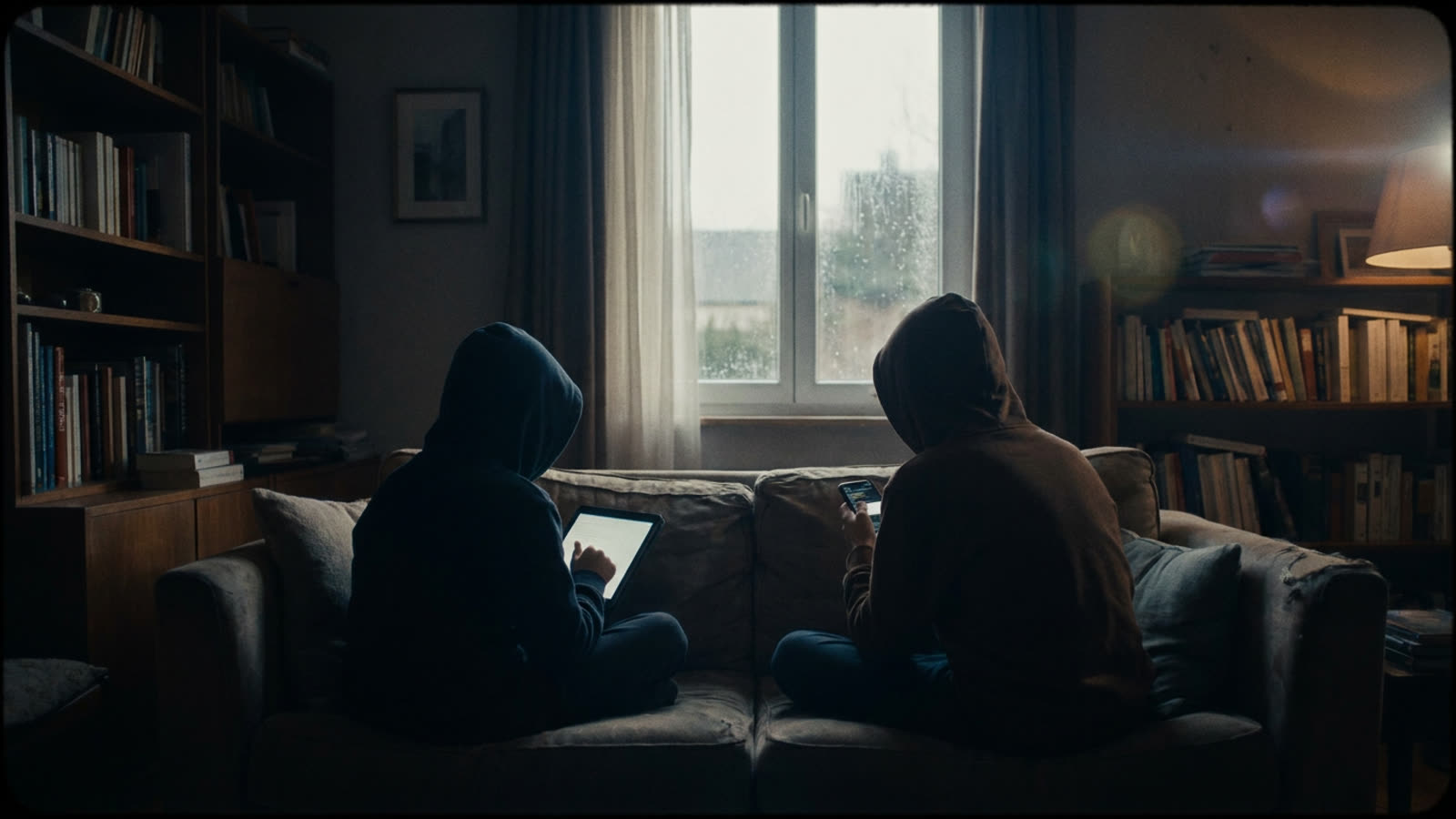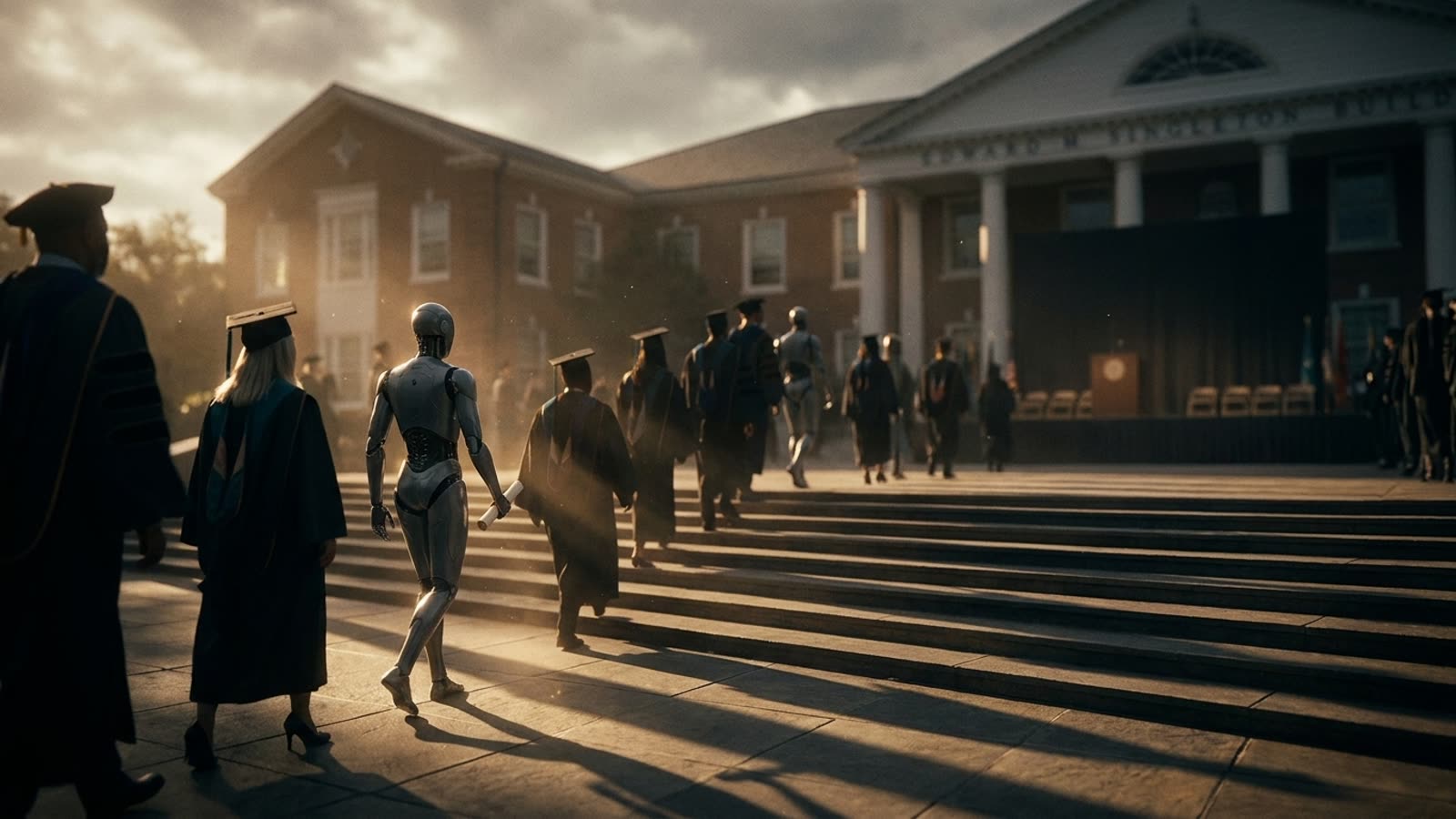
The first students to complete their entire university education alongside AI assistants are graduating this month, and the implications are only beginning to surface. At Stanford, MIT, and dozens of other institutions, the Class of 2026 represents a watershed moment: these students never knew college without ChatGPT as a study partner, essay collaborator, and exam companion.
The great recalibration
Universities spent the past three years in reactive mode—first banning AI tools, then grudgingly accepting them, and finally attempting to integrate them into curricula. But the graduates walking across stages this month reveal a more profound shift. These students didn't just use AI; they learned alongside it, developing what educators are calling "augmented intelligence"—a hybrid cognitive approach that treats AI as an extension of human thinking rather than a replacement for it.
The statistics are striking. According to internal data from several Ivy League institutions, 94% of graduating seniors used AI tools daily throughout their studies. More surprisingly, those who integrated AI most deeply into their learning scored higher on critical thinking assessments than their peers who used it sparingly. The correlation suggests that effective AI use may actually enhance rather than diminish intellectual development.
New skills for a new world
Employers interviewing the Class of 2026 report a distinctly different skill set from previous cohorts. These graduates excel at what Microsoft's chief learning officer calls "cognitive orchestration"—the ability to direct multiple AI agents toward complex problem-solving while maintaining critical oversight. They're also notably stronger at identifying AI hallucinations and biases, having spent four years learning to fact-check their silicon study partners.
Yet significant gaps have emerged. Writing instructors report that while students can craft sophisticated arguments with AI assistance, many struggle with unassisted long-form composition. Mathematics professors note similar patterns: students who learned calculus with AI tutors show impressive problem-solving abilities but sometimes lack fundamental computational skills.
Our take
The Class of 2026 marks the end of education as we knew it and the beginning of something we're still struggling to define. These graduates aren't better or worse than their predecessors—they're fundamentally different, shaped by a technology that will only become more central to human cognition. Universities clinging to 20th-century assessment methods will become irrelevant. Those brave enough to reimagine education for an AI-augmented world might just produce the thinkers we need for the challenges ahead.