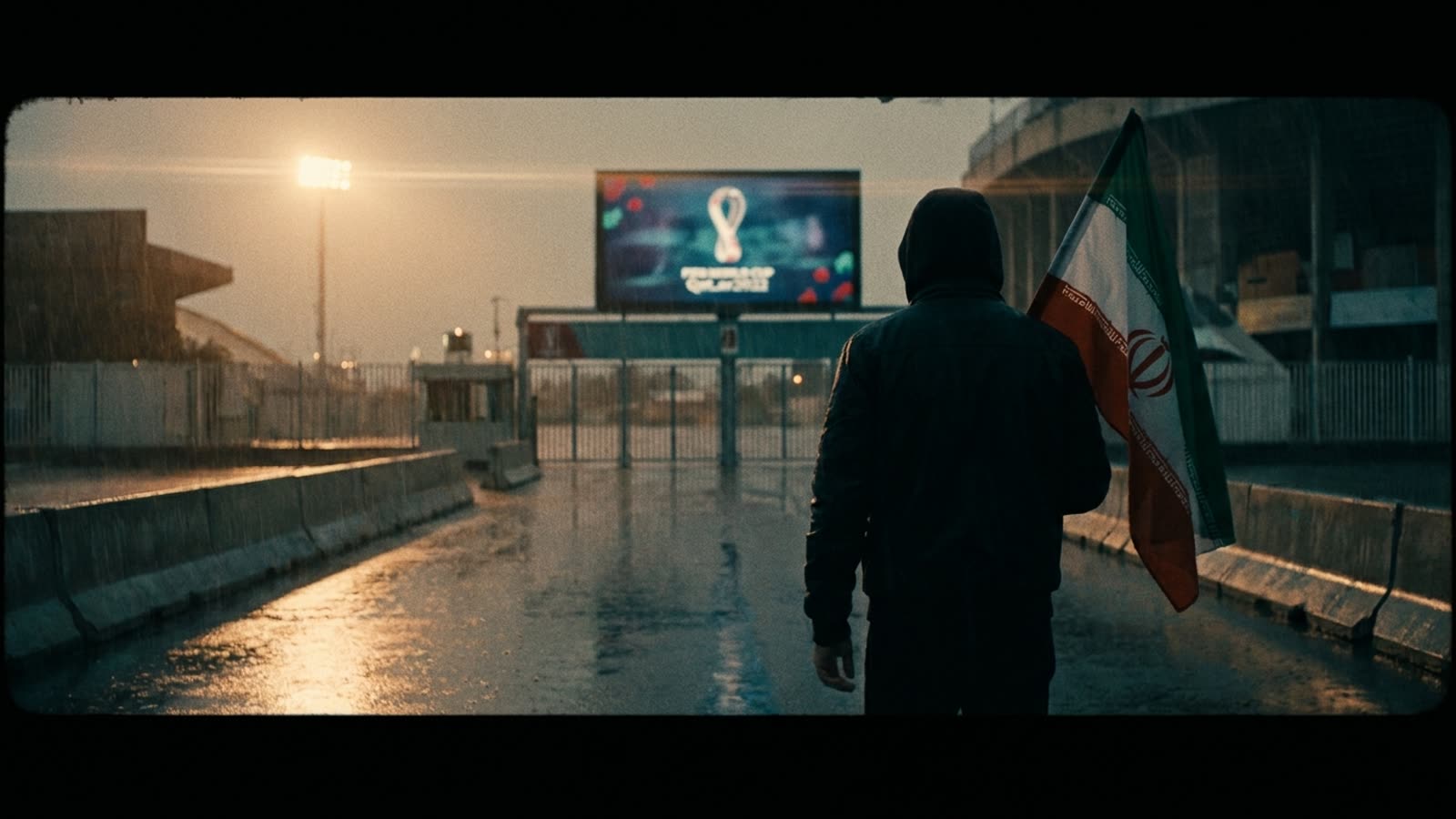
FIFA's announcement that Iranian fans will lose their World Cup ticket allocation is being framed as an administrative measure, but nobody is fooled. With the tournament set to kick off across North America later this month, football's governing body has effectively told an entire nation's supporters they are unwelcome—a move that lands somewhere between diplomatic signaling and collective punishment.
The timing is no accident. As tensions between Tehran and Washington remain elevated and international sanctions bite deeper, FIFA has chosen alignment over neutrality. Iranian football fans, many of whom saved for years to attend their national team's matches, now find themselves collateral damage in a conflict they did not start.
The mechanics of exclusion
FIFA's ticket allocation system typically reserves a portion of seats for each participating nation's supporters, distributed through national football federations. By pulling Iran's allocation, the governing body isn't technically banning Iranians from attending—they can still attempt to purchase general tickets—but it eliminates the guaranteed pathway that makes World Cup travel feasible for ordinary fans.
The practical effect is devastating. General tickets for marquee matches have been sold out for months, and secondary market prices have ballooned to figures that would require the average Iranian worker's salary for several years. FIFA has, in effect, priced out an entire country while maintaining plausible deniability.
Precedent and pattern
This is not football's first entanglement with geopolitics, nor will it be the last. Russia's exclusion from international competition following the 2022 invasion of Ukraine established a modern template for sporting bodies to act as enforcement arms of Western foreign policy. Yugoslavia faced similar treatment in the 1990s. South Africa's apartheid-era isolation from sport remains the canonical example of athletics as political weapon.
What distinguishes the Iranian case is the targeting of fans rather than the federation or national team itself. Iran remains eligible to compete; its supporters simply cannot watch in person through official channels. The message is surgical: your government is the problem, but you will bear the cost.
Our take
FIFA has never been a neutral actor, and pretending otherwise insults everyone's intelligence. But there is something particularly cynical about punishing fans—people whose only offense is loving football and happening to hold the wrong passport—while the Iranian national team still takes the pitch. If the point is to pressure Tehran, this achieves nothing. If the point is to perform solidarity with Western governments, mission accomplished. Either way, thousands of ordinary people lose the chance to witness their team on the world's biggest stage, and football's claim to universality takes another hit.