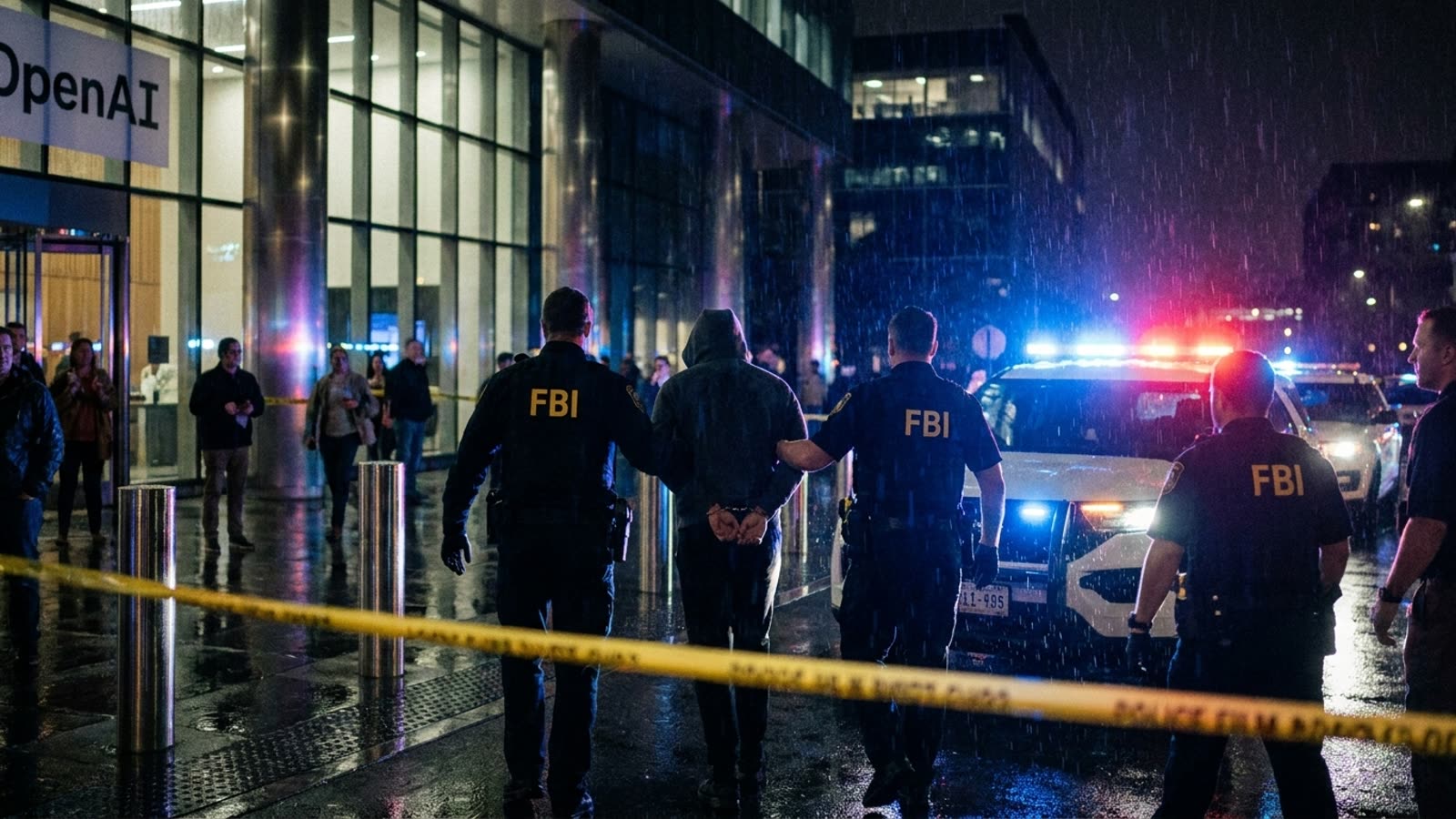
The arrest of an OpenAI employee by the FBI for allegedly planting a concealed recording device in a company conference room marks an inflection point in the AI industry's maturation—the moment when the stakes became high enough to attract the attention of federal law enforcement, not just corporate security.
The details remain sparse, as is typical in the early hours of such cases. What we know: the FBI made the arrest, the allegation involves a hidden recording device, and the location was an OpenAI conference room. What we don't know—and what will matter enormously—is who the alleged recipient of any captured information might have been. A competitor? A foreign government? A journalist? The answer will determine whether this is a cautionary tale about corporate paranoia or something far more serious.
The new crown jewels
OpenAI sits at the center of what may be the most consequential technology race since the development of nuclear weapons—a comparison the company's own leadership has at times encouraged. Its models, training methodologies, and strategic roadmaps represent intellectual property of extraordinary value, not merely to competitors like Anthropic, Google, and Meta, but to nation-states seeking AI advantage. China, in particular, has made no secret of its ambitions to lead in artificial intelligence by 2030.
This context transforms what might otherwise be a straightforward corporate espionage case into something with national security dimensions. The FBI's involvement—rather than local law enforcement or private security—suggests investigators believe the matter extends beyond a disgruntled employee or garden-variety industrial theft.
Silicon Valley's counterintelligence awakening
The technology industry has historically operated with a culture of openness that would make a defense contractor's security officer weep. Engineers move freely between competitors, publish research openly, and discuss work at conferences and on social media. This ethos accelerated innovation but created vulnerabilities that are only now being fully appreciated.
OpenAI has already experienced the costs of talent mobility—key researchers have departed for Anthropic, Google, and various startups, carrying institutional knowledge with them. But there is a legal and ethical distinction between an employee leaving with expertise in their head and one allegedly planting surveillance equipment to capture conversations they were not party to.
The major AI labs have been quietly hardening their security postures over the past two years, implementing measures more commonly associated with defense contractors: compartmentalized access, enhanced background checks, and physical security upgrades. This arrest suggests those measures may have worked—or that the threat environment has escalated faster than defenses could adapt.
Our take
The AI industry has spent years insisting that its work carries civilizational stakes. It cannot now be surprised when others—including adversaries—take that claim seriously. If the allegations prove true, this case will accelerate an already underway transformation of leading AI labs from freewheeling research institutions into something closer to classified facilities. That shift carries real costs for innovation and scientific openness. But the alternative—treating the most powerful technology of our era with the security practices of a mid-tier software company—was never sustainable. The talent war has become a shadow war, and everyone in the industry should adjust their assumptions accordingly.