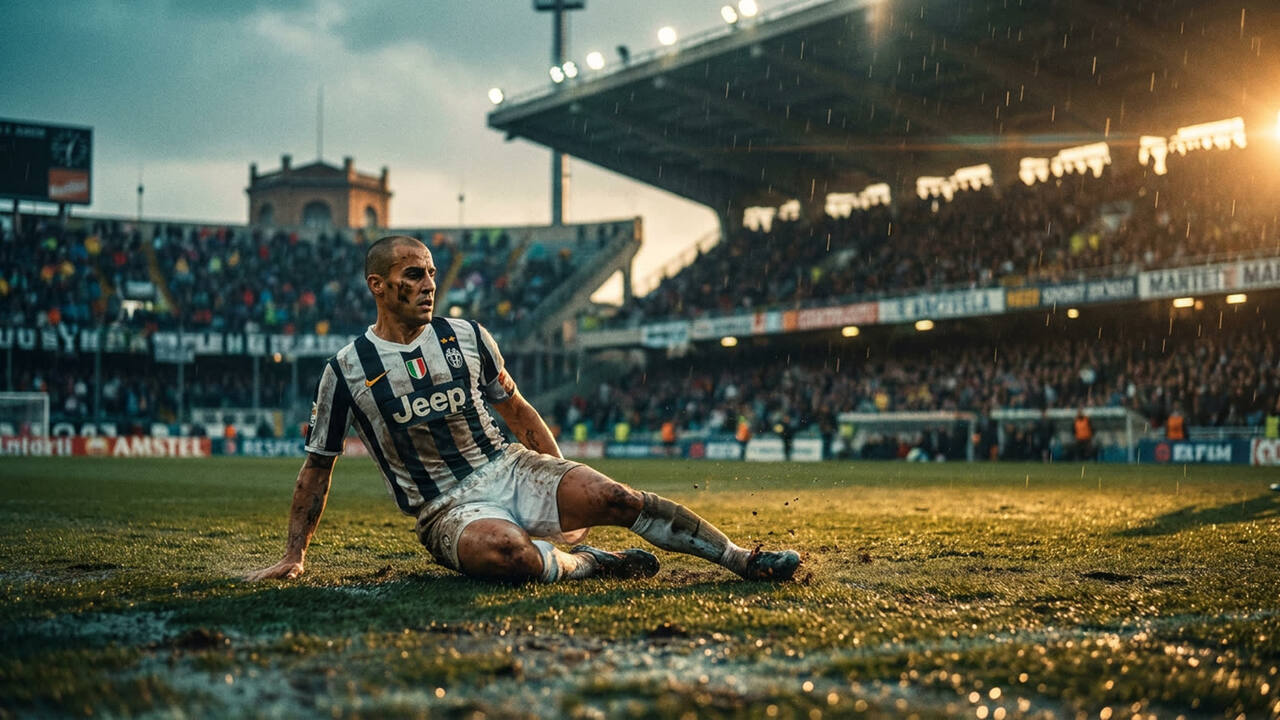
The Ballon d'Or has always had a bias problem, and the bias is goals. Since Fabio Cannavaro lifted the golden ball in 2006, every single winner has been a forward or attacking midfielder — Messi, Ronaldo, Kaká, Modrić (the closest thing to an exception, and still an offensive creator), Benzema. The idea that a player whose primary job is to stop things from happening could be considered the best in the world has quietly vanished from football's imagination.
Cannavaro's victory was never supposed to happen in the first place. Defenders who win individual awards are almost always goalscorers in disguise — Franz Beckenbauer and Matthias Sammer were sweeper-liberos who drifted into midfield and contributed to attacks. Cannavaro was something purer and more old-fashioned: a center-back who defended. At 176 centimeters, he was undersized for the position, which made his dominance in aerial duels feel like a violation of physics. He compensated with timing so precise it looked like clairvoyance, arriving at the exact coordinate where the ball would be a half-second before anyone else realized it.
The World Cup that made the case
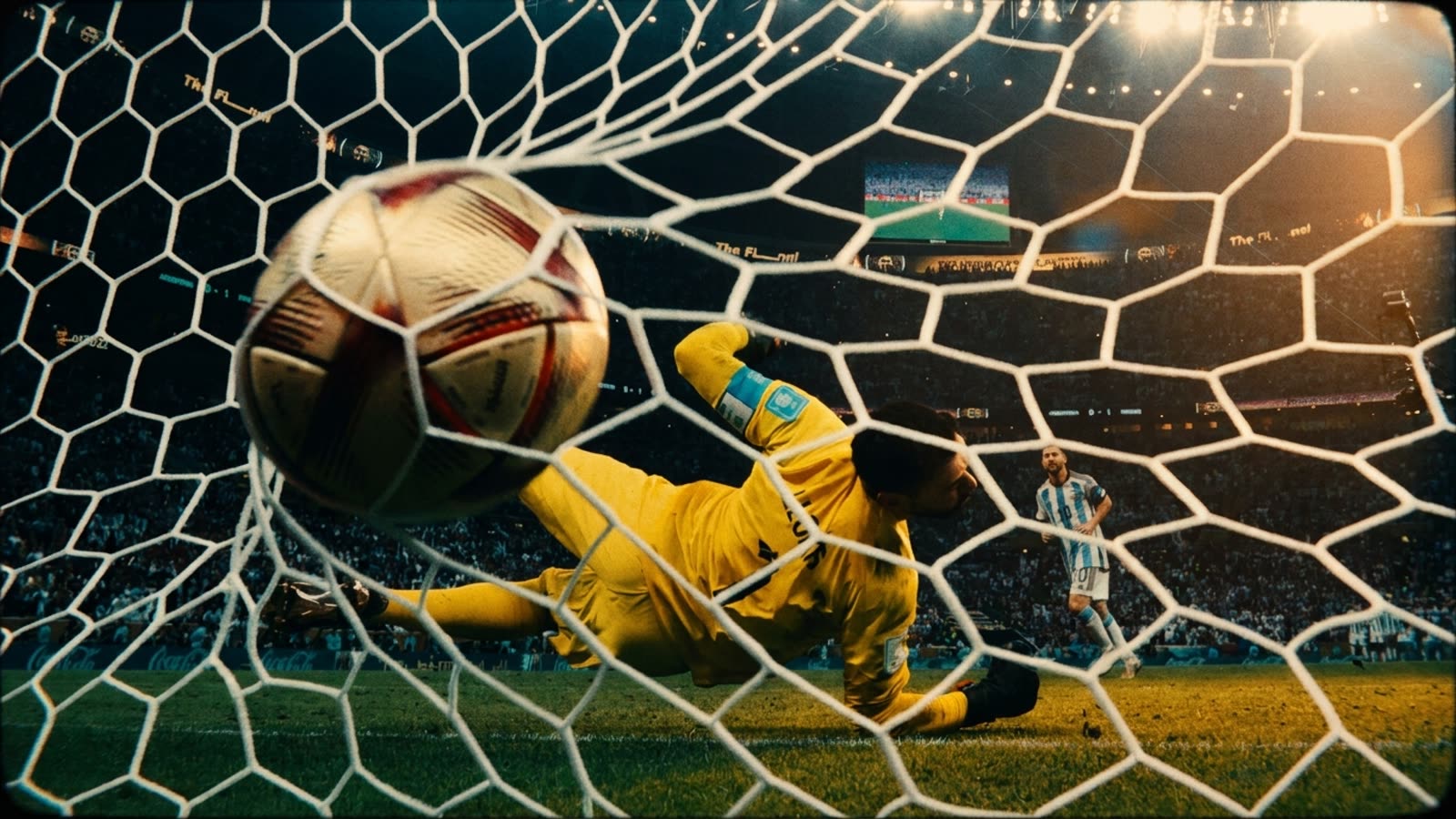
Italy's 2006 World Cup campaign was chaotic, shadowed by the Calciopoli match-fixing scandal that would relegate Juventus — Cannavaro's club — to Serie B weeks after the tournament. The team played with a siege mentality, and Cannavaro was the wall. He made more clearances, won more tackles, and committed fewer fouls than any other defender in the competition. In the semifinal against Germany, with extra time grinding toward penalties, he produced a header off the line that preserved the 0-0 scoreline until Grosso's famous winner. In the final against France, he marked Thierry Henry into irrelevance.
The statistics were secondary to the aesthetic. Cannavaro played with a theatrical intensity that made defending look heroic rather than merely functional. Every sliding challenge was a statement. His leadership was physical — he communicated through positioning, through the way he organized the back line with small gestures and barked commands.
Why it cannot happen again
The modern game has structurally devalued defending. Expected goals models, pressing metrics, and progressive passing statistics have created a framework where a defender's contribution is measured by what they add to attacks, not what they subtract from the opponent's. The best center-backs today — Rúben Dias, William Saliba, Virgil van Dijk — are praised for their composure on the ball, their ability to play long switches, their participation in build-up phases. The art of the pure stopper has become unfashionable.
More fundamentally, the Ballon d'Or voting pool has expanded and professionalized in ways that favor name recognition and highlight-reel moments. A striker who scores forty goals generates forty discrete moments of visible excellence. A defender who makes forty crucial interventions generates forty moments that are only visible to those paying close attention. The asymmetry is baked into how football is consumed.
Our take
Cannavaro's Ballon d'Or was not an anomaly because voters made a mistake — it was an anomaly because the circumstances required to make a defender's excellence undeniable are themselves anomalous. You need a World Cup victory, a dominant individual tournament, a narrative of redemption, and a year without a Messi or Ronaldo scoring sixty goals. That conjunction will not recur. The award has become a proxy for attacking output, and that is probably fine — football's economy runs on goals. But something has been lost: the recognition that the most difficult skill in the sport might be making the extraordinary look unnecessary.