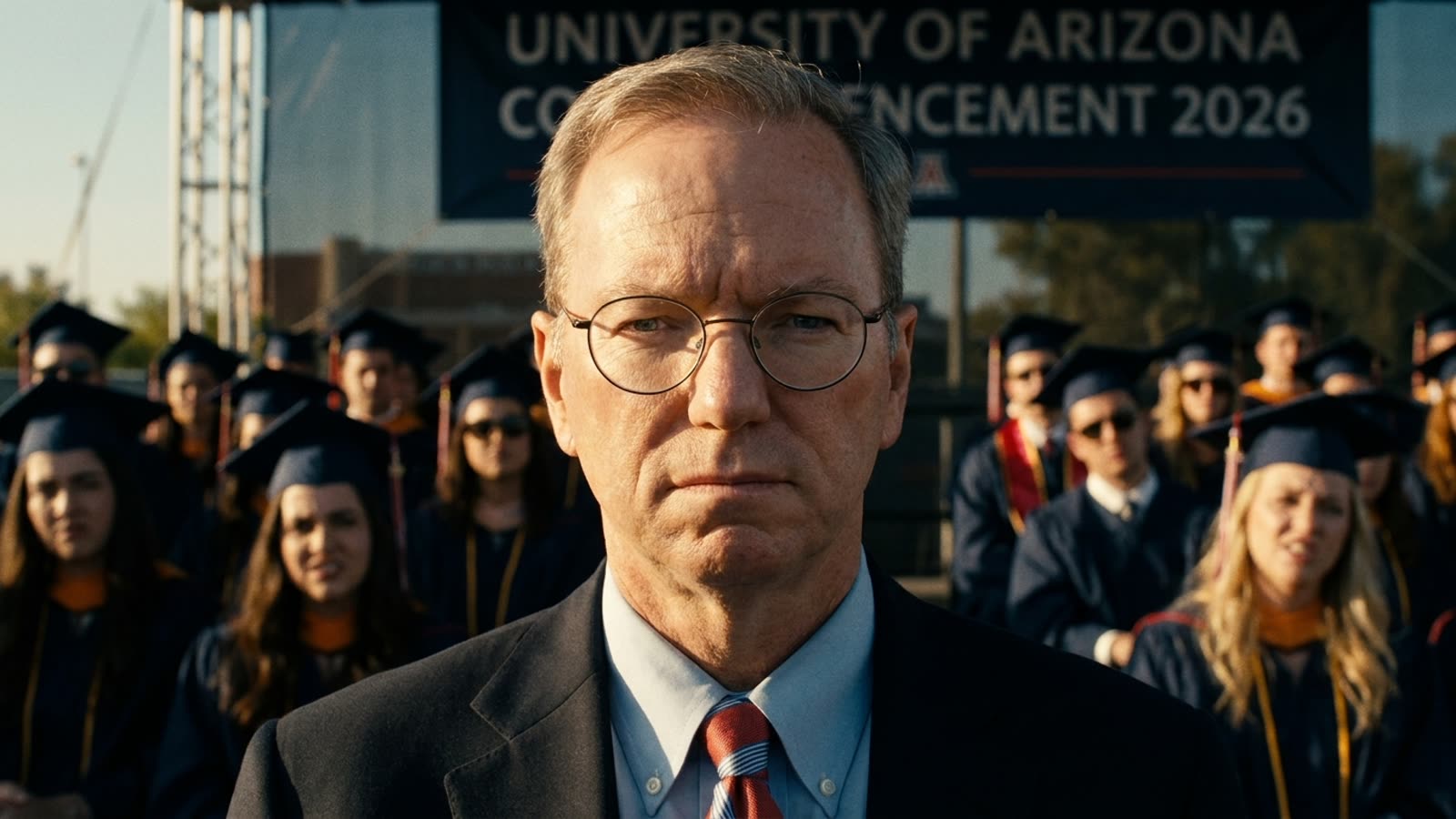
There is perhaps no worse audience for AI optimism than a room full of twenty-two-year-olds about to enter a job market that keeps telling them their skills are about to be automated away.
Eric Schmidt discovered this the hard way on Friday, when his commencement address at the University of Arizona devolved into something closer to a town hall protest. As the former Google CEO pivoted from the standard graduation platitudes into familiar territory—the transformative potential of artificial intelligence, the opportunities awaiting those who embrace it—students began to boo. Not politely. Not briefly. Repeatedly, and loudly enough to drown him out.
The room read the room
Schmidt is not an unpracticed speaker. He has addressed world leaders, testified before Congress, and delivered countless keynotes to adoring tech audiences. But commencement speeches operate under different rules. The audience is captive, emotional, and—crucially—not yet bought in. These are not investors or engineers already converted to the church of exponential progress. They are graduates who have spent four years watching AI-generated essays become indistinguishable from human work, who have seen entry-level job postings evaporate, who have been told simultaneously that AI will create millions of new jobs and that they should learn to code before the coders themselves are replaced.
Schmidt's sin was not mentioning AI. It was failing to acknowledge that for many in that stadium, the technology represents not opportunity but threat—or at minimum, profound uncertainty.
The commencement speech problem
Graduation addresses have always been exercises in managed optimism, but 2026 presents unique challenges. The genre demands inspiration; the moment demands honesty. Speakers who lean too heavily into "the future is bright" risk sounding out of touch. Those who acknowledge the genuine anxieties facing graduates risk being accused of dampening the celebration.
The safest path—and the one Schmidt apparently declined—is to meet students where they are. Acknowledge the disruption. Validate the fear. Then, and only then, offer a framework for navigating it. Instead, Schmidt delivered what sounded like a pitch deck to a crowd holding diplomas and student loan statements.
Our take
The boos at Arizona are a data point worth taking seriously. They suggest that the AI discourse has reached a tipping point where even its most accomplished evangelists cannot assume a friendly reception. Schmidt built one of the most consequential technology companies in history and has genuine insights to offer. But insight requires an audience willing to listen, and that audience must first feel heard. The class of 2026 is not anti-technology. They are anti-being-talked-at by billionaires who will not bear the costs of the transitions they celebrate. If tech leaders want to reach the next generation, they might start by asking questions rather than delivering answers.