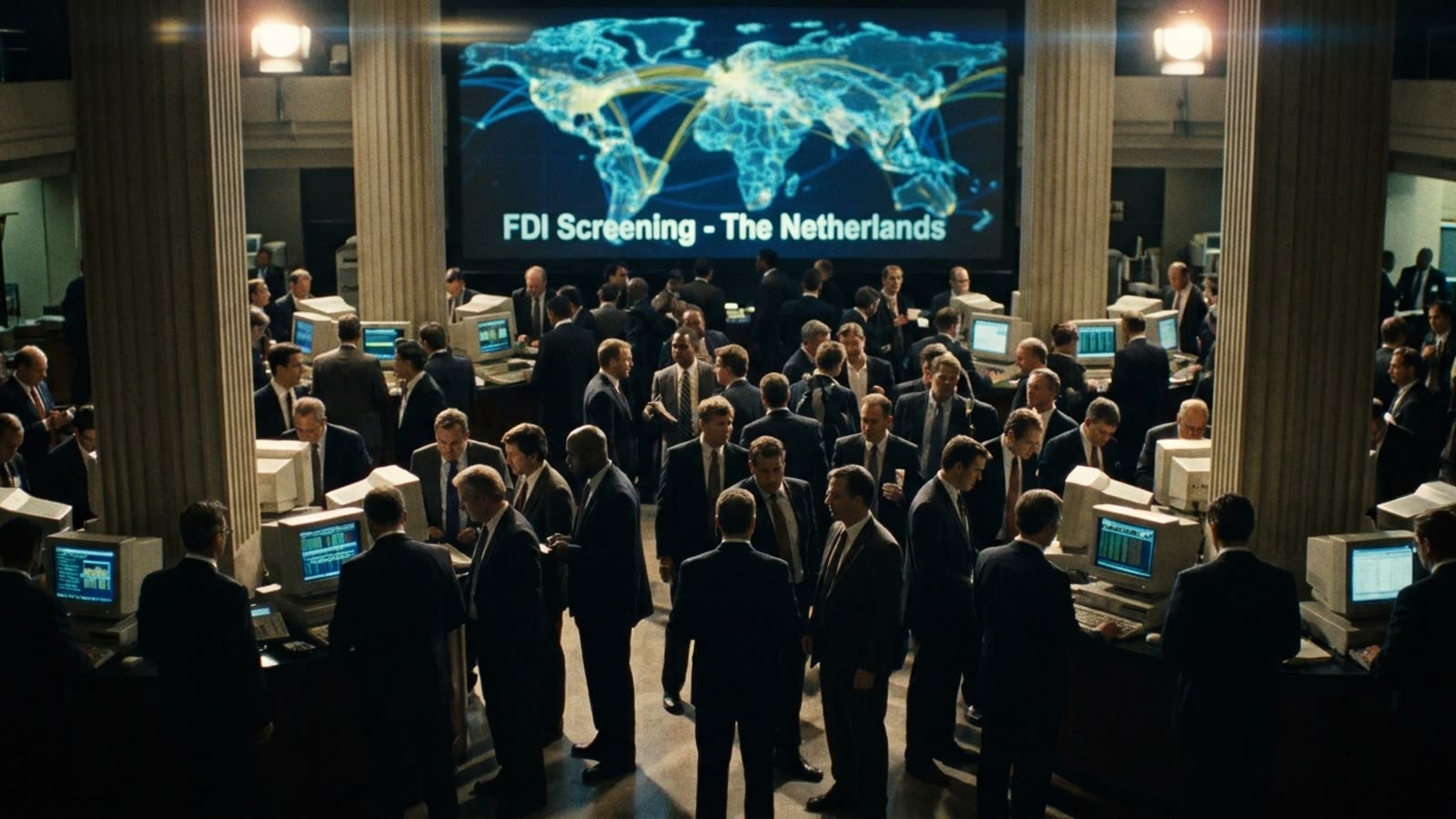
The Dutch government has blocked an American company from acquiring a Netherlands-based firm, citing risks to public interest — a decision that marks a significant escalation in Europe's willingness to weaponize investment screening against its closest ally.
The move lands at a moment when transatlantic economic relations are already strained by tariff disputes, technology export controls, and diverging approaches to China. What makes this case notable is not the specific transaction — details remain limited — but the bluntness of the justification. The Netherlands did not dress up the rejection in procedural language or suggest modifications. It simply said no.
The new FDI playbook
Foreign direct investment screening has become the quiet battleground of 21st-century economic policy. The European Union tightened its framework in 2020, and member states have since built national mechanisms with increasingly sharp teeth. Germany blocked Chinese acquisitions of semiconductor firms. France has intervened in everything from supermarkets to satellite companies. But American buyers have largely operated under the assumption that allied status conferred a degree of immunity.
That assumption now looks outdated. The Dutch decision suggests European governments are prepared to treat American capital with the same suspicion they apply to Chinese or Gulf state money when strategic sectors are involved. The phrase "public interest" is doing heavy lifting here — it can mean national security, it can mean industrial policy, it can mean electoral politics.
Why the Netherlands matters
This is not a peripheral economy flexing. The Netherlands hosts ASML, the world's most critical semiconductor equipment maker, and serves as a gateway for American multinationals accessing the European market. Dutch regulators have already proven willing to restrict chip technology exports to China under American pressure. Now they are demonstrating that cooperation flows in one direction only when it suits them.
For American dealmakers, the implications are immediate. Due diligence on European acquisitions must now include political risk assessments that were once reserved for emerging markets. Boards will need to budget for longer timelines, uncertain outcomes, and the possibility that a handshake means nothing until a minister signs off.
Our take
This is protectionism wearing the mask of security, and it will spread. The Netherlands has provided a template that other EU members will study and replicate. American executives who believed the transatlantic relationship exempted them from the new nationalism are about to receive an expensive education. The era of frictionless allied capitalism is over.