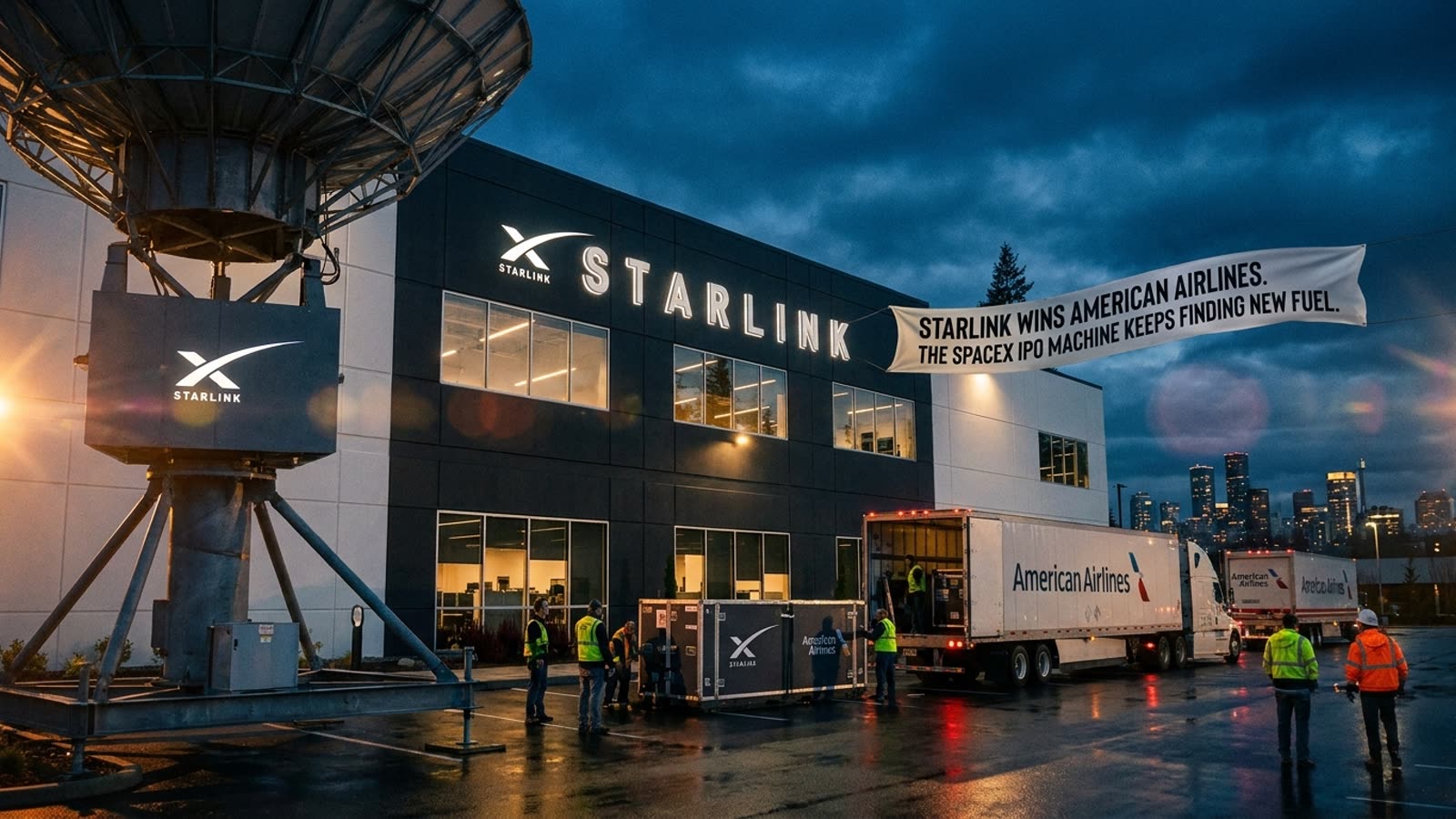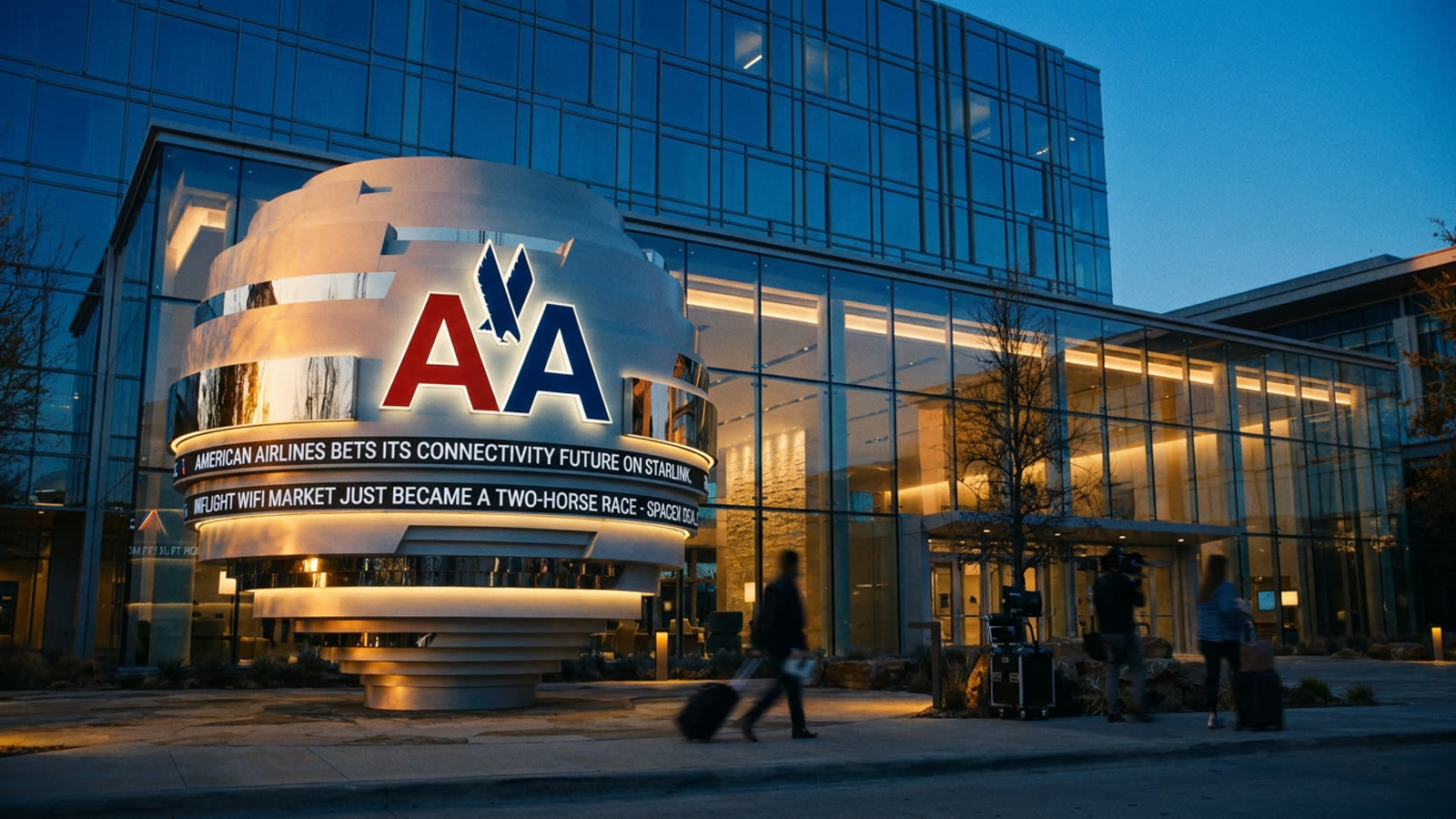
American Airlines has selected SpaceX's Starlink to provide inflight internet across its fleet, a decision that reshapes the competitive dynamics of aviation connectivity and delivers another institutional validation for Elon Musk's satellite venture ahead of its anticipated public offering.
The agreement, following Delta's Starlink announcement earlier this year, means two of America's three legacy carriers have now committed to low-earth-orbit technology that promises speeds resembling home broadband rather than the glacial connections passengers have learned to loathe. United remains the conspicuous holdout, still partnered with legacy provider Viasat—a position that grows lonelier by the quarter.
The economics of passenger frustration
Inflight WiFi has been a reliable disappointment since its commercial introduction. Geostationary satellites, orbiting 22,000 miles above Earth, impose latency that makes video calls impossible and streaming painful. Airlines charged premium prices for substandard service, training passengers to expect nothing and receive less.
Starlink's constellation operates at roughly 340 miles altitude, slashing latency to levels that support real-time applications. The technology gap is not marginal—it is generational. American's decision reflects a calculation that passenger experience now carries competitive weight, particularly among business travelers who increasingly expect to work productively at 35,000 feet.
SpaceX's IPO narrative strengthens
Every major carrier contract adds recurring revenue visibility to SpaceX's financial story. Aviation represents a captive, high-value customer segment: passengers trapped in aluminum tubes for hours, willing to pay for connectivity that actually functions. The American deal, combined with Delta, establishes Starlink as the presumptive default for premium carriers.
For legacy satellite operators, the implications are severe. Viasat and Intelsat built businesses around geostationary infrastructure that cannot match LEO performance. Their aviation contracts, once considered durable, now look like transitional arrangements awaiting expiration.
Our take
The inflight WiFi market spent two decades proving that captive customers will tolerate almost anything. Starlink's emergence reveals that tolerance had limits—airlines simply lacked alternatives worth the switching costs. American's decision is less a bold bet than a recognition that the old model was always temporary, sustained by technological constraints rather than customer satisfaction. United's continued resistance to the obvious will make for an interesting case study in institutional inertia.