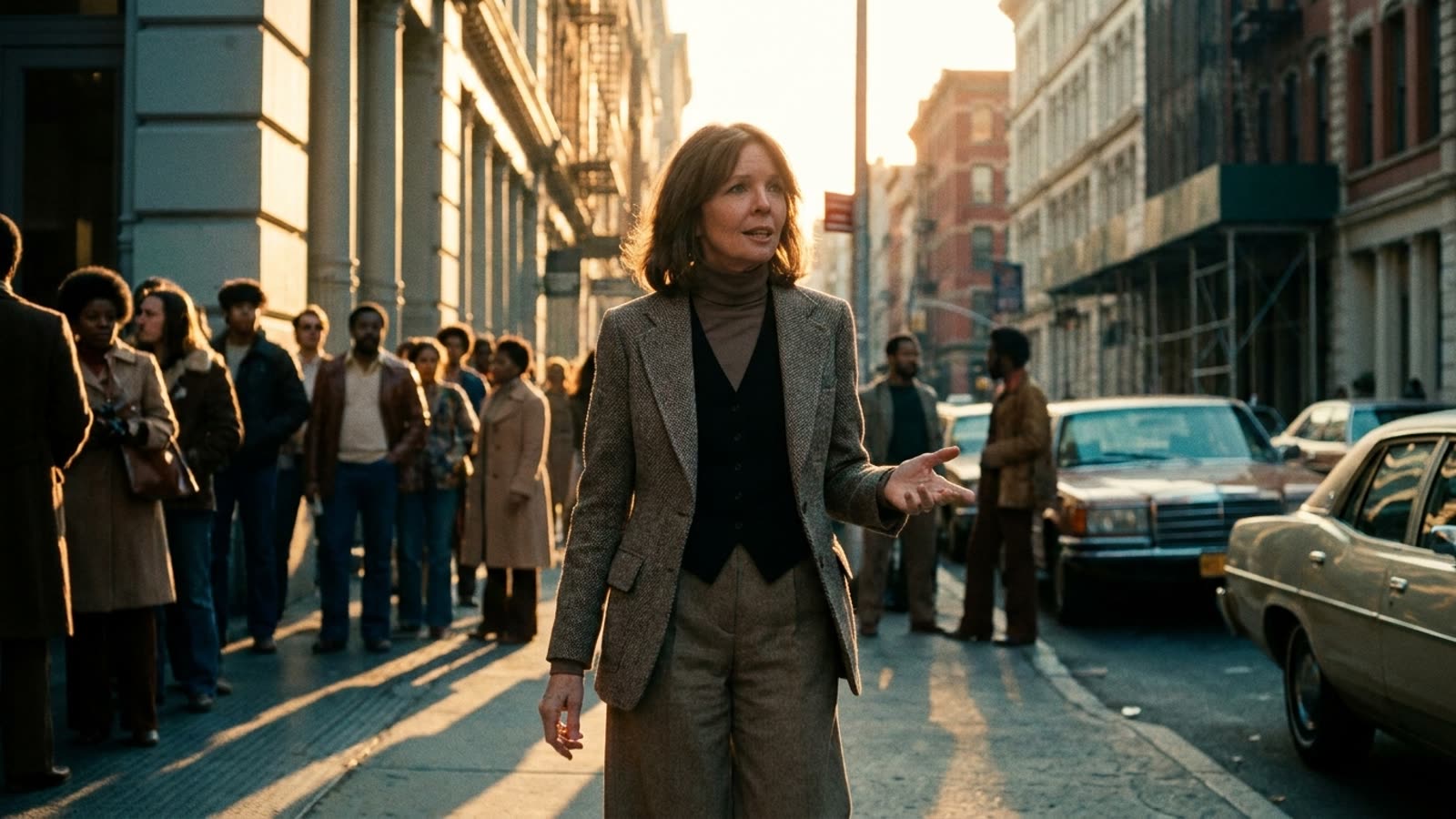
When Diane Keaton walked onto the set of Annie Hall in 1977 wearing her own clothes—the oversized vest, the men's tie, the wide-legged trousers, the hat—costume designer Ruth Morley reportedly threw up her hands. Woody Allen, directing, loved it. The audience, it turned out, loved it more. Within months, women across America were raiding their boyfriends' closets and their fathers' wardrobes, hunting for that ineffable combination of masculine tailoring and feminine nonchalance that Keaton had made look so effortless.
The look was never really about borrowing from men. It was about something far more subversive: the radical proposition that a woman could dress for her own comfort, her own pleasure, her own sense of play, without reference to what anyone else wanted her to be.
The accidental revolutionary
Keaton has always insisted she wasn't trying to make a statement. She simply wore what she liked—pieces she'd collected from thrift stores, her grandmother's jewelry, her own idiosyncratic layering logic. But fashion, like all cultural production, doesn't care about intention. What matters is what lands. And what landed was a visual vocabulary that gave women permission to reject the tyranny of the fitted silhouette, the plunging neckline, the carefully calibrated sex appeal that had defined screen femininity for decades.
The timing was perfect. Second-wave feminism had cracked open conversations about women in the workplace, but the sartorial question remained unresolved. How should a woman dress for a world that still expected her to be decorative? Keaton's answer was to sidestep the question entirely. She dressed like someone who had more interesting things to think about.
The long echo
Nearly five decades later, the influence remains inescapable. When Phoebe Philo built her Céline empire on slouchy tailoring and intellectual restraint, she was working in Keaton's shadow. When women's suiting became a runway staple rather than a novelty, the debt was clear. The contemporary fondness for "quiet luxury"—expensive clothes that whisper rather than shout—owes something to that original refusal to perform.
But the deeper legacy is attitudinal. Keaton demonstrated that personal style could be genuinely personal, assembled from affection and accident rather than prescribed by designers or dictated by trends. She proved that confidence didn't require perfection, that charm could coexist with eccentricity, that a woman could be beautiful precisely because she wasn't trying to be beautiful in the expected ways.
Our take
Fashion loves to rediscover what it never really forgot. Every few years, some designer sends oversized blazers and mannish trousers down a runway and critics call it fresh. It isn't fresh. It's Diane Keaton, still radiating from that original moment of refusal—the moment a woman decided that dressing like herself was more interesting than dressing like anyone's idea of what a woman should be. That remains, quietly, one of the most influential style choices ever made on film.