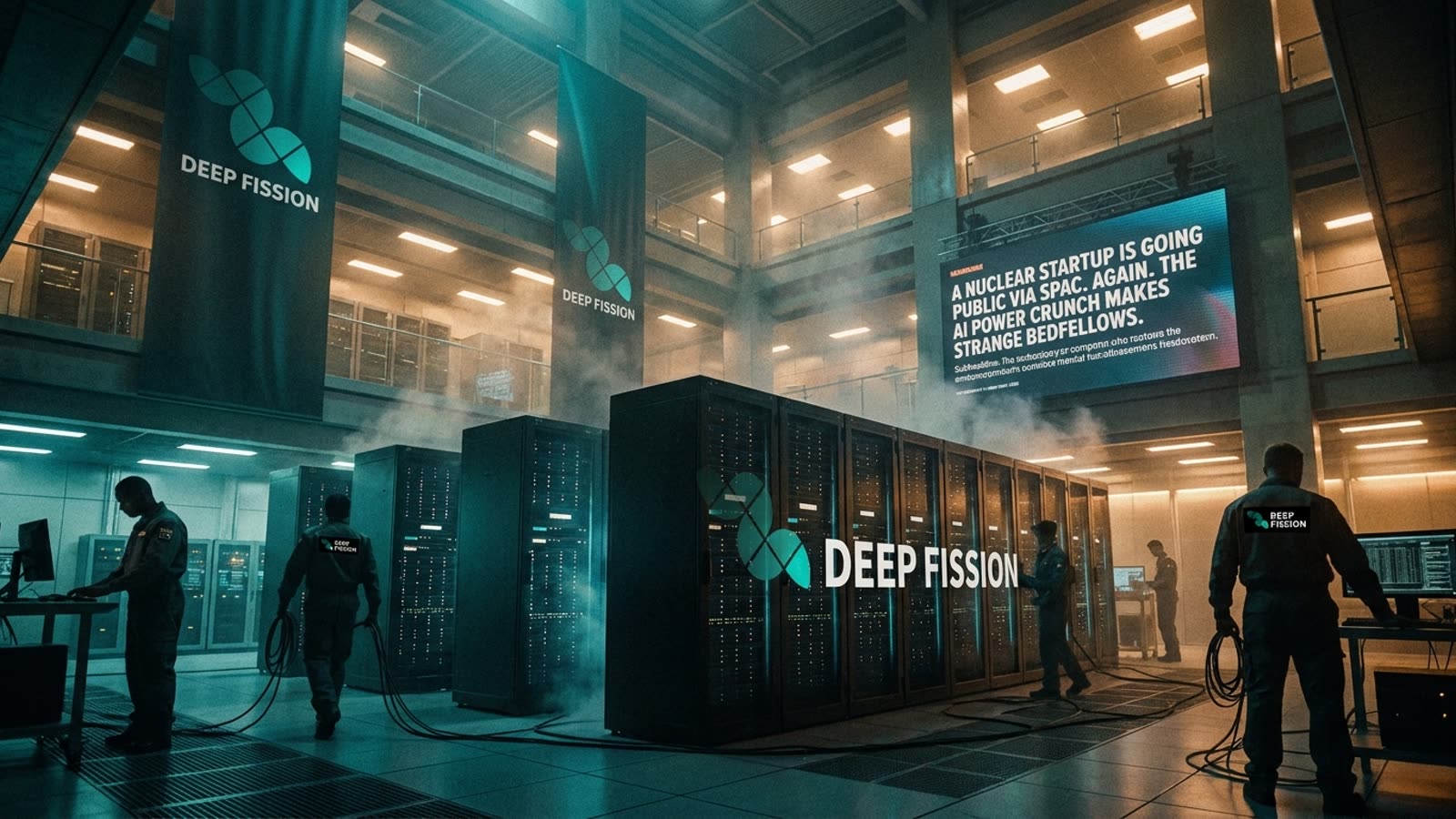
The AI industry's insatiable appetite for electricity has resurrected one of the last decade's most dubious financial instruments: the SPAC. Deep Fission, a nuclear startup promising small modular reactors optimized for data center power, announced this week that it will go public through a special purpose acquisition company—its second attempt at such a listing after a previous deal collapsed in 2024.
The timing is not coincidental. Every major AI lab is now engaged in a frantic search for reliable, carbon-neutral power that can scale with their ambitions. Microsoft has signed nuclear deals. Amazon is buying data centers adjacent to nuclear plants. Google has explored geothermal. The common thread: conventional grid power cannot keep pace with the computational demands of training frontier models, and renewable intermittency makes solar and wind inadequate for facilities that must run continuously.
The SPAC question
Deep Fission's choice of vehicle deserves scrutiny. SPACs earned their reputation as the preferred listing method for companies that couldn't survive traditional IPO due diligence—a category that included numerous failed electric vehicle startups and, notably, several previous nuclear ventures that promised more than they delivered. The structure allows companies to go public with forward-looking projections that would face intense skepticism in a conventional offering.
Deep Fission claims its small modular reactor design can be deployed faster and cheaper than traditional nuclear plants, with configurations specifically optimized for the steady baseload power that AI data centers require. The company has not yet built a commercial reactor. Its timeline to first deployment remains, charitably, ambitious.
Why the market is listening anyway
The difference between Deep Fission's 2024 failure and its 2026 attempt is the intervening explosion in AI infrastructure spending. Nvidia's data center revenue has roughly quadrupled. Hyperscalers are committing tens of billions to new facilities. And every one of those facilities needs power—lots of it, reliably, for decades.
This creates a peculiar market dynamic: investors who would ordinarily dismiss a pre-revenue nuclear company as speculative are now willing to fund it as an AI infrastructure play. The thesis is less about Deep Fission's specific technology than about the structural shortage it aims to address. If AI power demand continues on its current trajectory, something has to fill the gap. Nuclear is one of very few options that can provide carbon-free baseload at scale.
Our take
Deep Fission may or may not succeed. Its SPAC structure is a yellow flag, and small modular reactors remain largely theoretical as a commercial category. But the company's ability to attract capital at all tells us something important about where AI is heading: toward a future where the limiting factor is not algorithms or chips but raw electrical power. The industry that promised to dematerialize the economy is discovering that intelligence, artificial or otherwise, runs on electrons. Someone will figure out how to supply them profitably. Whether it's Deep Fission or a competitor, the nuclear-AI convergence is no longer speculative—it's inevitable.