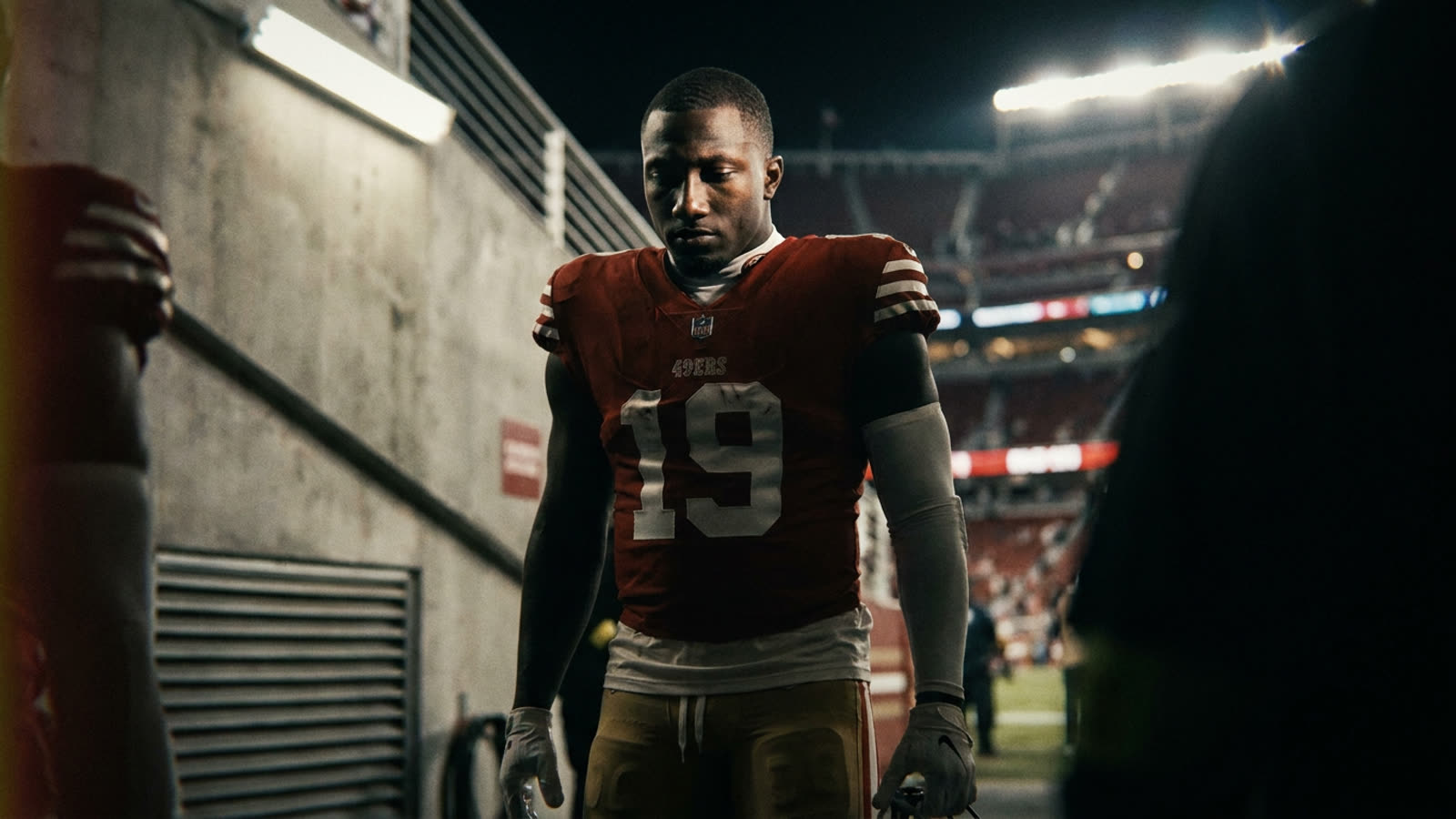
Fourteen notable free agents remain unsigned as training camps loom, but none of them crystallizes the NFL's current valuation puzzle quite like Deebo Samuel. The former All-Pro is healthy, motivated, and still capable of lining up at receiver, in the backfield, or as a decoy who warps defensive alignments. Yet he sits without a contract, a cautionary tale wrapped in a highlight reel.
The silence is not about talent. Samuel's 2019-to-2024 prime included a first-team All-Pro nod, a Super Bowl appearance, and the invention of a positional hybrid—"wide back"—that San Francisco rode to the NFC's upper tier. His ability to turn a jet sweep into a 15-yard gain on sheer violence remains unmatched. The issue is everything surrounding that talent: a 29th birthday arriving in January, a history of soft-tissue injuries, and a contract demand that, according to league sources, still hovers near top-15 receiver money.
Why teams are waiting
General managers have learned painful lessons from aging skill-position signings. Julio Jones's Tennessee tenure, Odell Beckham Jr.'s post-ACL wanderings, and DeAndre Hopkins's diminishing efficiency all haunt front offices. Samuel's game relies on explosion and contact absorption—traits that erode faster than route-running craft. Teams see a player whose best seasons may already be behind him, even if his best individual plays are still ahead.
There is also the matter of roster construction philosophy. The league's cap has ballooned past $270 million, yet most of that growth has been funneled toward quarterbacks and edge rushers. Receiver rooms are increasingly built through the draft and extended cheaply before free agency. The Bengals paid Ja'Marr Chase; the Vikings paid Justin Jefferson. Paying a second-tier veteran at first-tier prices no longer fits the template.
The contenders who make sense
A handful of teams could still talk themselves into Samuel. Baltimore needs a reliable target opposite Zay Flowers after Mark Andrews's departure, and the Ravens' run-heavy scheme would maximize Samuel's after-catch violence. Pittsburgh, perpetually receiver-poor, could pair him with George Pickens and finally give Russell Wilson adequate weaponry. Kansas City, even after Rashee Rice's legal troubles, has cap constraints that make a Samuel signing difficult but not impossible if he accepts a prove-it deal.
The most intriguing fit may be Dallas. The Cowboys' post-CeeDee Lamb receiving corps is thin, and owner Jerry Jones has never shied away from a splashy move. Samuel's presence would give Dak Prescott a safety valve he has lacked since Amari Cooper's departure. Whether Dallas is willing to absorb the injury risk is another question.
Our take
Deebo Samuel is not washed. He is, however, expensive relative to his remaining prime, and the NFL has become ruthlessly efficient at identifying that gap. The league's best teams now treat free agency as a place to find discounts, not stars. Samuel will sign somewhere—probably for less than he wants, probably with a team desperate enough to bet on his ceiling. But his prolonged unemployment is not an anomaly. It is the system working exactly as designed: cold, calculating, and utterly indifferent to highlight tapes from three seasons ago.