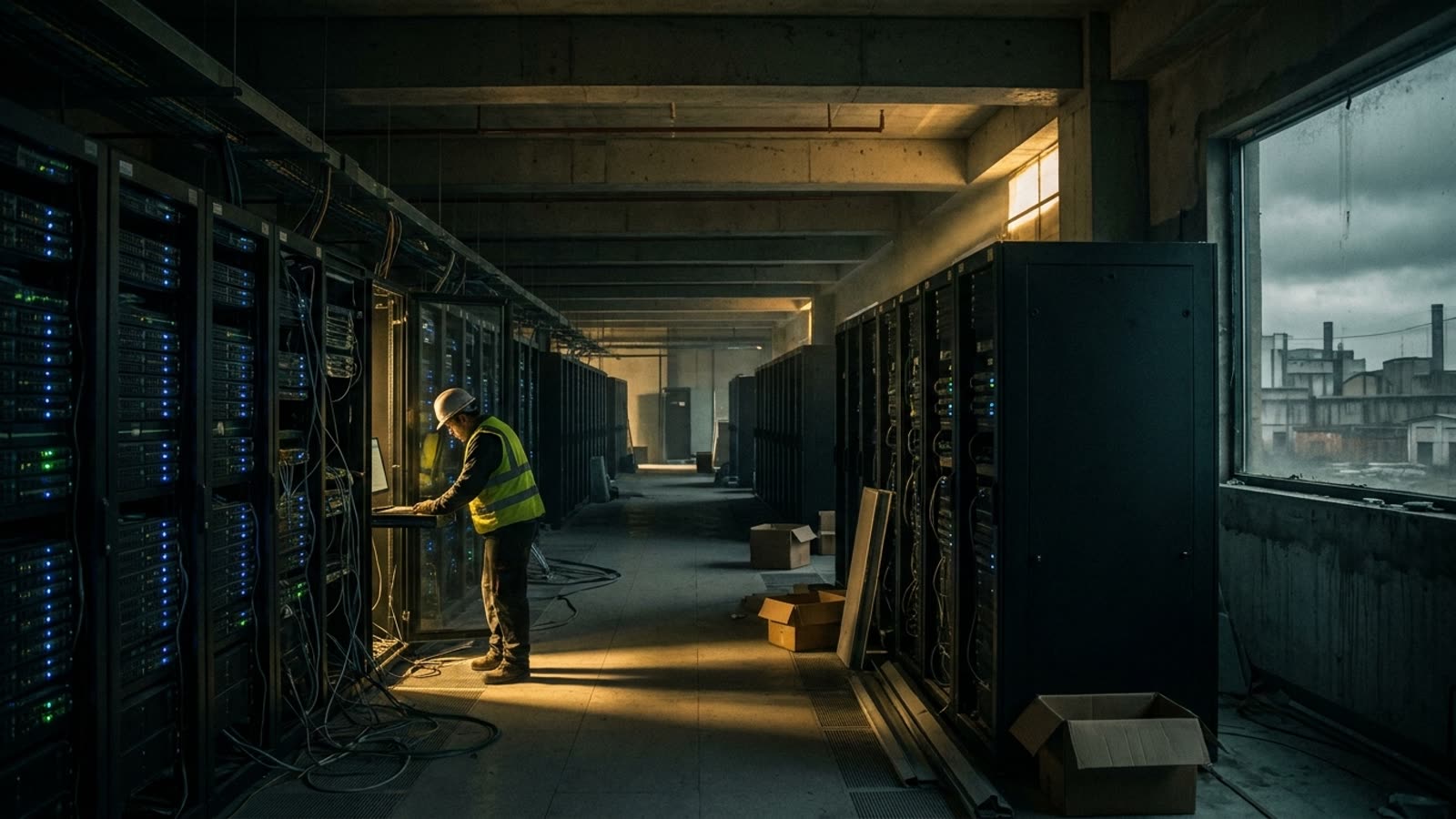
The reckoning that skeptics predicted is arriving, and it's starting in the bond market. Debt issued by data center operators and neocloud companies—the picks-and-shovels players of the AI boom—has sunk toward stressed levels as investors suddenly question whether all those GPU farms will ever generate returns commensurate with their construction costs.
This isn't a minor repricing. It's the market's first serious verdict on the sustainability of AI infrastructure spending, and the verdict is grim.
The anatomy of a debt spiral
The past two years saw an unprecedented borrowing spree by companies racing to build AI compute capacity. Neocloud providers—the newer entrants offering GPU-as-a-service to AI startups—issued billions in high-yield debt to finance data center construction, betting that insatiable demand for training runs would guarantee utilization rates north of 90 percent. Traditional data center REITs joined the party, leveraging their balance sheets to add AI-ready facilities.
The math looked compelling when interest rates seemed destined to fall and AI valuations only went up. Now both assumptions have inverted. Hot inflation data has revived Fed rate-hike expectations, pushing Treasury yields higher and making that floating-rate debt considerably more expensive to service. Simultaneously, the equity selloff in AI names has spooked credit investors who had been counting on refinancing options that now look far less certain.
Why this matters beyond finance
Bond market stress in AI infrastructure has real-world consequences. Data centers under construction may face funding gaps. Expansion plans will be shelved. The neocloud companies that promised startups an alternative to hyperscaler lock-in may find themselves unable to deliver capacity they've already sold forward.
More fundamentally, this is a test of whether the AI buildout can survive contact with normal capital market discipline. For two years, the sector operated in a kind of suspended animation where future demand justified any present expenditure. Credit markets are now imposing the discipline that equity markets wouldn't.
The Darwin moment arrives
Financial analysts are calling this a "Darwin moment" for AI borrowers—an apt phrase. The companies that raised debt prudently, secured long-term contracts with creditworthy customers, and maintained reasonable leverage will survive. Those that assumed perpetual cheap money and infinite demand will not. The sorting has begun.
The irony is thick: an industry built on optimization and prediction failed to model the most basic financial risk—that borrowing costs might rise and revenue might not materialize as quickly as PowerPoint slides promised.
Our take
This correction is healthy, even necessary. The AI infrastructure buildout was proceeding with a recklessness that would have ended badly regardless of macro conditions. Better to have the shakeout now, with projects half-built, than later, with stranded assets littering the landscape. The survivors will be leaner, their business models stress-tested. The casualties will serve as expensive lessons in the ancient wisdom that leverage amplifies outcomes in both directions. Welcome to the part of the cycle where that lesson gets relearned.