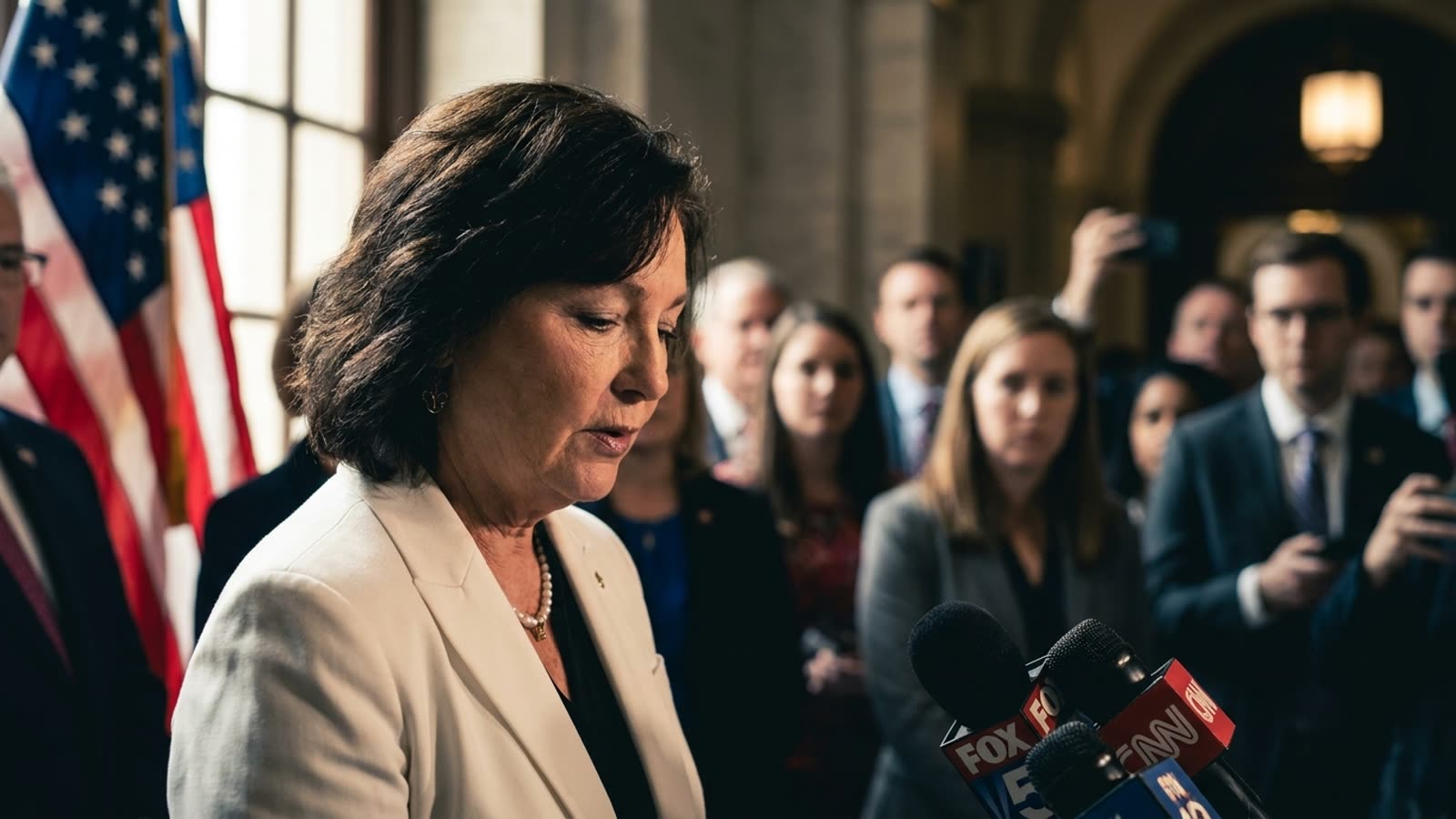
When Darline Graham was appointed to fill her late brother's Senate seat earlier this year, the expectation in Washington was simple: she would be a reliable vote, a caretaker presence, a quiet placeholder until the next election cycle sorted things out. Instead, she has become something far more interesting—a living reminder of a Republican foreign policy that Donald Trump has spent years trying to bury.
Her public disagreement with the president's decision to waive sanctions mandated by the Lindsey Graham Russia Accountability Act is, by the standards of contemporary GOP discourse, remarkably mild. She "gently disagreed." She expressed "concern." She did not call the president a traitor or demand impeachment. And yet the mere fact of her dissent—delivered with the moral authority of a grieving sister defending her brother's legislative legacy—carries a symbolic weight that louder voices could not achieve.
The sanctions gambit
The Trump administration's decision to exempt Russia from the sanctions framework that Congress passed with bipartisan support is nakedly transactional. With midterm elections weeks away and energy prices stubbornly elevated, the White House calculates that easing pressure on Russian oil exports might bring relief to American consumers—and, more importantly, to Republican candidates in competitive districts. The president has made little effort to disguise this reasoning, framing it as economic pragmatism rather than geopolitical retreat.
But the Lindsey Graham Act was designed precisely to prevent such pragmatism. The late senator spent years building a coalition around the principle that Russia's aggression in Ukraine demanded sustained economic punishment, regardless of short-term costs. His sister's appointment was supposed to honor that legacy. Her dissent suggests she takes that obligation seriously.
A party divided by ghosts
The Republican Party's relationship with hawkish foreign policy has always been complicated, but the Trump era has transformed that complexity into outright incoherence. The same party that once defined itself by Cold War resolve now contains multitudes: unreconstructed interventionists, America-First isolationists, and a large contingent that simply follows wherever the president leads.
Darline Graham occupies none of these camps comfortably. She is not a foreign-policy expert, nor does she claim to be. What she possesses is something more difficult to dismiss: the moral standing of someone who watched her brother build something and now watches it being dismantled. Her critique is personal in a way that policy arguments rarely are, and that makes it harder for the White House to dismiss as mere procedural objection.
Our take
The Trump administration will almost certainly get away with this sanctions waiver. Congressional Republicans lack both the votes and the appetite for a genuine confrontation with the president over Russia policy, and voters facing high gas prices are unlikely to punish politicians who promise relief. But Darline Graham's quiet rebuke serves a different purpose: it preserves a record. Someday, when historians examine how the Republican Party abandoned its own foreign-policy consensus, they will note that at least one senator—speaking in her brother's name—said this was wrong. That may be a small thing. It is not nothing.