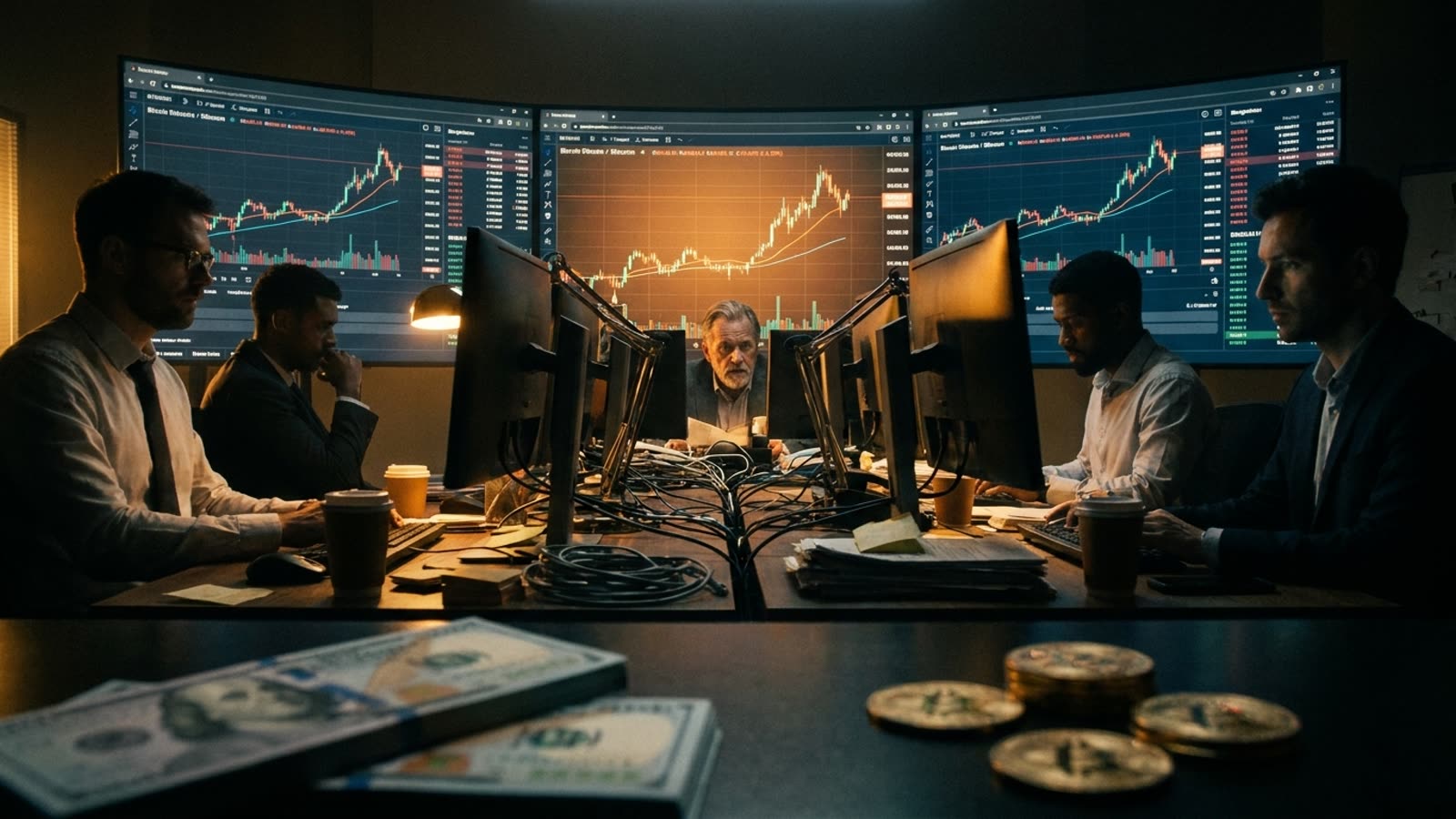
The conventional wisdom on Wall Street this week is that bitcoin is a risk asset, and risk assets suffer when the Federal Reserve signals tighter monetary policy. The May jobs report landed like a depth charge on Friday, with nonfarm payrolls blowing past expectations and cementing the case for at least one more rate hike this summer. Bitcoin promptly slid below $60,000 for the first time since late 2024, and the crypto commentariat dutifully pronounced the end of the post-halving rally.
Not everyone is selling. A prominent crypto-focused family office that parlayed an initial stake of around $20 million into a fund now valued at more than a billion dollars is reportedly adding to its bitcoin position, treating the current dislocation as an entry point rather than an exit sign. The move is a reminder that the loudest voices in a selloff are rarely the ones with the longest time horizons.
The family-office playbook
Family offices occupy a peculiar niche in asset management: they answer to no outside limited partners, face no quarterly redemption windows, and can afford to be contrarian in ways that hedge funds cannot. This particular operation—one of the earliest institutional-scale entrants into digital assets—built its fortune by accumulating bitcoin and select altcoins during the brutal 2018-2019 bear market, then riding the 2020-2021 bull run without panic-selling at the top. The strategy is simple in theory, agonizing in practice: buy when everyone is terrified, hold when everyone is euphoric, and ignore the noise in between.
Doubling down now, with the Fed poised to raise rates and retail sentiment cratering, fits the pattern. The office's thesis appears unchanged: bitcoin's fixed supply schedule makes it a hedge against long-term currency debasement, and short-term rate cycles are just that—short-term.
Why the macro picture is murkier than it looks
The rate-hike narrative is real but incomplete. Yes, the labor market is running hotter than the Fed would like, and yes, Chair Powell has signaled that the committee is prepared to act. But the same jobs report that spooked crypto traders also showed wage growth moderating slightly, and inflation expectations remain anchored. The bond market is pricing in one, maybe two, quarter-point hikes—not a return to the aggressive tightening cycle of 2022-2023.
For a long-duration asset like bitcoin, the difference between a Fed funds rate of 5.5% and 6% is meaningful at the margin but unlikely to alter the fundamental case. What matters more is whether institutional adoption continues—and there, the picture is mixed. Spot bitcoin ETFs have seen modest outflows this week, but cumulative inflows since January 2024 remain substantial. The SpaceX IPO, expected to be the largest in history, may be pulling some retail capital out of crypto, but that is a one-time liquidity event, not a structural shift.
Our take
The family office in question has been right more often than it has been wrong, which is why it now manages a billion dollars instead of twenty million. That does not mean it will be right this time. But the willingness to buy when others are selling is precisely the behavior that separates generational wealth-builders from the crowd. If bitcoin is indeed a long-term store of value, then a 15% drawdown triggered by a single jobs report is noise. If it is not, then the family office will learn an expensive lesson. Either way, the conviction is instructive. Most investors talk about buying the dip. Very few actually do it when the dip arrives.